
Reviewed · WINE TOURS
Alsace: Full-Day Wine Tour & Tastings from Strasbourg
Wine country begins just beyond Strasbourg. This eight-hour Alsace wine tour combines three winery visits with medieval villages, scenic drives, and plenty of Riesling, Pinot Blanc, and Gewürztraminer. I like the small group of no more than eight people, and I like that the day reaches several wine areas instead of stopping at one cellar. The main drawback is the $253 price, which may feel high for three formal tasting sessions, especially since lunch is not included.
I also like the chance to meet winemakers directly at some stops, rather than tasting only in a polished shop. Guides such as Jerome, Laurence, Pauline, Florence, and Maxime have been praised for their English, local knowledge, and easy manner. Bring a proper breakfast, though. Alsace tastings usually do not include snacks, and this is a full day of sipping without a built-in meal.
In This Review
- Key points to know before booking
- Leaving Strasbourg for the Mittelbergheim vineyards
- Mittelbergheim and the first flight of Alsace wines
- Dambach-la-Ville and the Frankstein Grand Cru
- Lunch and free time in a medieval wine village
- Afternoon tasting in the Ribeauvillé and Riquewihr area
- What the drive adds to the day
- The guides make the difference
- Is $253 a fair price?
- Who should book this Alsace wine day?
- Should you book it?
- FAQ
- Where does the tour start?
- How long does the experience last?
- How many people can join the tour?
- What wines can I taste?
- How many wineries does the tour visit?
- Is lunch included?
- Is the tour conducted in English?
- What should I bring?
- Can children join the tour?
Key points to know before booking
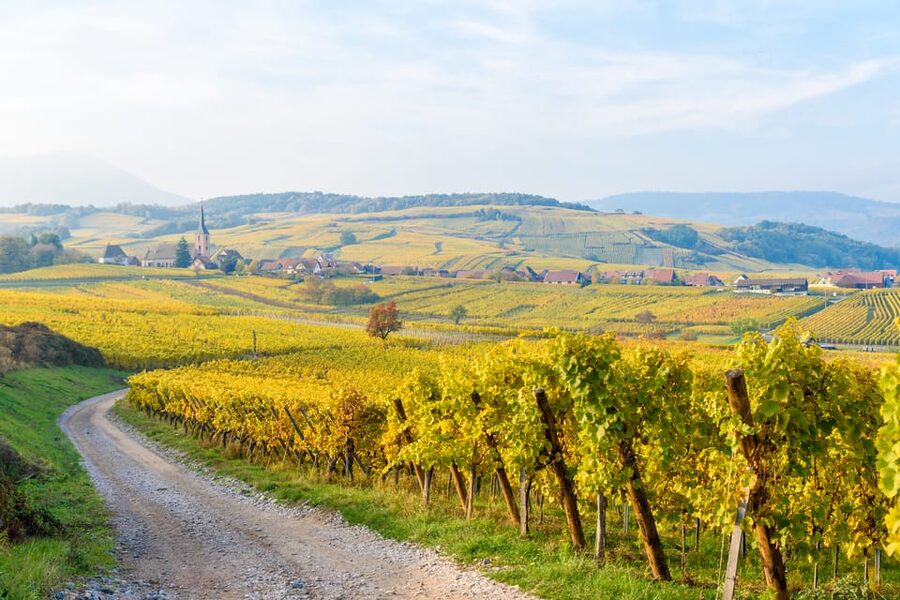
- Three wine stops across several Alsace districts: Taste wines around Mittelbergheim, Dambach-la-Ville, and the Ribeauvillé and Riquewihr area.
- A small van makes the day personal: The group is limited to eight, with an English-speaking driver-guide and live commentary.
- Expect many individual pours: Depending on the winery, you might taste roughly 10 to 20 wines over the course of the day.
- Ribeauvillé or Riquewihr adds more than wine: You get free time to walk through a traditional village and arrange your own lunch.
- The tour reaches important Grand Cru country: Zotzenberg, Kastelberg, Wiebelsberg, Frankstein, Geisberg, Kirchberg, Osterberg, Schoenenbourg, and Sporen are part of the regional story.
- It runs in all weather: Comfortable shoes, an ID card, and clothing suited to rain or cold are sensible choices.
Leaving Strasbourg for the Mittelbergheim vineyards
The day starts at 17 Place de la Cathédrale, a handy meeting point in central Strasbourg. From there, you ride about an hour in a comfortable, fully equipped minivan toward the Alsace Wine Route.
That first drive matters. You are not simply being transported from one tasting room to another. Your guide explains the villages, wine areas, and local traditions as the scenery changes outside the windows. Several guides, including Jerome, Laurence, and Laurent, have been praised for adding useful background on Alsace culture and regional history.
The group size is one of the tour’s strongest features. With a maximum of eight participants, you can ask questions without turning the day into a lecture. A small group also makes it easier for the guide to notice what you enjoy, then offer more useful advice at later tastings.
The van is practical rather than luxurious. One past participant found it difficult to see the sights from a middle seat because of the window height and position. If scenic views matter to you, arrive early and ask about seating, though the exact arrangement may depend on the group.
More Wine Tours in Strasbourg
- From Strasbourg: Medieval Villages & Wine Tasting Day Trip
★ 4.8 · 329 reviews - Alsace Wine Route Small Group Half-Day Tour with Tasting from Strasbourg
★ 4.5 · 291 reviews - Alsace Wine Route Wineries & Tasting Small Group Guided Tour from Strasbourg
★ 5.0 · 229 reviews
Mittelbergheim and the first flight of Alsace wines
Your first formal stop is in the Mittelbergheim wine-producing area, home to the Zotzenberg, Kastelberg, and Wiebelsberg Grand Crus. The local soils are especially well suited to Riesling, so this is a good place to begin if you want to understand why the grape is so important in Alsace.
The first tasting includes Pinot Blanc, Sylvaner, and Riesling. These wines give you a useful introduction to the region’s range. Pinot Blanc is often a softer starting point, Sylvaner can show a crisp, more restrained side of Alsace, and Riesling lets you focus on the grape most closely associated with this part of the route.
You are likely to taste several wines rather than one token sample. Some sessions have included 10 or more pours, while the total for the day has reached 12, 15, or even more than 20 wines depending on the wineries visited. That is generous, but it also means you should pace yourself. A tasting is more useful when you still have a clear palate for the final glass.
The wineries are described as typical local producers, not grand attractions built for mass tourism. At some visits, you may meet the owners or winemakers themselves. That personal contact gives the wines a face and a place, and it helps explain why buying directly from the producer can be appealing. Several participants purchased bottles at winery prices, though shipping or luggage arrangements are your responsibility.
Dambach-la-Ville and the Frankstein Grand Cru
A short 15-minute drive brings you to the Dambach-la-Ville wine area. This village sits in the middle of the Alsace wine region and is associated with the Frankstein Grand Cru.
The second tasting lasts about 45 minutes. Compared with the longer opening session, it gives the day a steady rhythm: taste, drive, listen, and taste again. That pacing keeps the tour from feeling like one long cellar visit.
I would pay attention to how the wines differ from those in Mittelbergheim. The point is not simply to collect grape names. The tour gives you a chance to compare different producers and growing areas within Alsace, which is much more helpful than tasting a single bottle and trying to generalize about the entire region.
The guide’s role is important here. Some tastings may be led by the producer, while your guide helps explain terminology, answer questions, and keep communication clear. Jerome, Laurence, Pauline, and other guides have received strong praise for their English and their ability to connect wine with the villages and local culture.
Do not expect a technical wine course with detailed maps and formal instruction at every stop. The experience is more relaxed and conversational. You will learn through the places, people, and glasses in front of you.
Lunch and free time in a medieval wine village
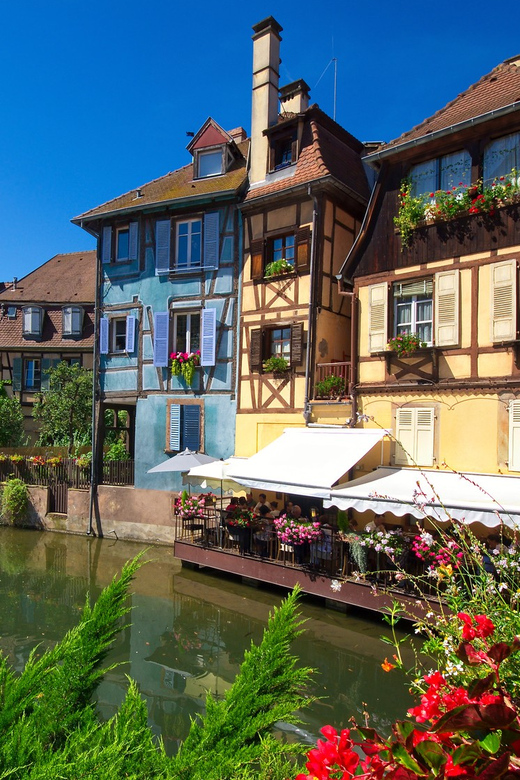
After the morning tastings, you get free time for lunch and a walk in a traditional village. The schedule identifies the Ribeauvillé and Riquewihr area, with the exact village visit depending on the day’s route.
This pause is welcome. Three winery sessions spread across eight hours would feel tiring without time to eat and stretch your legs. It also gives you a chance to see Alsace beyond the tasting rooms, with the narrow streets, old buildings, and decorative village character that make the region so popular.
Lunch is not included, so budget separately. One guide recommended Au Passage de la Tour in Ribeauvillé, and a group enjoyed eating there together. That is useful local help, but you are free to choose your own restaurant during the allotted break.
The main practical warning is time. One participant wanted a longer lunch, and that is understandable. Medieval villages invite slow walks, photographs, and browsing, while a fixed tour schedule does not. If lunch is your priority, choose a restaurant quickly and keep an eye on the departure time.
Riquewihr and Ribeauvillé offer different pleasures. Riquewihr is especially known for its compact, storybook appearance, while Ribeauvillé gives you a larger village setting with more room to walk. The tour lets you see one of these places in the middle of a wine day, not as an isolated photo stop.
A completely different sort of day in Strasbourg:
- Strasbourg: Euro Guided Tour by Segway
★ 4.7 · 808 reviews - Colmar, Medieval Village & Castle Small Group from Strasbourg
★ 5.0 · 769 reviews - 2-Hour Strasbourg Euro Tour by Segway
★ 5.0 · 642 reviews - From Strasbourg: Best Of Alsace Historical Day Trip
★ 4.7 · 633 reviews
Afternoon tasting in the Ribeauvillé and Riquewihr area
The afternoon continues in one of Alsace’s best-known wine districts. This area includes five Grand Cru appellations: Geisberg, Kirchberg, Osterberg, Schoenenbourg, and Sporen.
Riesling is the leading grape here, but the tasting may also include Pinot Gris, Muscat, and Gewürztraminer. This is where you can broaden your understanding of Alsace wines. The region is not only about dry Riesling. Aromatic white wines and richer styles add variety, and the guide can help you identify what suits your own taste.
The area is also linked with old-established wine families, including Trimbach, whose winemaking tradition began in 1626, and Hugel, established in 1639. You may not visit those exact producers, so do not book this expecting a tour of either family estate. Their names provide useful context for the long wine culture surrounding Ribeauvillé and Riquewihr.
The afternoon includes two tasting sessions, each listed at about 45 minutes. That makes five tasting-related segments if you count the first hour, the second 45-minute visit, and the two afternoon sessions separately. In practice, the experience is described as three winery visits, so the exact division of tastings can vary by the producers selected that day.
This variety is a real plus. One winery might feel more personal, another more organized, and another more focused on a particular style. The tradeoff is that you cannot know in advance exactly which estates you will visit. The tour chooses the producers, which saves you research time but gives you less control.
What the drive adds to the day
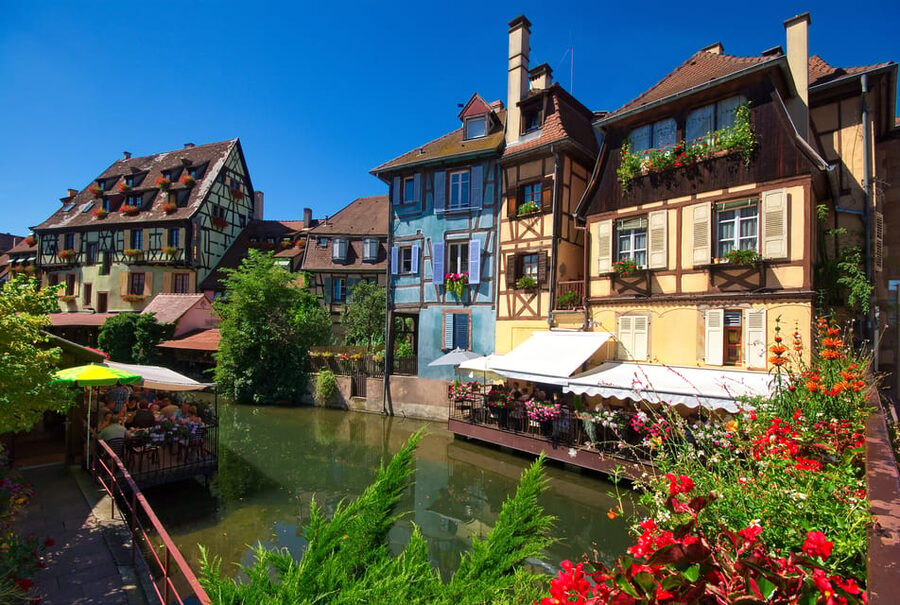
The driving is not dead time. The route links small villages and vineyard areas that are difficult to cover efficiently without a car. After the final tasting, the return drive to Strasbourg takes about 45 minutes.
The back-road route can be part of the pleasure. Laurence once took a group away from the main highway, passing through smaller villages and the place where she lives, Obernai. That sort of personal local knowledge can turn a transfer into a better sense of the region.
Still, the scenery depends on your seat, the weather, and the season. In winter, the villages can look beautiful but the day may be cold. In summer, the vineyards should be more colorful, but the van and walking portions can feel warmer. The tour operates rain or shine, so check the forecast and dress for changing conditions.
The schedule is full but not frantic. You have about an hour for the first tasting, 45 minutes for the second, an hour of village time, then two more tasting sessions and the return drive. Several participants found the day well paced, while the request for more lunch time shows that the schedule leaves limited room for lingering.
The guides make the difference
The tour uses English-speaking driver-guides, and guide quality is central to its appeal. Jerome is often praised for his wine and regional knowledge, clear English, patience, and sense of humor. Laurence brings sommelier training and family ties to Alsace, while Pauline has been praised for her energy and personal care.
Other named guides include Florence, Maxime, Laurent, and Camille. Florence has been described as strong on both regional history and wine. Maxime was praised as a careful driver and a useful guide, and Laurent’s background in history added extra context during village drives.
The exact guide is not guaranteed, so it would be unwise to book solely for one person. What you can reasonably expect is a guide who handles driving, timing, commentary, and questions in English.
That combination has value. You do not need to plan a route, reserve three cellar visits, or worry about driving after tasting wine. You also get an interpreter when a local producer is less comfortable speaking English.
Is $253 a fair price?
At $253 per person, this is not a budget outing. The price covers transportation in a comfortable minivan, an English-speaking guide, live commentary, and tastings at three typical wineries.
It does not cover lunch, monument or museum entry, personal expenses, or insurance. Since the day includes several tastings and the possibility of a dozen or more wines, the value improves for people who are serious about learning and comparing Alsace wines.
The price is harder to justify if you mainly want a quick taste and a village photograph. You could spend less on a shorter outing, though you would likely have less time in the wine country and less support getting between villages.
Buying wine directly can also affect your calculation. Producers may offer bottles at prices below restaurant or shop prices, but that is only a benefit if you have room in your luggage and want to carry wine home. Do not count future bottle purchases as guaranteed savings.
For me, the strongest value comes from combining wine education, several growing areas, village time, and a sober driver in one day. The weakest value is the cost per winery if you judge the tour only by the number of formal visits.
Who should book this Alsace wine day?
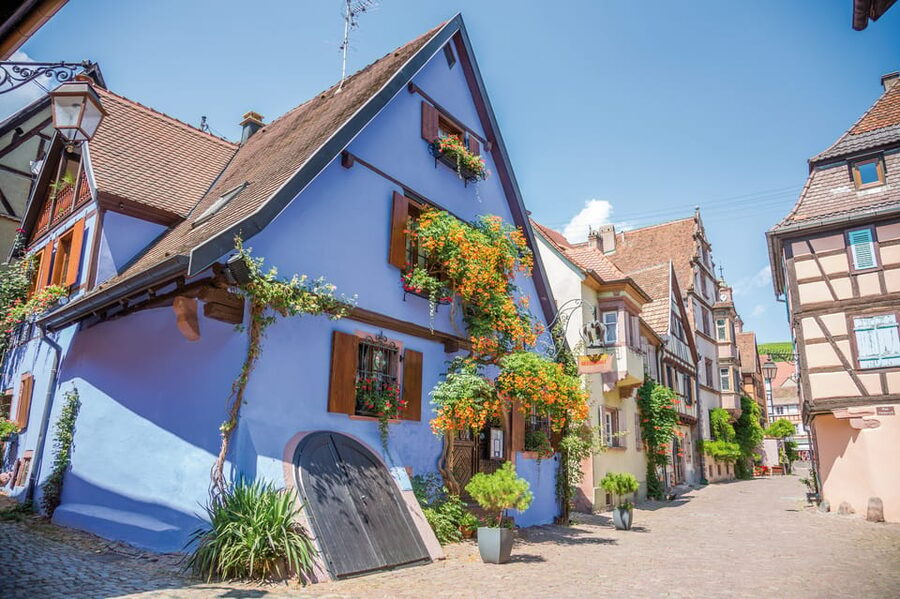
I would recommend it to adults who enjoy white wine, small villages, and guided cultural context. It is particularly useful if you are staying in Strasbourg without a rental car and want to reach the Alsace Wine Route efficiently.
It suits first-time visitors who do not know the difference between Pinot Blanc, Sylvaner, Riesling, Pinot Gris, Muscat, and Gewürztraminer. It also suits experienced wine drinkers who want to meet smaller producers and compare several parts of the region.
This is an adults-only activity, and participants must be at least 18 to drink alcohol. It is not suitable for wheelchair users, and pets are not allowed. You should be comfortable walking on village streets and standing during tasting sessions.
Bring an ID card or passport, comfortable shoes, and a good breakfast. Since snacks are usually not provided to avoid affecting the wine’s flavor, plan on eating before departure and making lunch a priority during the free hour.
Free cancellation is available up to 24 hours before departure, and you can reserve while paying later. The tour needs at least two adult passengers to operate, so a cancellation is possible if that minimum is not reached. The exact starting time should be checked when booking.
Should you book it?
Book this tour if you want a full day rather than a quick wine stop, especially if you value a small group, direct contact with producers, and a guide who can explain both wine and Alsace culture. The mix of Mittelbergheim, Dambach-la-Ville, Ribeauvillé, and Riquewihr gives you a broad taste of the region.
Think twice if $253 feels steep, if you want a long leisurely lunch, or if you prefer to choose every winery yourself. For everyone else, the convenient transport, large number of tastings, attractive villages, and strong guide support make this a practical way to see wine country from Strasbourg.
FAQ
Where does the tour start?
The tour starts at 17 Place de la Cathédrale in Strasbourg.
How long does the experience last?
The tour lasts eight hours and returns to 17 Place de la Cathédrale. During the Christmas period, the return point is just outside Strasbourg’s Grande-Île district, with the exact address arranged with the guide.
How many people can join the tour?
The small-group tour is limited to eight participants.
What wines can I taste?
The tastings may include Pinot Blanc, Sylvaner, Riesling, Pinot Gris, Muscat, and Gewürztraminer. The first tasting specifically includes Pinot Blanc, Sylvaner, and Riesling.
How many wineries does the tour visit?
The experience includes tastings at three typical local wineries.
Is lunch included?
No. Meals are not included, but the schedule provides free time for lunch in a traditional village.
Is the tour conducted in English?
Yes. The driver-guide provides live commentary in English, and English is the only language listed for the tour.
What should I bring?
Bring a passport or ID card and comfortable walking shoes. The tour operates in rain or shine, so clothing suited to the weather is also sensible.
Can children join the tour?
No. This is an adults-only tour, and the minimum age to participate and drink alcohol is 18.
More full-day trips from Strasbourg
- Strasbourg: Full-Day Small Group Tour to Colmar & Riquewihr
★ 4.3 · 121 reviews - FULL DAY ALSACE PRIVATE TOUR : Tailored by your Friendly Driver
★ 5.0 · 76 reviews - Normandy American D-Day Beaches Full Day Tour from Bayeux
★ 5.0 · 2,103 reviews - Paris: Parc Astérix Full-Day Entrance Ticket
★ 4.4 · 1,697 reviews
Recently added around Strasbourg
- From Strasbourg: Half-Day Tour of Alsace Villages★ 4.7 · 50 reviews
- Medieval Villages and Wine Tasting from Strasbourg★ 5.0 · 55 reviews
- Strasbourg City Center Guided Bike Tour w/ Local Guide★ 5.0 · 57 reviews
- Strasbourg Food Tour : Gourmet private Tour with tastings★ 4.7 · 58 reviews
- Private Tour: From Strasbourg to Colmar, Eguisheim, Riquewhir★ 4.5 · 58 reviews
- Capture the Magic of Strasbourg with an Exclusive Photoshoot★ 4.9 · 61 reviews
- FULL DAY ALSACE PRIVATE TOUR : Tailored by your Friendly Driver★ 5.0 · 76 reviews
- Explore Strasbourg in 60 minutes with a Local★ 5.0 · 82 reviews
Wine Tours, compared.
Authentic Parisian Gourmet Food Tour with 10 Local Dishes & Wines
Read our review →
Loire Valley Castles Day Trip from Paris with Complementary Wine
Read our review →
Bordeaux: Cité du Vin Entry Ticket and Wine Tasting
Read our review →
Bordeaux: River Garonne Cruise with Glass of Wine and Canelé
Read our review →
Montmartre Hill French Gourmet Food and Wine Tasting Walking Tour
Read our review →
Paris: Montmartre Cheese, Wine & Pastry Guided Walking Tour
Read our review →
From Paris: Loire Valley Castles Day Trip With Wine Tasting
Read our review →
From Bordeaux: Afternoon Saint-Emilion Wine Tasting & snack
Read our review →Browse the lists this tour appears in