
Reviewed · WINE TOURS
Alsace Wine Route Wineries & Tasting Small Group Guided Tour from Strasbourg
White wine and storybook towns make this eight-hour outing a fine way to see Alsace beyond Strasbourg. You follow the 170-kilometer Wine Route at the foot of the Vosges Mountains, stop at three wineries, and taste the region’s best-known grapes in a group capped at eight people.
I especially like the small minivan, which keeps the day personal and avoids the strain of driving after tastings. I also like the mix of family-run cellars, village walks, and grand cru wines. The main consideration is the price, $260.12 per person, plus lunch, and the exact village stops can shift with traffic, winery schedules, and seasonal road closures.
In This Review
- Key points before you book
- Meeting your guide in central Strasbourg
- Mittelbergheim and the first Alsatian whites
- Dambach-la-Ville and the cellar experience
- Lunch in a small village
- Ribeauvillé, Riquewihr, and the grand cru country
- Three wineries and a look at Alsace wine families
- Why the guide can make or break the day
- Is $260.12 a fair price?
- Who should book this Alsace Wine Route tour?
- FAQ
- Where does the tour start?
- What time does the tour begin?
- Where does the tour end?
- How many people can join?
- Are children allowed?
- How many wineries will I visit?
- Which wines might I taste?
- Is lunch included?
- Is hotel pickup included?
- Is the tour available every day of the year?
- Should you book it?
Key points before you book
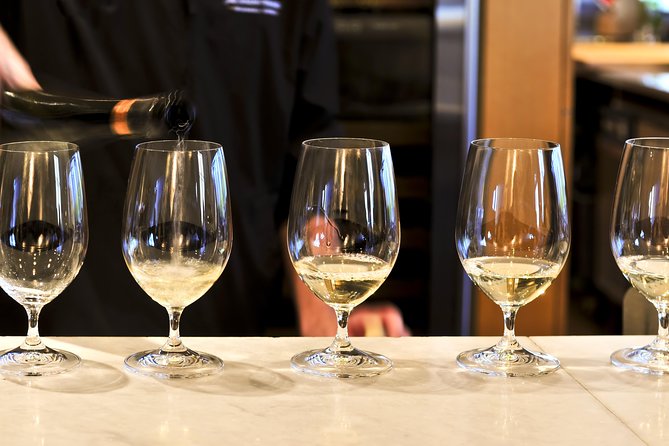
- Three winery visits: Taste Riesling, Sylvaner, Pinot Blanc, Gewürztraminer, Muscat, and Pinot Gris across three different Alsatian producers.
- A maximum of eight people: The compact group allows more questions and a calmer pace than a large coach tour.
- Four village names, flexible access: Mittelbergheim, Dambach-la-Ville, Ribeauvillé, and Riquewihr are part of the planned route, but you may not have time to walk through every one.
- Lunch is on your own: You get a midday break in a small Alsatian town, but food is not included and restaurant choices may be limited outside peak season.
- Strong guide service: Guides including Pauline, Laurence, Jerome, Amelie, Florence, Maxim, and Leticia have been praised for wine knowledge, local context, and warm service.
- Adults only: No one under 18 is allowed, and at least two adults are needed for the tour to operate.
Meeting your guide in central Strasbourg
The day begins at 9:00 a.m. outside the tourist information office at 17 Place de la Cathédrale, right in the center of Strasbourg. You meet your English-speaking driver-guide there and climb into an air-conditioned minivan.
This central meeting point is practical if you are staying near the cathedral or the Grande-Île. Hotel pickup is not included, so leave extra time to reach the square. At the end of the day, you return to the same meeting point, apart from a Christmas-period arrangement when the minivan may stop just outside the historic center.
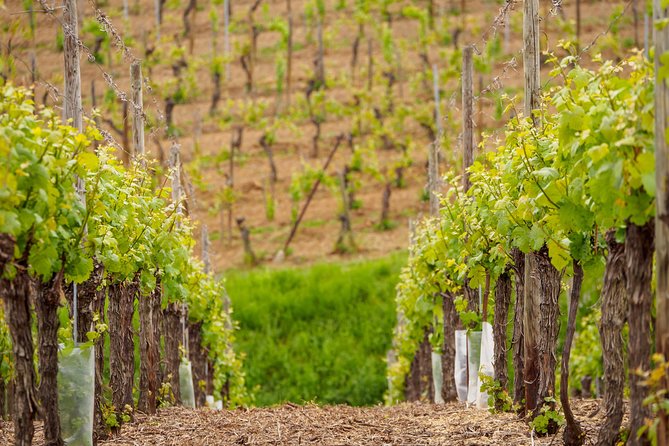
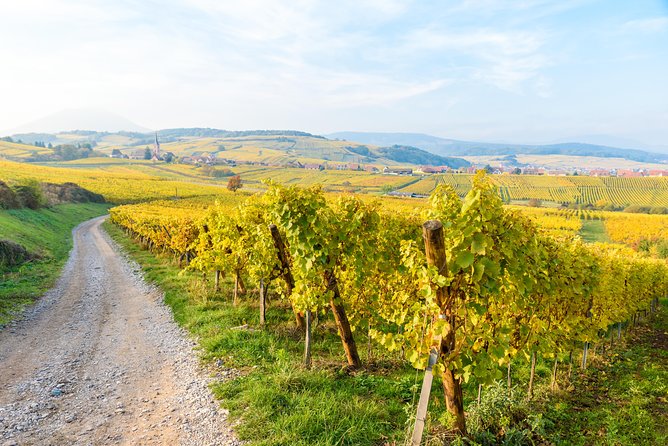
The drive matters here. Alsace’s Wine Route stretches about 170 kilometers along the lower Vosges, passing hundreds of vineyards and a string of villages with steep-roofed houses, fortified gates, and narrow lanes. You are not simply being shuttled from one tasting room to the next. The road itself is a major part of the experience.
The group limit of eight is one of the best practical features. You get a minivan rather than a bus, and you can ask about grape varieties, village customs, vineyard families, or the way Alsace changed between French and German rule without trying to catch the guide’s attention across a crowd.
More Food Tours in Strasbourg
- Strasbourg Food Tour – A Taste of Tradition by Do Eat Better
★ 5.0 · 614 reviews - From Strasbourg: Medieval Villages & Wine Tasting Day Trip
★ 4.8 · 329 reviews - Alsace Wine Route Small Group Half-Day Tour with Tasting from Strasbourg
★ 4.5 · 291 reviews
Mittelbergheim and the first Alsatian whites
Your first wine stop is the Mittelbergheim area, home to the Kastelberg, Zotzenberg, and Wiebelsberg grand cru sites. This is an excellent opening because it introduces the grape that many people wrongly think belongs only to Germany: Riesling.
Alsatian Riesling is often dry, focused, and suited to food. At the first winery, you taste Riesling alongside Sylvaner and Pinot Blanc. That comparison helps you notice how different Alsatian whites can be, even when they come from neighboring hills.
Mittelbergheim is also a good place to hear about terroir, the combination of soil, slope, exposure, and weather that shapes a wine. The guide can connect what you see outside the window with what you taste in the glass. That makes the first tasting more useful than a simple list of pours.
The tastings are not built around snacks. In France, food is often left out so it does not alter the wine’s flavor. Have a substantial breakfast, and drink water when it is available. Three generous tastings over a full day can add up quickly, even when each individual pour seems modest.
Dambach-la-Ville and the cellar experience
The next stop is Dambach-la-Ville, one of the region’s major wine-producing villages. The area is linked with Frankstein grand cru, one of Alsace’s most respected wine sites, as well as classic Riesling and Gewürztraminer.
Here you taste wine in a traditional caveau, or cellar. The setting can be part of the charm. You may get a close look at the less polished side of wine production, where small family producers work in old spaces rather than glossy visitor centers.
That authenticity has a tradeoff. One account of the tour found a second tasting room cold and plain, more like a basement or garage than a finished cellar. This is useful to know before booking: the operator intentionally uses a mix of established estates and small producers, so the rooms will not all have the same comfort or style.
I would see this as a matter of expectation rather than a flaw by itself. If you want a sleek tasting bar with perfect lighting, this may feel rough around the edges. If you want to understand how smaller Alsatian wineries actually operate, the informal setting may be one of the day’s more honest moments.
The guide fills an important role at this stop. A good guide explains how the local soil and climate affect Riesling and Gewürztraminer, translates technical points into plain language, and keeps the tasting moving without making you feel hurried.
Lunch in a small village
Around midday, you stop for lunch at your own expense. The break gives you time to eat and walk around a village rather than spending every minute in a cellar.
The precise lunch town can vary. Bergheim has been used as a stop, and its main street offers a pleasant place to stretch your legs. Other outings have included a break in a different small village. The important point is that you should not treat lunch as a fully planned restaurant experience.
Outside the busy season, some restaurants may be closed or operating limited hours. Ask your guide for a recommendation as soon as the morning begins, especially if you have dietary needs or want a proper sit-down meal. Food is not included, and the tour does not promise snacks during the tastings.
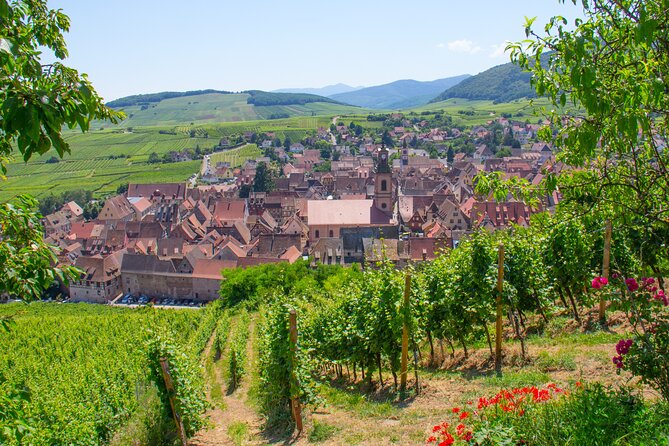
This is also your best chance to walk at your own pace. Alsatian villages reward a slow look at doorways, shop signs, fountains, and half-timbered facades. You do not need a long museum visit to enjoy the character of these places.
More Wine Tours in Strasbourg
- Alsace: Full-Day Wine Tour & Tastings from Strasbourg
★ 4.8 · 125 reviews - Medieval Villages and Wine Tasting from Strasbourg
★ 5.0 · 55 reviews
Ribeauvillé, Riquewihr, and the grand cru country
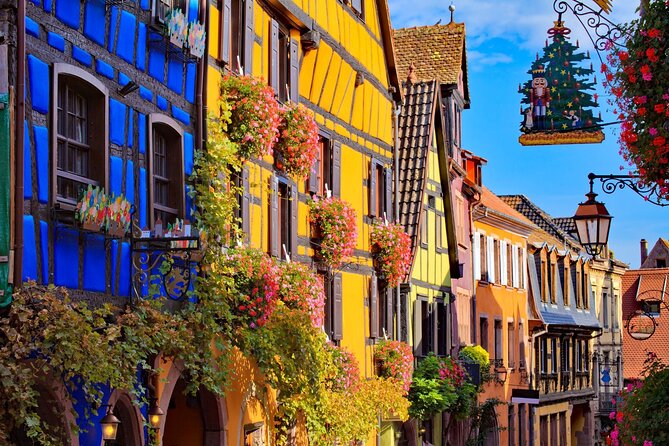
After lunch, the route turns toward the Ribeauvillé and Riquewihr wine area. The surrounding grand cru sites include Kirchberg, Osterberg, Geisberg, Schoenenbourg, and Sporen.
Riesling again leads the conversation, but the area also produces notable Muscat, Gewürztraminer, and Pinot Gris. By this point, your palate has enough reference points to compare the grapes more thoughtfully. You can begin to separate a floral Gewürztraminer from a crisp Riesling or a rounder Pinot Gris without treating every white wine as the same.
The villages are a major reason to choose this tour instead of a simple winery transfer. Ribeauvillé has an attractive old center and a strong connection to the surrounding vineyards. Riquewihr is especially picturesque, with the sort of preserved streets and colorful facades that make it one of Alsace’s most sought-after stops.
But keep the village promise in perspective. The route includes the Ribeauvillé and Riquewihr area, yet the actual walking time can depend on traffic, the selected wineries, and local events. During the Christmas market period, road closures and congestion can make access to Riquewihr difficult. You may pass through the area without getting a long independent visit.
If Riquewihr is your top priority, ask about the day’s planned stops before you commit. The tour is strongest as a combined wine and countryside outing, not as a guaranteed walking tour of every named village.
Three wineries and a look at Alsace wine families
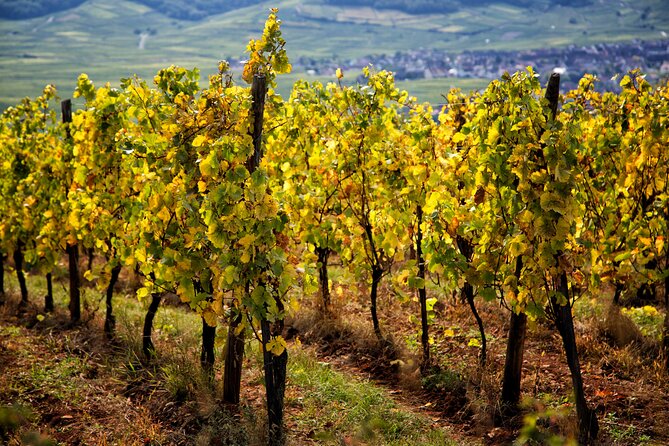
The final tastings bring the total to three wineries. Across the day, the producers may differ in size and style, from small family cellars to more modern or established operations.
That variety is valuable. You are not tasting one estate’s interpretation of Alsace all day. You get a broader idea of how the region works, how wine families present their bottles, and how production methods can vary from one cellar to another.
The Hugel and Trimbach families are among the long-established Alsatian names discussed during the route. Their stories help place your tasting in a wider local tradition. Many Alsace wine families have worked in the region for generations, and the wine is closely tied to village identity and family property.
The quality of the visits may not be identical. Two wineries may offer lively explanations and generous pours, while another may feel less engaged. In that situation, the guide becomes central. Guides such as Laurence, Pauline, Jerome, and Maxim have been praised for carrying the educational side of the visit, answering questions, and adjusting the wines to the group’s preferences.
I would not book this expecting every bottle to be a once-in-a-lifetime discovery. The selection aims to show the region rather than guarantee a lineup of famous labels. Some people found the wines good but not exceptional for the cost. Others bought bottles to ship home, including one group that purchased 12 bottles after the tastings.
Why the guide can make or break the day
The driver-guide is not only handling the roads. You rely on this person to explain the grapes, connect the villages to the wine, manage the timing, and help you decide where to eat.
The strongest praise has gone to guides who combine facts with genuine warmth. Pauline has been singled out for hospitality and practical recommendations. Laurence has been praised for adjusting the tasting choices to the group. Jerome has made a strong impression with explanations of vineyards, grapes, and local history. Maxim has helped people connect wine with Alsatian culture and daily life.
Those details matter because a small-group tour feels personal only when the guide uses the format well. With eight people or fewer, you should have room for questions and conversation. The group may also become social as the day progresses, particularly after three tastings and a shared lunch break.
There is still some guide-to-guide variation. One account found the commentary about the villages thinner than expected, while the wine explanation was stronger. If you want long walking tours in every village, say so early and ask how much free time is possible.
Is $260.12 a fair price?
At $260.12 per person, this is not a budget outing. You are paying for an eight-hour day, an English-speaking driver-guide, air-conditioned transport, and three tastings in a small group. Lunch, extra drinks, hotel transfers, insurance, and personal purchases cost more.
The value depends on what you would otherwise need to arrange. Renting a car means dealing with unfamiliar roads, parking, and the obvious problem of driving after wine tastings. Booking separate winery visits can also be awkward because small producers may not all accept casual drop-ins.
For me, the price makes the most sense if you want convenience and interpretation. You are buying a full day in the countryside without having to organize three cellar appointments or choose a safe driver. The value is weaker if your main goal is to visit only the most famous estates or if you expect every tasting room to feel luxurious.
The three tastings are included, but the quality and size of the pours can vary by producer. Since snacks are not provided, budget for lunch and eat well before departure. Wine purchases are optional and not part of the tour cost.
Who should book this Alsace Wine Route tour?
I would choose this outing if you have one day in Strasbourg and want a broad introduction to Alsace wine. It suits adults who like white wine, small villages, regional food, and local stories more than formal sightseeing checklists.
It is particularly useful for first-time visitors. You can learn the basic Alsatian grapes, see the vineyard zone, compare several producers, and get a feel for villages that would be difficult to connect in one day without a car.
You may want a different plan if you dislike wine tastings, need a fully accessible or highly structured itinerary, or care more about a long visit in Riquewihr than about the wineries. Children under 18 cannot join, pets are not allowed, and the tour requires at least two adults to run.
The experience also requires good weather. If poor conditions cancel the outing, you are offered another date or a full refund. The booking itself is otherwise non-refundable and cannot be changed, so check your plans carefully before paying.
FAQ
Where does the tour start?
The meeting point is 17 Place de la Cathédrale, 67082 Strasbourg, France, at the tourist information office in central Strasbourg.
What time does the tour begin?
The tour starts at 9:00 a.m. and lasts approximately eight hours.
Where does the tour end?
The experience ends back at the meeting point in Strasbourg. During the Christmas period, the return point may be just outside the Grande-Île district, with the exact address arranged with the guide.
How many people can join?
The tour has a maximum of eight people.
Are children allowed?
No. This is an adults-only tour, and children under 18 are not permitted.
How many wineries will I visit?
You will visit three wineries and receive three wine tastings.
Which wines might I taste?
The planned tastings include Riesling, Sylvaner, Pinot Blanc, Gewürztraminer, Muscat, and Pinot Gris. Grand cru wines may also be included.
Is lunch included?
No. Lunch and other food and drinks are at your own expense. Snacks are not usually provided during the tastings.
Is hotel pickup included?
No. You must make your own way to the central Strasbourg meeting point. Transport between Strasbourg and the wine route is provided in an air-conditioned minivan.
Is the tour available every day of the year?
It is not available on December 25 or January 1. It may also be canceled if the weather is poor or if the minimum number of two adults is not reached.
Should you book it?
Book this tour if you want a relaxed, well-organized day of Alsatian wine, village scenery, and regional explanation without driving. The small group, generous tastings, and consistently warm guide service are the strongest reasons to go.
Just keep your expectations realistic. You may visit an informal cellar, have a simple lunch break, or lose a planned village walk to traffic or seasonal closures. If you accept that flexibility, $260.12 can be fair for the convenience and range. If Riquewihr alone is your priority, arrange a separate visit so the town does not depend on the day’s route.
Recently added around Strasbourg
- From Strasbourg: Half-Day Tour of Alsace Villages★ 4.7 · 50 reviews
- Medieval Villages and Wine Tasting from Strasbourg★ 5.0 · 55 reviews
- Strasbourg City Center Guided Bike Tour w/ Local Guide★ 5.0 · 57 reviews
- Strasbourg Food Tour : Gourmet private Tour with tastings★ 4.7 · 58 reviews
- Private Tour: From Strasbourg to Colmar, Eguisheim, Riquewhir★ 4.5 · 58 reviews
- Capture the Magic of Strasbourg with an Exclusive Photoshoot★ 4.9 · 61 reviews
- FULL DAY ALSACE PRIVATE TOUR : Tailored by your Friendly Driver★ 5.0 · 76 reviews
- Explore Strasbourg in 60 minutes with a Local★ 5.0 · 82 reviews
Wine Tours, compared.
Authentic Parisian Gourmet Food Tour with 10 Local Dishes & Wines
Read our review →
Loire Valley Castles Day Trip from Paris with Complementary Wine
Read our review →
Bordeaux: Cité du Vin Entry Ticket and Wine Tasting
Read our review →
Bordeaux: River Garonne Cruise with Glass of Wine and Canelé
Read our review →
Montmartre Hill French Gourmet Food and Wine Tasting Walking Tour
Read our review →
Paris: Montmartre Cheese, Wine & Pastry Guided Walking Tour
Read our review →
From Paris: Loire Valley Castles Day Trip With Wine Tasting
Read our review →
From Bordeaux: Afternoon Saint-Emilion Wine Tasting & snack
Read our review →Browse the lists this tour appears in