
Reviewed · COOKING CLASSES
Amazing Sweet Crêpe Cooking Class Paris
Crepes taste better when you make them. This three-hour Paris class combines hands-on cooking with Breton food traditions, and I especially like the small group of no more than eight and the chance to learn directly from Stephane, an energetic restaurant chef. You also cook and eat your own sweet crepes, rather than watching a demonstration from the sidelines.
The class begins at 3:45 pm in Montmartre and includes coffee, tea, and soda. The main drawback is the length: three hours includes plenty of talking and teaching, so younger children may lose focus, and the class is not suitable for people with celiac disease, lactose intolerance, or vegan diets.
In This Review
- Key points about this Paris crepe class
- A three-hour Paris lesson built around sweet crepes
- Meeting Stephane at Caramel Sarrasin
- Mixing batter and learning the Breton basics
- Working the billig and making your own crepes
- Sweet toppings and the afternoon tea party
- Photos, a gift, and the recipe for home
- Why the $105.86 price can make sense
- Who should book this class
- Getting there and planning the afternoon
- Is three hours too long?
- My verdict: book it if you want more than a dessert
- FAQ
- Where does the sweet crepe cooking class meet?
- What time does the class start?
- How long does the experience last?
- Does the class include drinks?
- What food is prepared?
- Is the class suitable for children?
- Is the class suitable for special diets?
Key points about this Paris crepe class
- Stephane leads the class: His humor, energy, patience, and clear instruction are central to the experience.
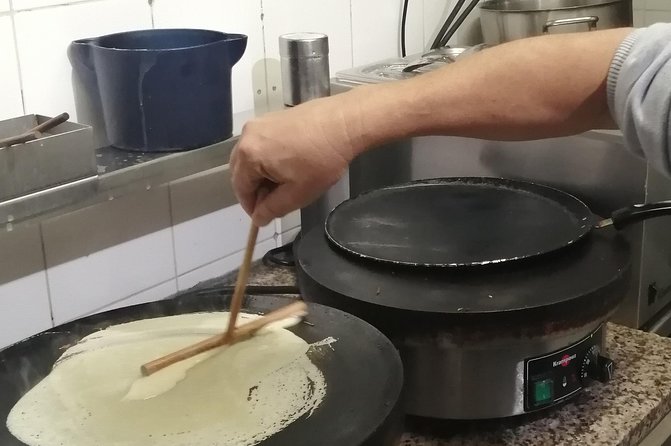
- You use professional crepe tools: Learn to spread batter with a Breton rozell rake and cook on a professional billig griddle.
- The lesson goes beyond recipes: You cover batter technique, cooking methods, the difference between sweet crepes and savory galettes, and Breton food traditions.
- The group stays intimate: With a maximum of eight people, you have a better chance to take part rather than simply watch.
- You finish with a tea-time party: Eat your crepes with toppings, drinks, photos, and a small gift.
- The recipe comes afterward: The recipe is sent by email, making it possible to repeat the class at home.
A three-hour Paris lesson built around sweet crepes
This is not a quick snack stop. Set aside about three hours for a proper cooking lesson, starting at 3:45 pm and finishing back at Caramel Sarrasin, at 47 Rue du Faubourg Montmartre in the ninth arrondissement.
The timing is useful if you want a relaxed afternoon activity after sightseeing. It is less useful if you have a tightly packed evening schedule. The class is long enough to include explanation, cooking, eating, and a closing photo and gift presentation, but you should not book it immediately before a fixed dinner reservation.
The focus is sweet wheat pancakes, the familiar French crêpe. Still, the teaching also covers galettes, the savory Breton cousin made in a different style. That extra context gives the meal more meaning. You are not only learning how to prepare a dessert. You are learning why French menus separate crepes and galettes, and how Breton food traditions shape both.
More Workshops in Paris
- Fragonard Paris: Mini Perfume Workshop
★ 4.5 · 1,924 reviews - Paris Cooking Class and Lunch with Wine plus Market Visit Option
★ 5.0 · 1,024 reviews - Paris Croissant Small-Group Baking Class with a Chef
★ 5.0 · 910 reviews
Meeting Stephane at Caramel Sarrasin
The class takes place at Caramel Sarrasin, a restaurant and cooking setting near public transportation. You meet at the restaurant, and the activity ends in the same place, so there is no need to arrange a separate ride between stops.
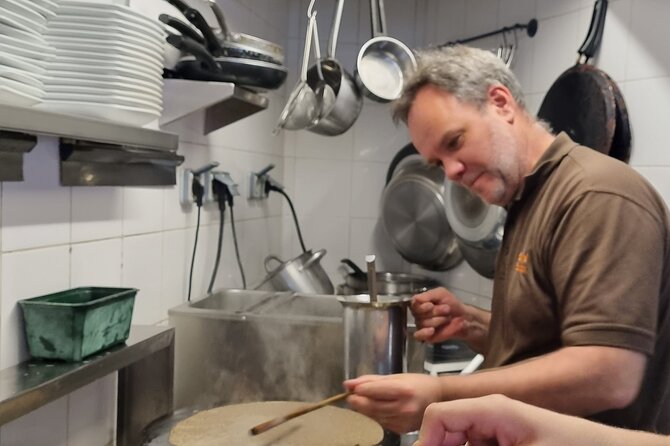
Stephane is the personality at the center of the class. His style is lively, funny, and encouraging. He brings plenty of energy, but the teaching is not just a performance. He explains the ingredients, gives cooking tips, and encourages people to take part.
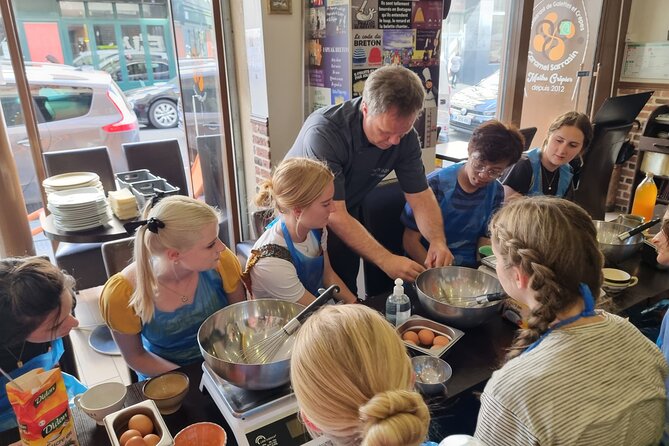
That matters in a small class. A cooking lesson can feel awkward when the instructor does everything while you stand nearby. Here, the format is designed for participation. You might crack eggs, weigh flour, mix batter, spread it on the griddle, and try the cooking movements yourself. The exact division of tasks may vary with the group, but the class is clearly intended to be hands-on.
Stephane also keeps solo participants involved. You do not need to arrive with a partner or family group. The maximum of eight people gives the class a shared, social feel without turning it into a large demonstration.
Mixing batter and learning the Breton basics
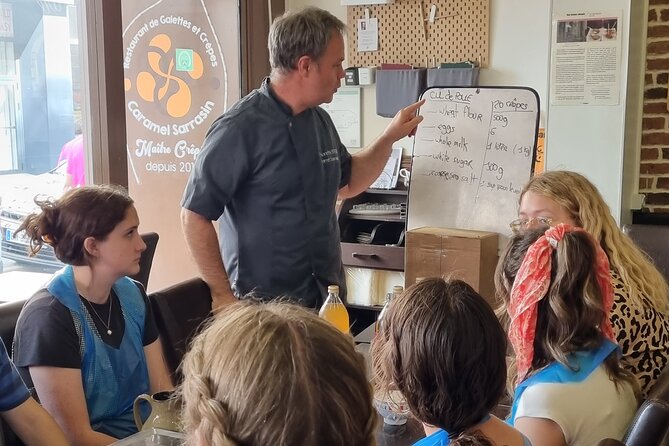
The first practical task is making the batter correctly. That sounds simple, but the class pays attention to technique, including how to get a smooth mixture without lumps. This is one of the most useful parts for home cooks because the basic method applies long after your Paris visit.
You learn the role of the ingredients and the proper way to combine them. Stephane also shares professional tips that can improve ordinary pancakes at home. The experience is not presented as a complicated culinary exam. Beginners are welcomed, and the instructor’s patience helps children and first-time cooks take part.
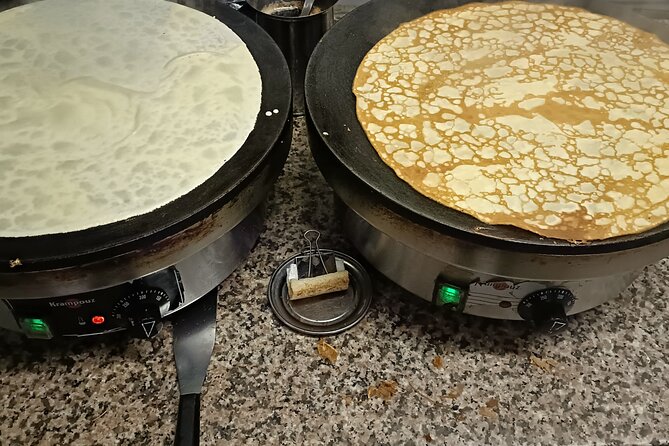
The lesson also brings in food history, geography, and language. You learn about Brittany, the region closely linked with crepes and galettes, along with Breton terms for the tools and cooking process. The billig is the professional crepe griddle, while the rozell is the wooden rake used to spread batter across the hot surface.
These details are more than decoration. Once you understand the tools and the purpose of the spreading motion, the cooking process makes more sense. You can see why a crepe requires a different touch from an ordinary skillet pancake.
Working the billig and making your own crepes
The best part for many people is moving from explanation to action. You use the professional griddle, spread the batter, cook the pancake, and learn how to flip and fold it.
This is where the class earns its price. You are not simply told how a chef cooks. You get a chance to try the technique with guidance close at hand. The first crepe may be a practice round, but the class is structured around the pleasure of improving as you go.
The small group helps here. With only eight places, Stephane can offer encouragement and corrections without the room becoming chaotic. You can watch other people try the same technique, which is often useful when you are still figuring out how much batter to use or how quickly to spread it.
Families should pay attention to the age rule. Children must be at least eight years old. An eight-year-old can take part in tasks such as cracking eggs, weighing flour, and eating the finished crepes, but the full class includes a fair amount of explanation. A child who cannot sit and listen for extended periods may find three hours tiring.
Older children and teenagers appear to be a particularly good match. The activity gives them something physical to do, and the end result is immediate: they cook food and eat it. It also works well for mixed-age family groups, since adults can enjoy the food background while younger participants focus on the cooking.
More Cooking Classes in Paris:
- Paris: Montmartre Cheese, Wine & Pastry Guided Walking Tour
★ 4.8 · 2,255 reviews - Paris: Macaron Class at Galeries Lafayette
★ 4.3 · 905 reviews - Paris: French Croissant Baking Class with a Chef
★ 4.9 · 712 reviews - Paris Cooking Class: Learn How to Make Macarons
★ 5.0 · 634 reviews
Sweet toppings and the afternoon tea party
After the cooking comes the reward. You taste the sweet wheat crepes during a tea-time gathering, with coffee, tea, and soda included.
The menu is not presented as a long restaurant meal. The listed dessert is a sweet wheat pancake, and the class centers on sampling the crepes you prepare. Still, the food is substantial enough that some people find their finished portions can cover an evening meal, depending on how much you make and what toppings are served.
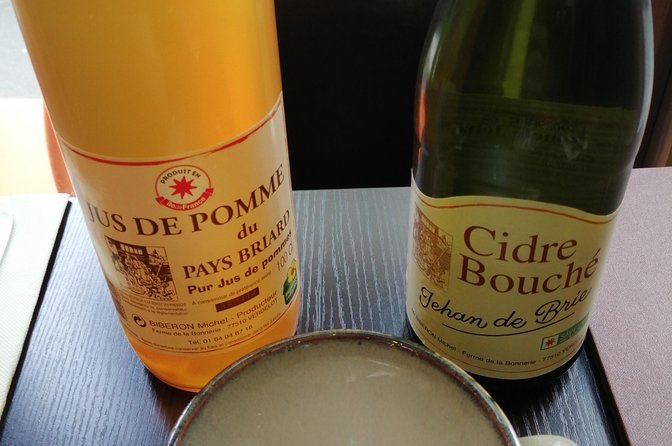
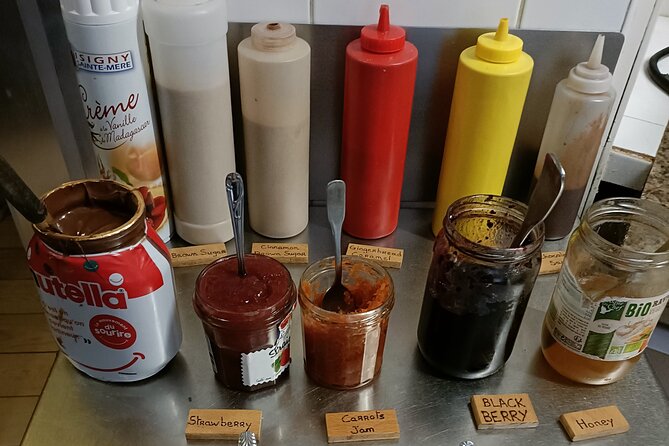
Toppings add variety to the final tasting. Homemade caramel is a particular highlight, and you can also expect different toppings to try with your crepes. If you enjoy caramel, buying some of Stephane’s homemade version to take home is suggested by the experience itself and is a practical souvenir for the kitchen.
The tea-time format also gives the group a chance to relax. You have been concentrating on batter and griddle work, so sitting down with a drink and your food creates a natural finish. It is social without requiring a formal meal service.
Keep dietary limits in mind before booking. The class is not suitable for celiac guests, people who are lactose intolerant, or vegans. The supplied information does not describe substitutions, so you should not count on the standard recipe being adapted.
Photos, a gift, and the recipe for home
The activity ends with photos and gift giving. That closing moment is a nice touch for families and friends who want a shared memory beyond the food itself.
The recipe is sent to you by email after the class. This is one of the strongest practical benefits. Many cooking classes are enjoyable but difficult to repeat because the recipe is vague or forgotten. Here, you leave with written instructions and the confidence gained from making the batter and cooking it yourself.
The recipe also gives the experience a life after Paris. You can make crepes for family and friends, and children who took part can repeat the process at home. The lesson teaches a useful kitchen skill rather than offering only a one-time tasting.
Make sure the correct email address is provided when booking. The recipe is delivered electronically, so an incorrect address could mean missing the most useful souvenir.
Why the $105.86 price can make sense
At $105.86 per person, this is not a budget dessert outing. You are paying for roughly three hours, a small class, instruction from an active restaurant chef, ingredients, drinks, hands-on access to professional equipment, and the final tasting.
The value is strongest when you want an activity rather than just food. A crepe at a Paris restaurant costs far less than the class, but it does not teach you how to mix lump-free batter, spread it with a rozell, or work a billig. It also does not give you a recipe, guided practice, photos, or a shared group experience.
The price works especially well for a family or small group that enjoys cooking together. It can also suit a solo participant because the class encourages people to work together. If you only want a quick dessert or have no interest in cooking, the cost and three-hour commitment may feel excessive.
The high satisfaction level supports the idea that the activity delivers what it promises. The experience has a five-star rating from 233 reviews, with 100 percent recommending it. That does not remove the dietary and scheduling limits, but it does show a very consistent response to Stephane’s teaching and the food.
Who should book this class
I would choose this class for:
- Families with children aged eight and older
- Teenagers who enjoy cooking or hands-on activities
- Couples wanting a break from museum visits and monuments
- Solo participants who like meeting people in a small group
- Anyone interested in Breton food traditions
- Home cooks who want a reliable crepe method
- Visitors who enjoy a lively instructor and plenty of conversation
It is particularly good for a family with children of different ages. The youngest eligible child can help with simple preparation, while older teenagers and adults can try the more technical griddle work.
It may not suit you if you prefer a quiet, short, highly structured lesson. Stephane’s style is energetic and talkative, and the class includes food history, language, and cultural explanation. That is a plus for some people and a drawback for anyone who wants to cook with minimal instruction.
The experience also requires a willingness to eat the standard sweet crepe preparation. Those with celiac disease, lactose intolerance, or vegan diets should skip it unless the provider confirms an appropriate adaptation before booking.
Getting there and planning the afternoon
The meeting point is Caramel Sarrasin at 47 Rue du Faubourg Montmartre, 75009 Paris. The location is near public transportation, but private transportation is not included, so you arrange your own route to the restaurant.
Plan to arrive with enough time to find the address before the 3:45 pm start. Since the class ends at the meeting point, you can continue your evening from the same neighborhood without arranging a return transfer.
The class is commonly reserved well ahead, with an average booking lead time of 37 days. That is useful planning information, especially if your Paris dates are fixed or you want a particular afternoon. Book early during popular travel periods, but remember that free cancellation is available up to 24 hours before the start time.
A cancellation made less than 24 hours before the activity is not refunded, and late changes are not accepted. The class also needs a minimum number of participants. If the provider cancels because that minimum is not reached, you are offered another date or experience, or a full refund.
Is three hours too long?
Three hours is a serious portion of a Paris afternoon. The length includes instruction, preparation, repeated cooking attempts, eating, photos, and the gift presentation. It is not three hours of constant griddle work.
That pacing is good for people who want to understand the process. You have time to hear about crepes and galettes, watch the technique, try it yourself, and enjoy the results without being rushed.
For a young child, the talking may be the weak point. An eight-year-old can participate, but the class is not designed as a nonstop children’s entertainment session. Parents should judge their child’s patience honestly.
For teenagers and adults, the length is more likely to feel worthwhile. You leave with both a meal and a skill, and the class can break up a museum-heavy or sightseeing-heavy day.
My verdict: book it if you want more than a dessert
I recommend the Amazing Sweet Crêpe Cooking Class Paris if you want a friendly, hands-on activity with real food instruction. Stephane’s energy, the intimate group size, the professional tools, and the Breton background give the class substance beyond a simple pancake demonstration.
Book it for a family afternoon, a solo social activity, or a cooking-minded break from sightseeing. Skip it if you need dietary substitutions, dislike long lessons, or only want to grab a fast crepe. For everyone else, the combination of cooking, cultural context, tea, photos, and a recipe to use at home makes the $105.86 fare reasonable.
FAQ
Where does the sweet crepe cooking class meet?
The class meets at Caramel Sarrasin, 47 Rue du Faubourg Montmartre, 75009 Paris, France.
What time does the class start?
The start time is 3:45 pm.
How long does the experience last?
The activity lasts approximately three hours.
Does the class include drinks?
Yes. Coffee, tea, and soda are included.
What food is prepared?
The listed dessert is a sweet wheat pancake, or sweet crepe. The lesson also explains the difference between sweet crepes and savory galettes.
Is the class suitable for children?
Children must be at least eight years old. The class is not suitable for children under eight.
Is the class suitable for special diets?
No. It is not suitable for people with celiac disease, lactose intolerance, or vegan diets.
Recently added around Paris
- Private Half-Day Guided Tour of Paris★ 4.5 · 48 reviews
- 2 hour outdoor group activity in Paris: SAINT GERMAIN★ 5.0 · 48 reviews
- Paris Dinner Show Opera Bel Canto★ 4.5 · 48 reviews
- Paris Vintage Tour by Night on a Sidecar with Champagne★ 5.0 · 48 reviews
- Secrets & Scandals of the Louvre – Limited to 6 Guests★ 5.0 · 48 reviews
- Paris Photoshoot: Eiffel Tower Exclusive Private Experience★ 5.0 · 48 reviews
- From Paris: Versailles Full-Day Guided Tour with Lunch★ 4.9 · 48 reviews
- Paris: Louvre Mona Lisa Discovery Guided Tour with Ticket★ 4.9 · 48 reviews
Cooking Classes, compared.

Paris: Montmartre Cheese, Wine & Pastry Guided Walking Tour
Read our review →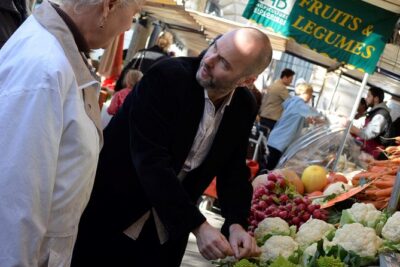
Paris Cooking Class and Lunch with Wine plus Market Visit Option
Read our review →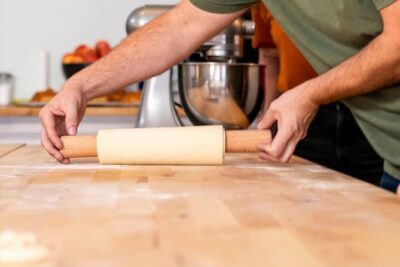
Paris Croissant Small-Group Baking Class with a Chef
Read our review →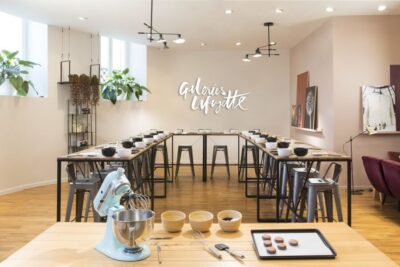
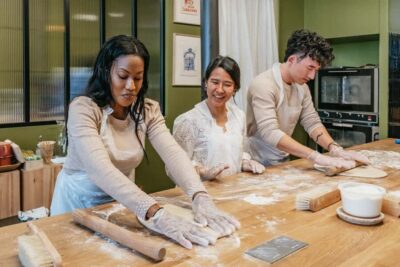
Paris: French Croissant Baking Class with a Chef
Read our review →
Paris Cooking Class: Learn How to Make Macarons
Read our review →
A Morning in Paris Food Tour: Croissants, Baguettes & Chocolate
Read our review →Browse the lists this tour appears in