
Reviewed · WINE TOURS
Burgundy Wines Masterclass in Dijon
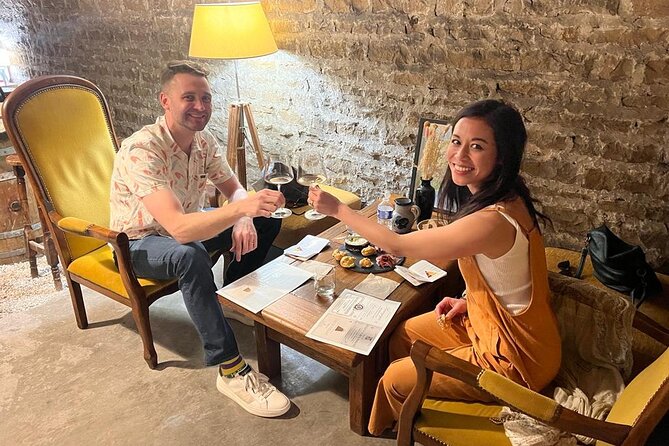
Burgundy makes more sense after two hours here. The Burgundy Wines Masterclass in Dijon turns a famously tricky wine region into something you can actually follow, with six regional wines, local cheese, and charcuterie served along the way. I especially like the clear lesson on Burgundy labels and the relaxed chance to ask questions without feeling rushed. The main drawback is the fixed 4:30 p.m. start, although another time may be arranged if you ask.
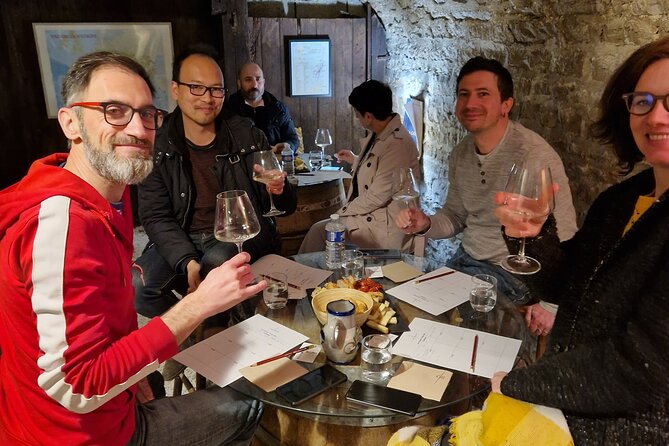
This is not a quick pour-and-go tasting. Matthieu, Pauline, or another guide leads you through grape varieties, wine areas, production rules, aromas, and the logic behind Burgundy’s crus. The setting is an underground cellar, and the small maximum of nine people keeps the session personal. It is a strong choice for beginners, but serious wine fans will also find plenty to chew on.
In This Review
- Key points to know before booking
- Why Burgundy wine needs a class
- Starting with the right way to taste
- Six wines across Burgundy
- Cheese, charcuterie, and the useful part of pairing
- An underground cellar with a personal feel
- How the two-hour schedule works
- The advice that continues after the tasting
- Is $110.10 a fair price?
- Who should book this Dijon tasting?
- Should you book the Burgundy Wines Masterclass?
- FAQ
- Where does the Burgundy Wines Masterclass begin?
- Where does the experience end?
- What time does the masterclass start?
- Can I request a different time?
- How many people can attend?
- How many wines are included?
- Is food included?
- Is the tasting offered in English?
- Can I cancel for a full refund?
Key points to know before booking
- Six Burgundy wines, including some Premier Cru: You taste across the region rather than trying one local bottle in isolation.
- A practical lesson in Burgundy labels: The class explains villages, vineyards, classifications, and production rules in plain English.
- Aroma training before tasting: Scent exercises help you identify fruit, spice, floral notes, and the influence of terroir.
- Local food pairing included: Cheese and charcuterie give you a useful way to compare how wine changes with food.
- Small groups capped at nine: The format leaves room for personal questions and adjustments to your level.
- Dijon cellar setting: The activity begins and ends at 1 Av. Junot, 21000 Dijon, with public transportation nearby.
Why Burgundy wine needs a class
Burgundy is one of France’s most rewarding wine regions, but its labels can feel like a puzzle designed by someone who dislikes tourists. A bottle may emphasize the village or vineyard rather than a famous producer, and the classification system does not work like the one used in many New World wine regions.
That is why a guided tasting can be more useful than simply ordering several glasses at a wine bar. Here, the lesson connects the label to the place, grape, and production rules. You are not just told that one bottle is more prestigious than another. You learn what the words mean and how to judge the wine in your own glass.
The class covers the different areas within Burgundy, along with the region’s main grapes and winemaking traditions. The emphasis is not only on memorizing names. It is on understanding why wines from nearby places can taste different and why a Premier Cru bottle carries a different classification from a village wine.
I like this approach because Burgundy is best appreciated with context. Without it, a red wine may seem simply light, earthy, or polished. With some background, you can start asking better questions: Is the character coming from the grape, the vineyard, the vintage, the producer, or the way the wine was made?
More Wine Tours in Dijon
- Dijon: La Cave du Palais Burgundy Wine Tasting Experience
★ 4.8 · 400 reviews - Small-Group Full-Day Tour of Côte de Nuits, Côte de Beaune Vineyards and Beaune Historical District
★ 5.0 · 364 reviews - Pinot Noir Masterclass – Wine tasting in Dijon
★ 5.0 · 147 reviews
Starting with the right way to taste
The session begins with an explanation of how to taste wine properly. The method follows the systematic approach used by the Wine & Spirit Education Trust, commonly known as WSET. Matthieu reached the school’s highest level in London last year and has ten years of experience leading tastings for both amateurs and professionals.
That does not mean you need formal wine training. The lesson is presented for regular people who want to understand what they are drinking. You will be guided through the basic sequence of looking, smelling, tasting, and thinking about the finish and structure.
The aroma work is one of the most useful parts. You may be asked to identify scents before tasting, with examples linked to fruit, spice, flowers, and other wine aromas. This can feel a little like a guessing game, which helps keep the class light. It also gives you a better vocabulary for describing what you smell instead of falling back on it tastes good.
The guides spend real time on how aromas change. That includes the effect of age and the way a wine can open up during the few minutes after a bottle is poured. If you have always wondered why people swirl a glass or pause before taking a sip, this section gives those habits a practical purpose.
Six wines across Burgundy
The tasting includes six Burgundy wines, with some Premier Cru examples. That number is enough to show contrast without turning the afternoon into a blur of glasses.
The point is not to race through a long list. Each wine supports the lesson about Burgundy’s areas, grapes, classifications, or styles. You might compare different expressions of white and red Burgundy, then discuss how the wines differ in aroma, texture, acidity, body, and finish.
Some sessions may include a blind tasting element. That adds a useful test: first judge what is in the glass, then consider how much the label influences your expectations. It is a good reminder that classification and price are not the same thing as personal enjoyment.
This is also where the class works for different skill levels. If you are new to Burgundy, you get a framework for the region. If you already know wine, you can ask about particular producers, appellations, vintages, or less familiar bottles. Matthieu has been praised for adjusting the level to the group, and Pauline has also been described as making the material approachable for all levels.
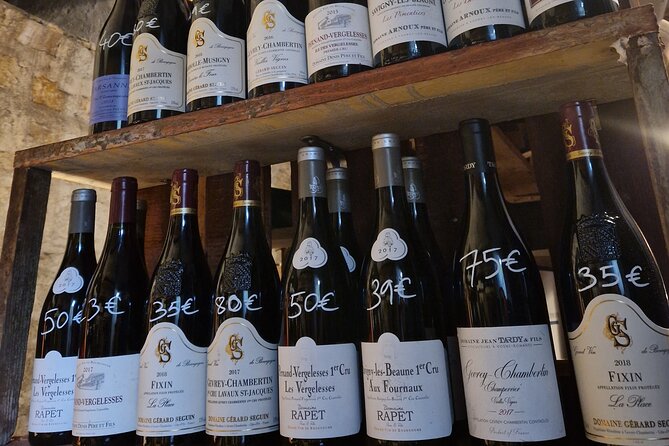
The selection appears to focus on quality and value rather than simply chasing Grand Cru names. One of the most appealing details is the chance to taste serious Burgundian wine without paying Grand Cru prices for every bottle. For a visitor who wants to understand what makes Burgundy special, that is a smarter use of two hours than buying several expensive bottles at random.
Cheese, charcuterie, and the useful part of pairing
A plate of local cheeses and charcuterie is served during the activity. This is more than a snack, especially if you are trying to understand wine pairing.
Food changes the way wine tastes. Salt, fat, creaminess, and texture can make a wine seem softer, sharper, fuller, or more balanced. Tasting the wines with local meats and cheeses gives you a direct comparison rather than a lecture about pairing rules.
The food also makes the class more social. You are seated with something to eat while the discussion continues, and the pace remains relaxed. In some sessions, homemade gougères have also been served, adding another local touch, though you should not assume they are included every time.
Tell the provider about allergies, intolerances, or dietary requirements before the session. Cheese and charcuterie are part of the planned experience, so this information matters. The supplied details do not promise a particular substitute menu, so ask in advance rather than hoping the issue can be solved at the cellar.
The class serves alcohol, so it is not suitable for anyone with health issues linked to alcohol. That is an important practical point, especially if you are booking for a group with mixed interests.
More Wine Tours in France:
- Authentic Parisian Gourmet Food Tour with 10 Local Dishes & Wines
★ 5.0 · 4,754 reviews - Loire Valley Castles Day Trip from Paris with Complementary Wine
★ 4.5 · 3,907 reviews - Bordeaux: Cité du Vin Entry Ticket and Wine Tasting
★ 4.6 · 3,885 reviews - Bordeaux: River Garonne Cruise with Glass of Wine and Canelé
★ 4.5 · 3,630 reviews
An underground cellar with a personal feel
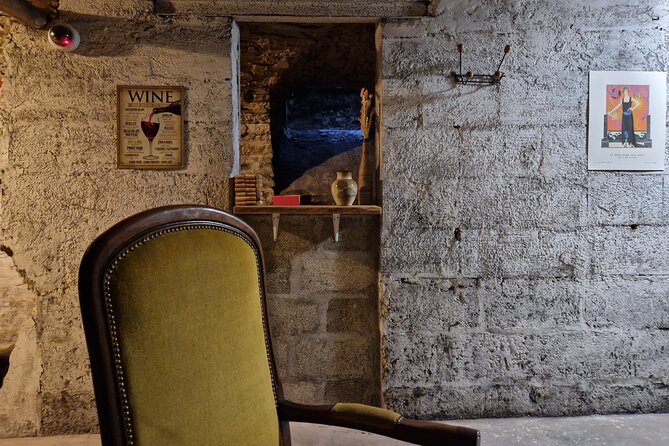
The meeting point is 1 Av. Junot in Dijon, and the activity finishes back there. The location is near public transportation, so you do not need to arrange a separate ride between tasting rooms.
The cellar setting adds atmosphere without turning the class into a performance. You are there to taste and learn, not to pose beside rows of barrels. The intimate space also suits the format, since the maximum group size is nine.
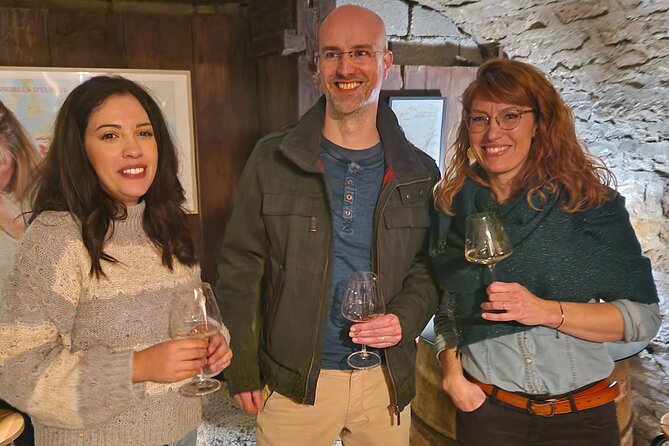
In practice, the group may be smaller. Some sessions have had only two people, and one has even gone ahead with a single participant. That can be a real benefit if you want to ask detailed questions or shape the discussion around your own interests. It can also feel less lively than a full group, depending on your preference.
The experience is described as private, with room to ask any question you like. The guides aim to keep the mood comfortable rather than formal. You will not be expected to prove your wine knowledge, and you should feel free to say when a term or classification is confusing.
Matthieu is the main name associated with the experience, while Pauline also leads sessions. Both have been praised for clear English and a friendly manner. German may be available on request, but you should confirm that before booking.
How the two-hour schedule works
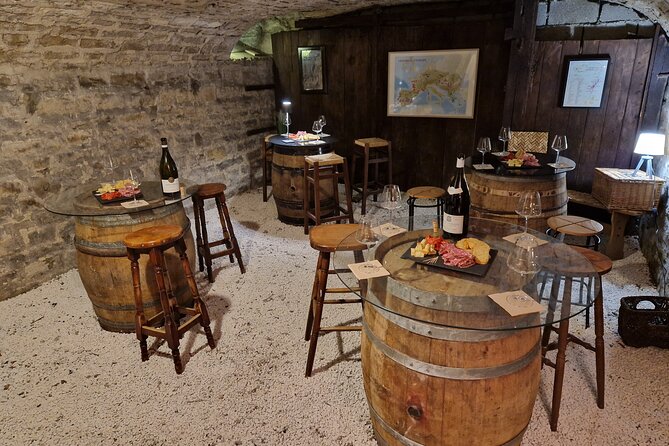
The starting time is 4:30 p.m., making this a convenient late-afternoon activity. It can fit well after a day walking through Dijon and before dinner, though you should leave enough time to reach the meeting point without rushing.
The sequence generally follows this rhythm:
- You begin with the basics of tasting and the aroma exercises.
- The guide introduces Burgundy’s history, culture, grapes, and wine areas.
- You learn how the classification system works and how to read a Burgundy label.
- Six wines are tasted, including some Premier Cru selections.
- Cheese and charcuterie are used to explore pairing and texture.
- Questions and discussion continue throughout the session.
The two-hour length is well judged for an introduction. A shorter tasting would leave you with impressions but little structure. A much longer class could become heavy, especially with six wines. Here, the pace allows time for explanation and conversation.
Do not expect a vineyard visit, a winery tour, or a walk through the countryside. This is an indoor educational tasting in Dijon. If your main goal is to see vines and meet winemakers at their estates, you need a separate outing. If you have limited time and want a strong foundation before visiting Burgundy’s wine villages, this class makes good sense.
The advice that continues after the tasting
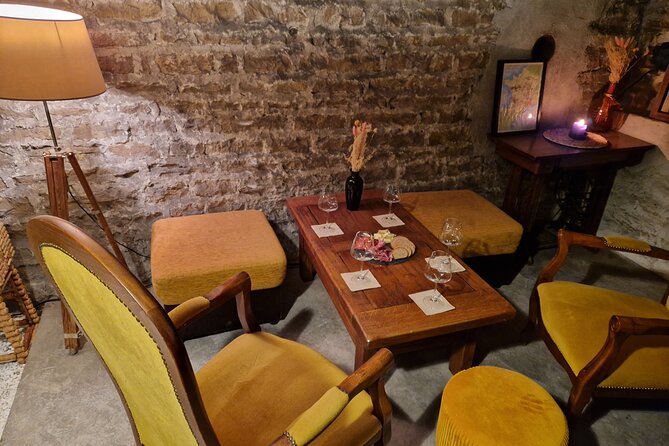
A useful extra is the local advice offered during the conversation. Matthieu has helped participants choose wine venues in nearby cities, suggested places to eat and drink in Dijon, and explained how to combine purchases into one shipment.
That kind of practical help can save money and prevent a common Burgundy mistake: buying based only on a famous name. You can ask which bottles offer good value, how to compare producers, and what to look for when shopping later in your trip.
There is also wine for sale at the cellar. Buying is optional, and you should feel no pressure to purchase simply because you enjoyed a bottle. Still, the opportunity is helpful if you discover a style you like and want to take home something with a clear connection to the lesson.
The class is particularly useful before a vineyard day. You will recognize more of the terms, understand the labels better, and know what questions to ask. It can also work after a vineyard visit, when you want someone to organize the information that may have arrived in a rush.
Is $110.10 a fair price?
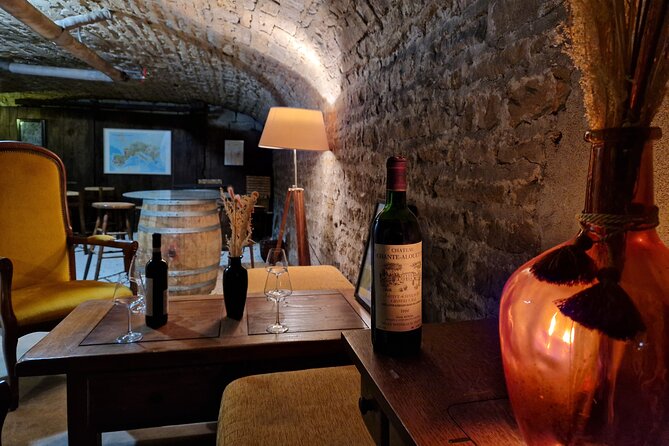
At $110.10 per person, this is not the cheapest tasting in Dijon. The price makes more sense when you count what is included: about two hours of instruction, six Burgundy wines, some Premier Cru pours, local cheese and charcuterie, a small group, and access to a guide with advanced wine training.
You are paying for interpretation as much as for wine. A bottle of Burgundy can cost far more than its label first suggests, and a poorly chosen tasting can leave you with little understanding of what you sampled. This experience aims to help you make better choices afterward.
The value is strongest for three kinds of visitors:
- You are new to Burgundy and want a plain-English introduction.
- You enjoy wine but struggle with French labels and classifications.
- You already know wine and want detailed regional discussion in a small setting.
The price may feel less worthwhile if you want only a casual glass with a plate of snacks. It may also be too introductory if you want a full-day estate tour with vineyard visits and several producers. For the right person, though, the compact format gives you useful knowledge without taking a whole day from Dijon.
Group discounts are available, which could improve the value for a larger party. The maximum is nine people, so ask about the current group rate when booking.
Who should book this Dijon tasting?
I would recommend it to couples, small groups, solo wine enthusiasts, and curious beginners. It is also a good family activity for adults who are legally able to drink, although the alcohol focus means it is not suitable for everyone in every group.
You do not need to know wine terms in advance. The guides can begin with the basics and move into more advanced material if you are ready. That flexibility is one of the strongest features.
I would be especially keen to book it before a Burgundy wine trip outside Dijon. The lesson on labels, crus, and aromas gives you a useful map for the rest of the region. It can also help you spend your wine budget with more confidence.
The fixed 4:30 p.m. time is the main scheduling concern. Contact the provider if you need another slot, since alternate times may be possible. Book ahead too: the experience averages a booking lead time of about 29 days, which suggests that popular dates can fill well before arrival.
Should you book the Burgundy Wines Masterclass?
Book this if you want Burgundy explained by a local expert in a friendly cellar, with enough wine to compare styles and enough time to ask questions. The combination of six wines, Premier Cru examples, aroma training, and food pairing gives you more substance than a standard tasting flight.
Skip it if your priority is a vineyard excursion, a large estate, or a purely social drinking session. This is a class first, though it is delivered with plenty of warmth and good food.
For most wine-curious visitors to Dijon, I think it is a smart use of an afternoon. You leave with a clearer sense of what you like, how to read a Burgundy label, and how to approach the region’s wines without feeling lost.
FAQ
Where does the Burgundy Wines Masterclass begin?
It begins at 1 Av. Junot, 21000 Dijon, France.
Where does the experience end?
The activity ends back at the meeting point on 1 Av. Junot.
What time does the masterclass start?
The standard starting time is 4:30 p.m.
Can I request a different time?
Yes. You can contact the provider to ask about another time slot, and they will try to accommodate the request.
How many people can attend?
The maximum group size is nine people.
How many wines are included?
The tasting includes six Burgundy wines, including some Premier Cru wines.
Is food included?
Yes. Cheese and charcuterie are served during the activity. Local cheeses and charcuteries make up the main pairing plate.
Is the tasting offered in English?
Yes. The experience is offered in English. German may also be available on request.
Can I cancel for a full refund?
You can cancel at least 24 hours before the local start time for a full refund. Cancellations or changes made less than 24 hours in advance are not accepted for a refund. If the minimum number of participants is not reached and the experience is canceled, you will be offered another date or experience, or a full refund.
Recently added around France
- The essential in Bordeaux, private tour with a local★ 4.9 · 48 reviews
- Avignon, Les Baux, St Remy and Arles from MARSEILLE★ 4.5 · 48 reviews
- Visit Avignon and Villeneuve lez Avignon aboard a Double-Decker Bus★ 4.0 · 48 reviews
- 2 hour outdoor group activity in Paris: SAINT GERMAIN★ 5.0 · 48 reviews
- Private Half-Day Guided Tour of Paris★ 4.5 · 48 reviews
- Paris Dinner Show Opera Bel Canto★ 4.5 · 48 reviews
- Blind Test Room & karaoke Montpellier★ 5.0 · 48 reviews
- Cannes: Lérins Islands Private Boat Tour★ 4.9 · 48 reviews
Wine Tours, compared.
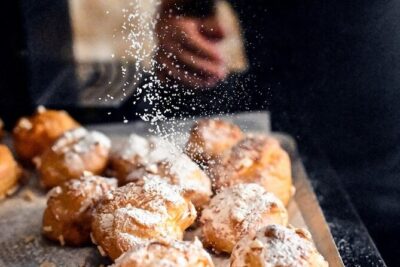
Authentic Parisian Gourmet Food Tour with 10 Local Dishes & Wines
Read our review →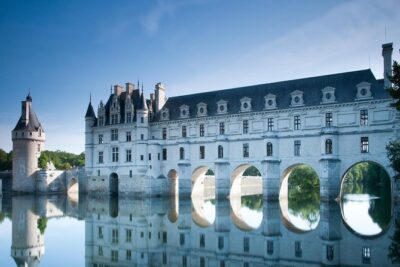
Loire Valley Castles Day Trip from Paris with Complementary Wine
Read our review →
Bordeaux: Cité du Vin Entry Ticket and Wine Tasting
Read our review →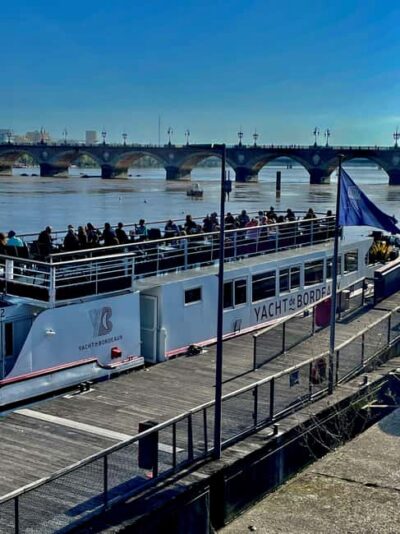
Bordeaux: River Garonne Cruise with Glass of Wine and Canelé
Read our review →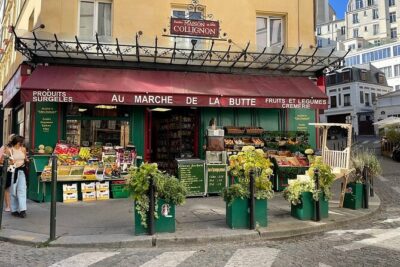
Montmartre Hill French Gourmet Food and Wine Tasting Walking Tour
Read our review →
Paris: Montmartre Cheese, Wine & Pastry Guided Walking Tour
Read our review →
From Paris: Loire Valley Castles Day Trip With Wine Tasting
Read our review →
From Bordeaux: Afternoon Saint-Emilion Wine Tasting & snack
Read our review →Browse the lists this tour appears in