
Reviewed · MUSEUMS
Cave Museum Village Troglodyte of Rochemenier Admission Ticket
Ancient homes hide beneath the French countryside. Rochemenier gives you a clear, affordable look at village life in a troglodyte setting, with underground rooms, old farm buildings, household furniture, tools, and photographs left by the people who once lived there. You explore at your own pace, using an explanatory leaflet available in 18 languages.
I like the authentic farm interiors and the way the museum connects unusual underground architecture with ordinary rural life. I also like the low price, about $10.26 per person, which makes this an easy addition to a day of sightseeing. The main drawback is that the standard visit is self-guided, and the scheduled guided visit is in French only.
The museum receives a 4.4 rating from 143 reviews, with 90 percent of people recommending it. One especially strong assessment calls it a fantastic, interesting, informative visit and praises its immaculate presentation. Bring a sweater, though. Underground freshness is part of the deal.
In This Review
- Key points to know before you go
- Why Rochemenier’s underground homes are worth seeing
- Entering the two preserved farms
- What the furniture and tools reveal
- Following the history from the 13th to the 19th century
- Self-guided touring, French visits, and pacing
- Comfort underground: what to wear and expect
- Opening hours and timing your visit
- Is the $10.26 admission good value?
- Who will enjoy Rochemenier most?
- Booking, cancellation, and final practical advice
- Should you book the Cave Museum Village Troglodyte of Rochemenier?
- FAQ
- How much does admission to the Cave Museum Village Troglodyte of Rochemenier cost?
- How long does the visit take?
- Is the tour guided or self-guided?
- Is an English-language guided tour available?
- What can I see at Rochemenier?
- Can I bring a stroller?
- Can I cancel for a full refund?
Key points to know before you go
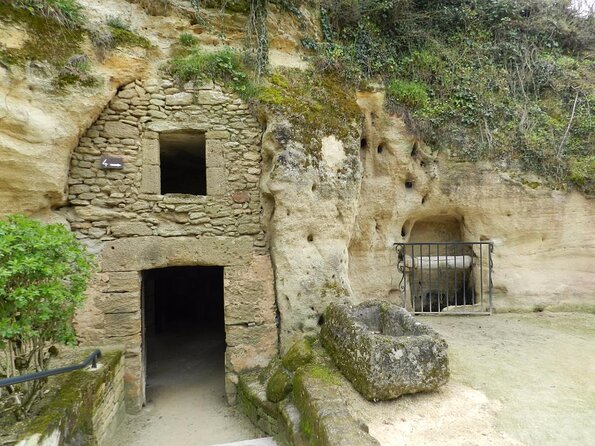
- Two abandoned farms form the heart of the visit: These homes were opened to the public in 1967 and preserve the setting used by Rochemenier’s last inhabitants.
- Around 250 underground rooms tell the larger story: The rooms were cut into sandstone and spread across about 40 farms.
- The village grew for centuries: The oldest known habitation apparently dates from the 13th century, with new rooms added through the 19th century.
- A leaflet makes the self-guided tour accessible: Explanations are available in 18 languages, including English.
- The underground chapel has limited stroller access: Strollers can enter most of the site, but not this one area.
- The visit works best at an easy pace: Plan on roughly one to three hours, depending on how closely you study the displays.
Why Rochemenier’s underground homes are worth seeing
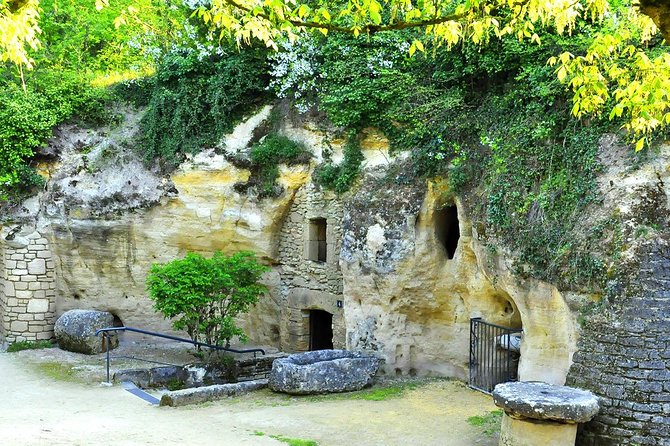
Rochemenier is not simply a collection of caves. It is a former working village, shaped by practical needs over many generations. As the population grew, residents excavated additional rooms into the rock. The result is an underground settlement of roughly 250 rooms spread among about 40 farms.
That detail changes how you look at the site. You are not just admiring unusual stone chambers. You are seeing how families made homes, farms, storage areas, and work spaces in a place where the rock itself supplied the building material.
The oldest habitation apparently dates from the 13th century. Expansion continued up to the 19th century, so the village reflects a long period of adaptation rather than one carefully planned construction project. Rooms were added when people needed them, which gives the site a practical, almost improvised character.
The rock is sandstone containing sea shells. It is a calcareous sand, and local farmers used it to reduce acidity in the soil. That is a particularly useful detail because it shows that the rock was not only a shelter. It also played a role in agriculture.
More Museum Tours in France:
- Paris: Louvre Museum Timed-Entrance Ticket
★ 4.6 · 71,977 reviews - Louvre Museum Masterpieces Guided Tour with Access
★ 4.5 · 12,023 reviews - Paris: Louvre Museum Entry Ticket With Host and River Cruise
★ 4.6 · 9,926 reviews
Entering the two preserved farms
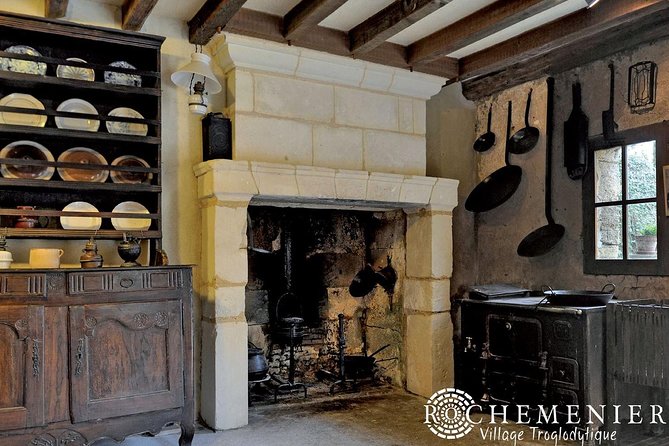
The public visit focuses on part of the village made up of two farms. Both were abandoned toward the beginning of the 20th century, then opened to the public in 1967. Their preserved rooms help you picture the final period of occupation before modern ways of living changed the village.
I like this approach more than a museum made only of labels and reconstructed displays. The rooms themselves are the main object. Furniture, tools, and photographs add human scale, showing how the last inhabitants worked, stored goods, and organized daily life.
Expect a quiet, atmospheric visit rather than a highly staged attraction. You move through spaces that were cut from the rock and examine objects connected with the people who lived there. The photographs are especially useful because they help link the empty rooms to real families and a functioning community.
The museum is described as immaculately presented, and that matters here. Underground sites can feel confusing if rooms are poorly marked or displays are neglected. A tidy presentation makes it easier for you to follow the story and notice the difference between a domestic room, a farm area, and a space shaped by the rock itself.
What the furniture and tools reveal
The furniture and tools are not just decorative antiques. They explain how much of rural life depended on manual work and careful use of available materials.
As you examine the displays, look for the connection between the objects and the rooms around them. A tool makes more sense when you understand the farm setting. A piece of furniture becomes more interesting when you see how a family arranged a home inside an excavated chamber rather than a conventional house.
The photographs provide another layer. They show the people who occupied the farms and help prevent the visit from becoming only an architectural stop. You are reminded that Rochemenier was once a lived-in village, not an abandoned curiosity created for tourists.
This is also where the museum suits different ages well. Children can focus on the unusual underground rooms and tools. Adults may pay more attention to farming, building methods, and the gradual changes in rural life. Since the tour is self-guided, each person can spend more time with the parts that interest them.
Following the history from the 13th to the 19th century
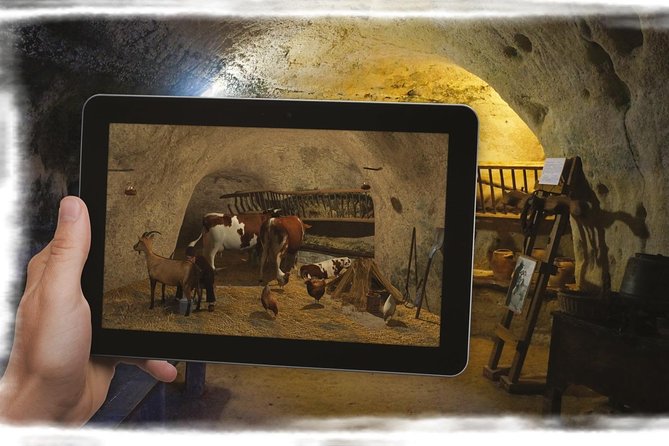
The most interesting idea at Rochemenier is growth over time. The underground rooms did not appear all at once. Residents added them as the village population increased, with excavation continuing for centuries.
That long timeline gives you a useful way to read the site. You can think about how a small habitation developed into a network of farms, and how the same rock supported both shelter and agriculture. The setting illustrates French rural history at a personal level, through homes and work spaces rather than grand monuments.
I find this kind of history particularly valuable because it explains how ordinary people lived. You do not need a specialist background to understand the basic story. The rooms, tools, photographs, and explanatory notes make the past visible without asking you to decode a complicated display.
The leaflet is available in 18 languages, which is a major advantage for an international audience. The regular visit remains independent, so you can read the explanations at your own speed instead of trying to keep up with a group.
A few more France trips worth weighing up
- Disneyland® Paris 1-Day Ticket
★ 4.6 · 49,412 reviews - Paris: Versailles Palace and Gardens Full Access Ticket
★ 4.6 · 41,579 reviews - Paris: Eiffel Tower Entry Ticket with Optional Summit Access
★ 4.4 · 20,035 reviews - Paris: Moulin Rouge Cabaret Show Ticket with Champagne
★ 4.7 · 16,088 reviews
Self-guided touring, French visits, and pacing
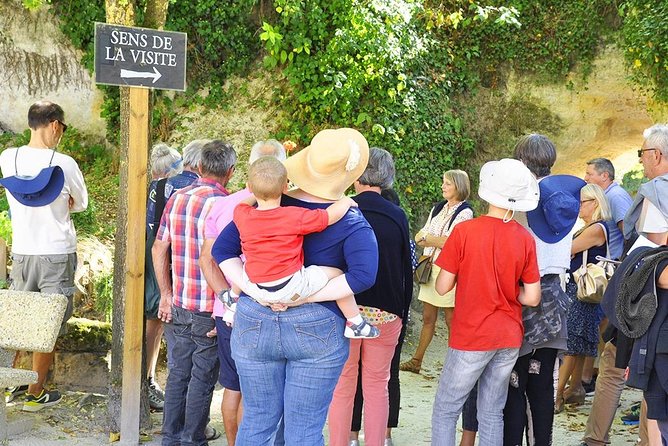
The usual format is a self-guided visit. You receive an explanatory leaflet, and the site lets you set your own rhythm. That flexibility is useful if you are visiting with children, prefer to read carefully, or want to move quickly through areas that interest you less.
A guided visit is available at a specific time, but it is in French only. If you do not speak French, the multilingual leaflet is the better option. It gives you access to the essential information without making an English-language guide part of the booking.
Plan for one to three hours. The shorter end works if you make a brisk circuit and focus on the main rooms. The longer end makes sense if you read the material closely, study the furniture and tools, and take time with the photographs and underground spaces.
There is no need to force the visit into a tight schedule. The $10.26 admission price is modest, and the self-guided format makes Rochemenier easy to pair with other stops in France’s Loire Valley area. The value comes from the combination of a preserved site and a focused museum presentation, not from a long list of organized activities.
Comfort underground: what to wear and expect
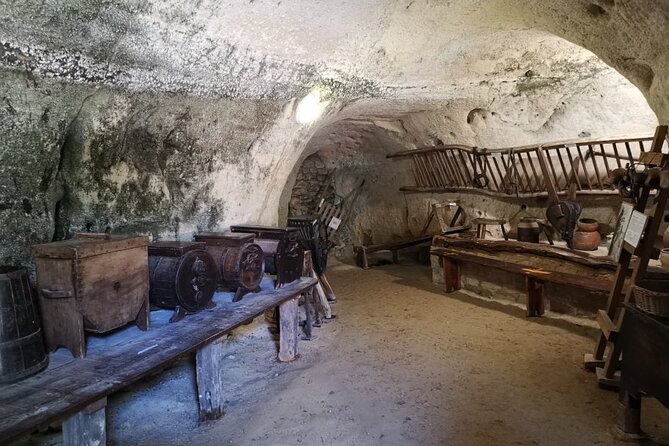
The most useful practical warning is simple: bring a sweater. The underground rooms remain fresh, even when the weather above ground is warm.
That coolness is part of the appeal, but it can become uncomfortable if you arrive dressed only for summer. A light extra layer is enough for most people, and it is an easy item to carry.
Strollers can access most of the site, which helps families with young children. The underground chapel is the exception and cannot be reached by stroller. Service animals are allowed, and the activity is described as suitable for most people.
The visit has a maximum of 15 participants, although the self-guided format means you are not necessarily moving as one tight group. A smaller capacity should help keep the rooms more manageable, especially in the underground sections where space may feel limited.
Opening hours and timing your visit
Opening hours change with the season, so check the date carefully when planning. From January 2 through April 15, 2026, the museum is open Tuesday through Sunday from 10:00 a.m. to 5:00 p.m.
From April 16 through September 15, it opens daily from 9:30 a.m. to 5:30 p.m. From September 16 through November 20, it returns to Tuesday through Sunday hours, 10:00 a.m. to 5:00 p.m.
The schedule means Monday visits are possible during the main spring and summer period, but not during the other listed seasons. If you are building a day around several sights, allow enough time for the museum’s one to three hour range rather than treating it as a quick photo stop.
Advance booking is common, with the activity booked on average 16 days ahead. That does not tell you that every date sells out, but it does suggest that you should reserve ahead if your itinerary is fixed.
Is the $10.26 admission good value?
Yes, particularly if you enjoy historic buildings and prefer to explore independently. For about $10.26, you get entry to an unusual underground village site, the two preserved farms, the museum displays, the furniture and tools, and the photographs connected with the last residents.
The price also reduces the risk of disappointment. You are not paying for a full-day guided excursion or a large entertainment complex. You are paying for a focused cultural visit that can last from one to three hours.
The value is strongest for visitors who want context. If you only want to see dramatic rock formations, Rochemenier may feel too historical and museum-based. The real interest is the combination of architecture, agriculture, and family life.
The self-guided format keeps the cost down, but it also means you should be comfortable reading and making your own way through the displays. The French-only guided option may be useful for French speakers, but English speakers should rely on the leaflet rather than expect an English tour.
Who will enjoy Rochemenier most?
I would recommend this visit to families, history-minded visitors, and anyone looking for a quieter stop away from France’s grand castles and major cities. The unusual setting gives children something concrete to explore, while the furniture, tools, and photographs give adults a clearer sense of rural life.
It is also a good match for independent sightseers. You do not need to follow a guide or maintain a strict pace. You can spend extra time in the rooms that catch your attention and finish the visit when you have seen enough.
People with a strong interest in local building methods will find plenty to consider. The sandstone, sea shells, calcareous material, and agricultural use of the excavated rock connect geology to everyday life.
I would be more cautious if you need a fully guided English-language tour. That is not offered. You should also plan around the underground temperature and the limited stroller access to the chapel.
Booking, cancellation, and final practical advice
Confirmation is received at the time of booking, and free cancellation is available if you cancel at least 24 hours before the experience begins. Cancellations made less than 24 hours before the start time are not refunded, and late changes are not accepted.
I would book in advance if Rochemenier is an important part of your route, especially during the daily opening period from April 16 through September 15. Before setting out, check the opening day for your season, bring a sweater, and allow more than an hour if you enjoy reading museum explanations.
The strongest praise for this experience centers on its informative presentation and careful upkeep. That is exactly what you want from a small rural museum: clear interpretation, preserved rooms, and objects that make an unfamiliar way of life understandable.
Should you book the Cave Museum Village Troglodyte of Rochemenier?
Book it if you want a reasonably priced, self-guided look at authentic rural history in an unusual underground setting. The two preserved farms, 250-room village, old tools, furniture, and photographs offer much more than a quick look at caves.
Skip it if you are searching for an English-speaking guided tour or a large attraction with constant activity. Rochemenier is slower and quieter. Its reward is the chance to see how generations of French farmers adapted homes and work spaces to the rock beneath them.
For most visitors already sightseeing in the region, the modest admission price and flexible one to three hour visit make it an easy recommendation. Bring your sweater, take your time, and let the ordinary details do the storytelling.
FAQ
How much does admission to the Cave Museum Village Troglodyte of Rochemenier cost?
Admission is about $10.26 per person.
How long does the visit take?
The visit takes approximately one to three hours, depending on how quickly you move through the rooms and displays.
Is the tour guided or self-guided?
The usual visit is self-guided, with an explanatory leaflet available in 18 languages. A guided visit is offered at a specific time in French only.
Is an English-language guided tour available?
No. An English guided visit is not included. English speakers can use the explanatory leaflet.
What can I see at Rochemenier?
You can explore part of the underground village, including two former farms. The displays include furniture, tools, and photographs connected with the last inhabitants.
Can I bring a stroller?
Strollers can access the site, except for the underground chapel, which is not accessible by stroller.
Can I cancel for a full refund?
Yes, if you cancel at least 24 hours before the experience start time. Cancellations made less than 24 hours ahead are not refunded.
Recently added around France
- The essential in Bordeaux, private tour with a local★ 4.9 · 48 reviews
- Avignon, Les Baux, St Remy and Arles from MARSEILLE★ 4.5 · 48 reviews
- Visit Avignon and Villeneuve lez Avignon aboard a Double-Decker Bus★ 4.0 · 48 reviews
- 2 hour outdoor group activity in Paris: SAINT GERMAIN★ 5.0 · 48 reviews
- Private Half-Day Guided Tour of Paris★ 4.5 · 48 reviews
- Blind Test Room & karaoke Montpellier★ 5.0 · 48 reviews
- Paris Dinner Show Opera Bel Canto★ 4.5 · 48 reviews
- Cannes: Lérins Islands Private Boat Tour★ 4.9 · 48 reviews
Museums, compared.


Louvre Museum Masterpieces Guided Tour with Access
Read our review →
Paris: Louvre Museum Entry Ticket With Host and River Cruise
Read our review →
Les Invalides: Napoleon’s Tomb & Army Museum Entry
Read our review →
Louvre Museum – Exclusive Guided Tour (Entry Included)
Read our review →
Paris: Louvre Museum Hosted Entry and Mona Lisa Audioguide
Read our review →
Paris: Louvre Museum Tour Mona Lisa & Iconic Masterpieces
Read our review →
Browse the lists this tour appears in