
Reviewed · COOKING CLASSES
Croissant Baking Class, Mastering the Art with a Pastry Chef
Fresh pastry makes a fine Paris souvenir. This three-hour class at Studio Pâtisserie gives you hands-on practice with croissant dough, butter, folding, rolling, and shaping, rather than simply watching a chef work. I especially like the maximum group size of eight, which leaves room for personal help, and the relaxed teaching style praised by people who worked with Chef Leo and Maria. The main catch is that this is real dough work, so you need some strength for kneading and should not expect a quick demonstration followed by instant pastries.
The class costs $143.92 per person, a serious price for a baking lesson, but the value improves if you want a skill you can use at home. You learn the full process, receive recipes or detailed tips, and may leave with a generous batch of baked goods. It is best suited to people aged 17 and older who enjoy food, learning, and getting their hands messy.
In This Review
- Key Points at a Glance
- Starting at Studio Pâtisserie on Rue de Rome
- Working the Dough With Individual Help
- Shaping Croissants and Pain au Chocolat
- What Happens While the Pastries Bake
- Taste, Texture, and the Take-Home Payoff
- Why the Eight-Person Limit Matters
- The Three-Hour Pace and Paris Planning
- Who Will Get the Most From This Class
- Booking Details Worth Knowing
- Should You Book the Paris Croissant Class?
- FAQ
- Where does the croissant class begin?
- How long does the baking class last?
- How much does the experience cost?
- Is the class offered in English?
- How many people can attend?
- What is the minimum age?
- Do I need physical strength for the class?
- Can I cancel for a full refund?
Key Points at a Glance
- Small groups of up to eight: You work at your own station and have a better chance of getting direct help.
- Chef Leo and Maria lead the class: Their warm, funny, patient approach is a major part of the experience.
- Croissants and pain au chocolat: You practice shaping both classic crescent pastries and chocolate-filled pastries.
- A lesson in lamination: You learn how butter and dough become many delicate pastry layers through folding and rolling.
- Useful take-home guidance: Recipes and practical measurements help you repeat the process at home.
- A hands-on Paris activity: This is a good change of pace from museums, monuments, and crowded sightseeing routes.
Starting at Studio Pâtisserie on Rue de Rome
The class begins at Studio Pâtisserie, at 85 Rue de Rome in Paris’s 17th arrondissement. The studio is near public transportation, and the address is reported as easy to find, an important detail when you are trying to arrive on time with flour-free clothes and a tight sightseeing schedule.
The activity starts with an introduction to French pastry making. Your chef explains the role of flour, butter, and other ingredients before moving into the working method. This opening matters because croissants are not just bread shaped into a crescent. The ingredient quality, measurements, temperature, folding, and resting all affect the final texture.
You will likely appreciate the clear structure. The instruction is designed to keep beginners moving without making experienced home bakers feel ignored. The chefs explain each stage, demonstrate the technique, then help you apply it yourself.
Chef Leo receives particularly strong praise for his humor, patience, and easygoing manner. Maria is also described as friendly, engaging, and good at keeping the class interactive. The tone sounds more like a welcoming kitchen lesson than a formal culinary school, which suits a holiday activity.
More Workshops in Paris
- Fragonard Paris: Mini Perfume Workshop
★ 4.5 · 1,924 reviews - Paris Cooking Class and Lunch with Wine plus Market Visit Option
★ 5.0 · 1,024 reviews - Paris Croissant Small-Group Baking Class with a Chef
★ 5.0 · 910 reviews
Working the Dough With Individual Help
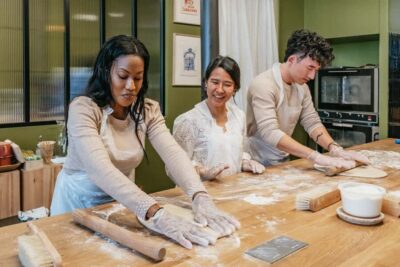
The heart of the class is the dough. You roll it out, fold it, and work with butter to create the layers that give a croissant its flaky bite. This is called lamination, and it is the key skill you are paying to learn.
You will not simply stand beside the chef while a finished pastry appears. You get dough to handle, rectangles to roll, and pieces to shape. One class account describes the process as producing a 16-layer pastry without major trouble, a useful sign that the method is broken down into manageable steps.
The small group size helps here. With eight people at most, the chef can check your rolling, correct awkward folds, and help when the butter or dough does not behave as planned. That one-on-one attention is worth more than it might sound. Croissant dough can look simple in a photograph, but small errors in shape and thickness affect the bake.
You should be ready for physical work. The instructions specifically note that strength is needed to knead the dough, and you will be rolling out several rectangles during the process. A participant offered useful advice for anyone planning to repeat the recipe at home: write down the different dimensions used for the butter, lamination, final rolling, and pastry cuts.
If you use the metric system, pay attention to the measurements. People from the United States may need to convert length, weight, and volume when recreating the recipe. Your phone can handle the conversions, but it is wise to save the measurements before you leave.
Shaping Croissants and Pain au Chocolat
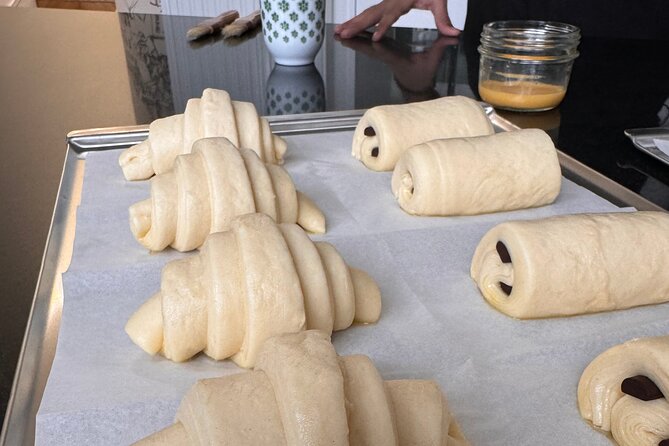
Once the dough has been rolled and layered, the class turns to shaping. You learn how to cut pieces into rectangles and triangles, then form the familiar crescent shape. This is where the lesson becomes especially satisfying because the pastry starts looking like a real croissant instead of a slab of dough.
You also shape pain au chocolat. These pastries use the same laminated dough but offer a different form and filling. Learning both gives you more flexibility at home and makes the class feel like a fuller pastry lesson rather than a single-recipe demonstration.
The chefs guide the process step by step. If your shapes are uneven, that is part of the learning. The aim is not to produce identical bakery-window pastries on the first try. You are learning how the dough stretches, where to place the chocolate, and how to form pieces that can bake properly.
The class’s strongest quality is its mix of instruction and conversation. Chef Leo is praised for sharing baking advice as well as Paris suggestions, while the general atmosphere is described as friendly and relaxed. That can make a technical lesson easier to follow, especially if you are new to laminated dough.
What Happens While the Pastries Bake
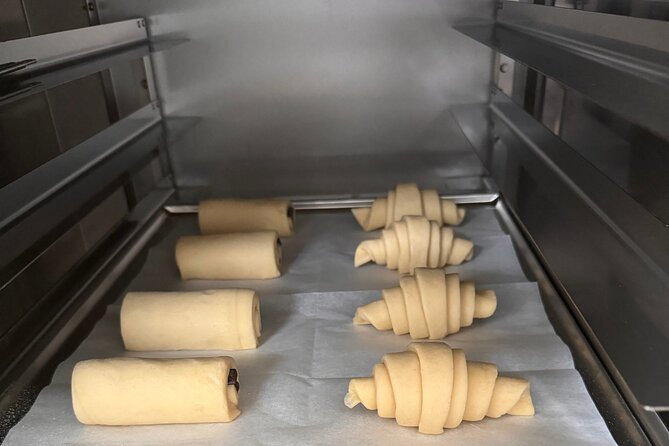
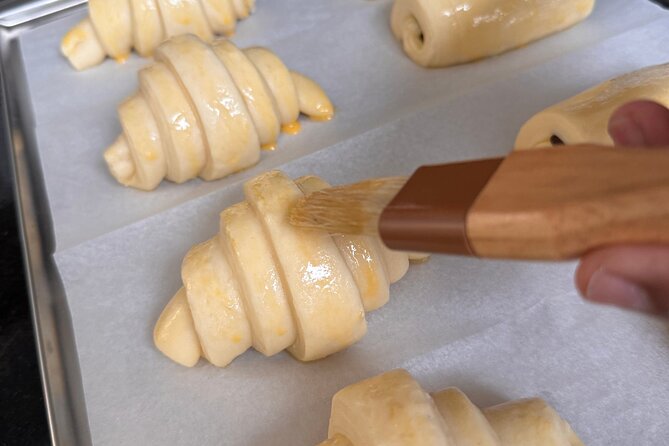
After shaping, the pastries go into the oven. This gives you a natural pause after the most physical part of the class. You can compare your shapes, talk with the other people in the room, and ask final questions while the butter and dough turn golden.
The class is designed around timing rather than a rushed finish. A particularly useful detail is that the dough made by one day’s class can be used by the following day’s class, allowing the dough to receive the proper proofing time. In turn, the next class uses the dough you prepare.
That system means the pastries you bake during your session are not necessarily made entirely from dough mixed moments earlier. This is not a flaw. Proper croissant dough needs time, and the arrangement lets you learn the process while still receiving a properly prepared product at the end.
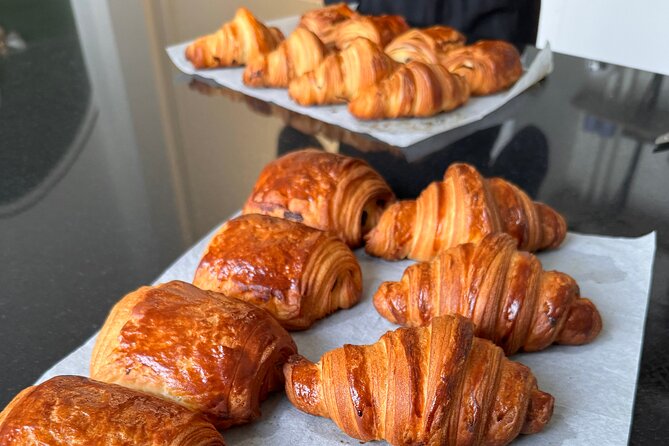
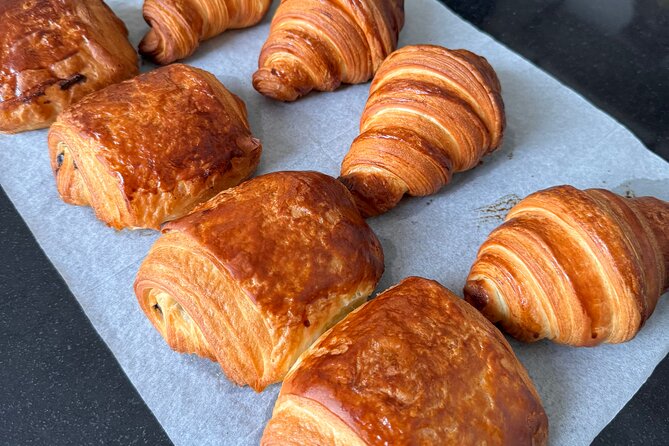
The result is the best part of the lesson: warm, buttery pastries made through your own work. Some class participants describe taking home four croissants and four pain au chocolat each. Another account describes a batch of eight pastries at the end. The exact amount may depend on the session, but you should expect a meaningful edible result rather than one token pastry.
More Cooking Classes in Paris:
- Paris: Montmartre Cheese, Wine & Pastry Guided Walking Tour
★ 4.8 · 2,255 reviews - Paris: Macaron Class at Galeries Lafayette
★ 4.3 · 905 reviews - Paris: French Croissant Baking Class with a Chef
★ 4.9 · 712 reviews - Paris Cooking Class: Learn How to Make Macarons
★ 5.0 · 634 reviews
Taste, Texture, and the Take-Home Payoff
Fresh croissants are difficult to beat, and the class puts that lesson right in front of you. The ideal pastry should have a golden outside, a buttery smell, and delicate layers that pull apart rather than crumble into a heavy lump.
People who took the class repeatedly praised the taste, with some calling the results the best buttery croissants they had eaten in Paris. That is high praise in a city where every bakery window creates competition. You should still keep expectations sensible: your first batch may not look perfectly uniform, but the pleasure is in learning why.
The take-home result adds value to the price. At $143.92, the class is not a cheap snack stop. You are paying for three hours of instruction, ingredients, studio time, chef attention, and the chance to leave with pastries and recipes.
The strongest value comes if you plan to bake again. Croissants take patience, but the class gives you a practical starting point. You learn the sequence, the dimensions, and the feel of the dough. That is more useful than buying another pastry and forgetting the experience by the next morning.
Why the Eight-Person Limit Matters
A group of eight is small enough to feel personal but large enough to create a social setting. You meet other people who are interested in baking, share the work, and see how different hands shape the same dough.
The class does not seem built for silent, individual study. Conversation is part of the appeal. The chefs use humor and encouragement to keep the room comfortable, and the informal setting helps beginners ask questions without feeling foolish.
For a couple, this makes a pleasant shared activity. One person does not need to be an experienced cook. A husband and wife described one partner as the more confident cook while the other still found the instructions easy to follow with help available.
It can also work well for a family group with older children, but the minimum age is 17. Do not book it for younger children expecting an exception. The kneading and rolling also require enough strength to work the dough properly.
The Three-Hour Pace and Paris Planning
Allow the full three hours. The class includes an introduction, dough work, lamination, rolling, cutting, shaping, baking, and time to enjoy the results. The activity ends back at Studio Pâtisserie, so you can plan your next stop from the same neighborhood.
I would not place this class immediately before a timed museum entry or a train departure. Baking involves several stages, and the listed duration is approximate. Give yourself breathing room, especially if you want to linger over the finished pastries or ask questions about making them at home.
The location near public transportation makes it easier to fit into a day in Paris. Still, check your route before leaving, since arriving late could mean missing the opening explanation and the first dough demonstration. That early guidance sets up everything that follows.
The class is offered in English, which is helpful if you want to understand technical details such as folding patterns, pastry dimensions, and ingredient measurements. It also makes the lesson accessible to people who do not speak French but want a direct connection with French baking.
Who Will Get the Most From This Class
I would recommend this activity to:
- Couples looking for a shared Paris experience beyond sightseeing
- Home bakers who want to understand laminated dough
- First-time pastry makers who prefer patient instruction
- Adults interested in French food and practical skills
- Small groups celebrating a trip with a hands-on activity
- People who want recipes and techniques they can use after returning home
It is less suitable if you want a passive food tasting or a short activity. You will knead, roll, measure, and shape. The work is part of the fun, but it can feel demanding if your idea of a Paris morning is sitting in a café with no flour on your sleeves.
You should also consider the price. If you judge the class only by the cost of the pastries, it is expensive. If you value a three-hour lesson, personal coaching, a social setting, and a recipe you can repeat, the price becomes easier to justify.
Booking Details Worth Knowing
The experience costs $143.92 per person and is normally booked about 47 days ahead. That booking pattern suggests you should reserve early if your Paris dates are fixed, especially if you want a particular day.
Your booking confirmation arrives at the time of booking, and the activity accepts mobile tickets. Service animals are allowed. The class is limited to eight participants and is offered in English.
Free cancellation is available if you cancel at least 24 hours before the local start time. Cancellations or changes made inside that 24-hour window are not accepted for a refund.
Should You Book the Paris Croissant Class?
Book it if you want more than a pastry to eat. You will learn how butter, flour, rolling, folding, and time work together, then see the result come out of the oven. The warm instruction from chefs such as Leo and Maria, the small group, and the useful home-baking advice make this a strong choice for food-focused visitors.
Skip it if you dislike hands-on work, have limited time, or are looking for a low-cost breakfast. For everyone else, this is a tasty way to spend three hours in Paris and return home with a skill, a recipe, and possibly a box of buttery pastries.
FAQ
Where does the croissant class begin?
The class begins at Studio Pâtisserie, 85 Rue de Rome, 75017 Paris, France.
How long does the baking class last?
The class lasts approximately three hours.
How much does the experience cost?
The listed price is $143.92 per person.
Is the class offered in English?
Yes. The class is offered in English.
How many people can attend?
The class has a maximum of eight participants.
What is the minimum age?
Participants must be at least 17 years old.
Do I need physical strength for the class?
Yes. The activity notes that strength is needed to knead the dough.
Can I cancel for a full refund?
Yes, if you cancel at least 24 hours before the experience start time. Cancellations made less than 24 hours in advance are not refunded.
Recently added around Paris
- Private Half-Day Guided Tour of Paris★ 4.5 · 48 reviews
- 2 hour outdoor group activity in Paris: SAINT GERMAIN★ 5.0 · 48 reviews
- Paris Dinner Show Opera Bel Canto★ 4.5 · 48 reviews
- Paris Vintage Tour by Night on a Sidecar with Champagne★ 5.0 · 48 reviews
- Paris Photoshoot: Eiffel Tower Exclusive Private Experience★ 5.0 · 48 reviews
- Secrets & Scandals of the Louvre – Limited to 6 Guests★ 5.0 · 48 reviews
- From Paris: Versailles Full-Day Guided Tour with Lunch★ 4.9 · 48 reviews
- Paris: Louvre Mona Lisa Discovery Guided Tour with Ticket★ 4.9 · 48 reviews
Cooking Classes, compared.

Paris: Montmartre Cheese, Wine & Pastry Guided Walking Tour
Read our review →
Paris Cooking Class and Lunch with Wine plus Market Visit Option
Read our review →
Paris Croissant Small-Group Baking Class with a Chef
Read our review →
Paris: French Croissant Baking Class with a Chef
Read our review →
Paris Cooking Class: Learn How to Make Macarons
Read our review →
A Morning in Paris Food Tour: Croissants, Baguettes & Chocolate
Read our review →Browse the lists this tour appears in