
Reviewed · NORMANDY TOURS
Full-Day Canadian Battlefields & sites Normandy Tour from Bayeux
The Canadian story begins at Juno. This full-day outing from Bayeux follows Canada’s D-Day landing and the hard fighting that pushed toward Caen, with Juno Beach and the Juno Beach Centre providing the emotional heart of the day. I like the small group, capped at eight, and I like that the route continues beyond the beach to cemeteries, villages, Carpiquet, and Hill 67. The main drawback is the pace: eight hours of history, walking, driving, and solemn stops can feel like a lot to absorb.
You can begin at Bayeux train station, Place de Quebec, or your Bayeux hotel at 8:30 a.m. The air-conditioned minivan keeps transport simple, and the guide does the driving while connecting each place to the next stage of the battle. Pack lunch or plan to buy it locally, since lunch is not included, and bring warm layers for Juno, where winter wind off the Channel can be fierce.
In This Review
- Key points to know before booking
- Why this Canadian-focused Normandy tour matters
- Juno Beach: where the day takes shape
- Juno Beach Centre: people behind the statistics
- Beny-sur-Mer Canadian War Cemetery
- Authie and the route toward Caen
- Abbey d’Ardenne: a painful chapter inland
- Carpiquet and the fight for the airfield
- Hill 67: ending with the wider battle
- What the $161.32 price gets you
- Who should book this day
- Practical advice for a better day
- Should you book the Canadian Battlefields tour?
- FAQ
- Where does the tour begin?
- What time does the tour start and end?
- Is hotel pickup included?
- How many people can join the tour?
- Is lunch included?
- What does the tour price include?
Key points to know before booking
- Juno is only the beginning: You visit the beach, the museum, German bunkers, and several inland battle sites.
- The Canadian focus is unusually strong: The day follows Canadian troops from the June 6 landing toward Caen and Carpiquet.
- The group is small: With a maximum of eight people, you get more room for questions than on a large coach tour.
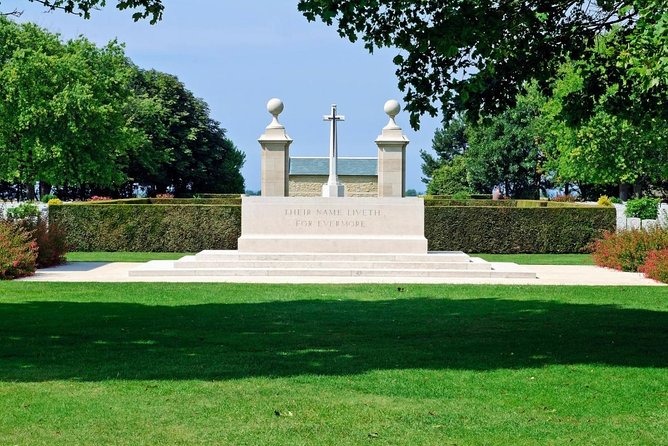
- The cemetery is a quiet high point: Beny-sur-Mer Canadian War Cemetery gives the military story a personal human scale.
- Expect a full day outside: Wind, rain, uneven ground, and repeated stops are part of the experience.
- The price covers the essentials: At $161.32 per person, transport, guide service, hotel pickup in Bayeux, and Juno Beach Centre admission are included.
Why this Canadian-focused Normandy tour matters
Normandy tours often center on the American beaches, especially Omaha, or spread their time across several Allied sectors. This trip takes a different path. It is built around the Canadian landings at Juno and the difficult advance inland during the summer of 1944.
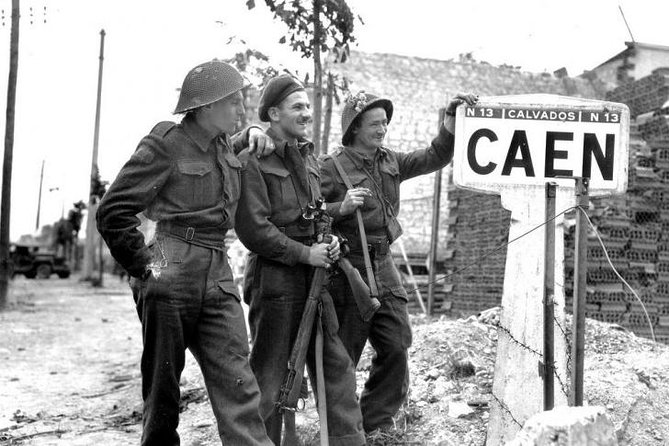
That focus gives the day a clear thread. You begin where Canadian troops came ashore, then follow the route toward Caen and the Carpiquet airfield. Along the way, your guide explains how Canadian forces held positions west of Caen and faced counter-attacks from the German 12th SS Panzer Division.
The numbers are sobering. Three hundred and fifty-nine Canadians died on D-Day, and about 5,500 Canadians were killed during the Battle of Normandy. Across the Second World War, 45,000 Canadians lost their lives. Those figures can feel distant in a book, but the cemetery rows and beach defenses bring them close.
I especially value the way this tour connects the famous landing with the less familiar weeks that followed. Juno was not a single morning of action. Canadian forces fought through villages, roads, fields, and fortified positions for two months. The inland stops help you understand that the battle did not end when the beach was secured.
More full-day trips from Bayeux:
- Normandy American D-Day Beaches Full Day Tour from Bayeux
★ 5.0 · 2,103 reviews - Omaha and Band Of Brothers Full Day Tour
★ 5.0 · 1,104 reviews - From Bayeux: American D-Day Sites in Normandy Full-Day Tour
★ 4.9 · 503 reviews
Juno Beach: where the day takes shape
The first stop is Juno Beach, with about 30 minutes to look around. There is no admission charge, but the setting itself does the work. You are standing along the coast where the 3rd Canadian Infantry Division landed on June 6, 1944, under fire from German strongpoints.
Your guide uses the beach to explain how the assault unfolded. Canadian troops faced machine-gun fire and fortified positions as they moved inland. The open sand makes the exposure easy to grasp, especially when you hear how much ground had to be crossed before reaching cover.
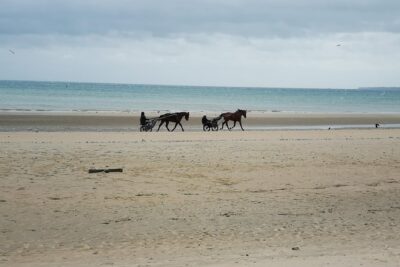
The beach is not a formal museum exhibit. It is a broad, weather-dependent place, so the experience changes with the season. In cold months, wind from the Channel can cut through ordinary clothing. Wear a waterproof jacket and sturdy shoes, and do not count on the coast feeling mild just because the day began pleasantly in Bayeux.
The 30-minute stop is enough for orientation and reflection, but not for a long independent walk. That is one reason the next stop works so well: the museum fills in the details that the open beach cannot provide.
Juno Beach Centre: people behind the statistics
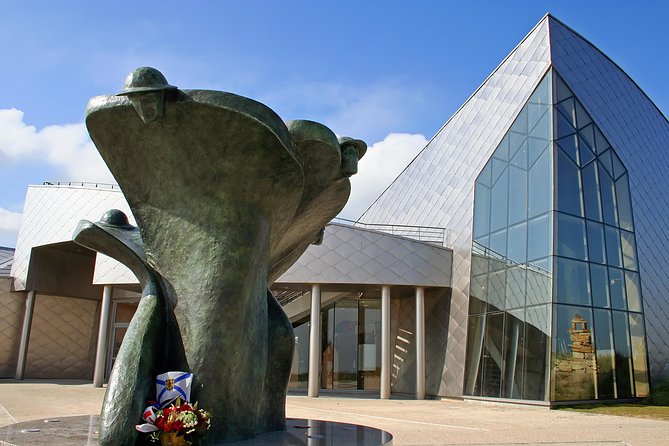
The Juno Beach Centre includes about an hour inside and around the museum, with admission covered in the tour price. Its subject is the Canadian war effort and the people who served, not just the mechanics of the D-Day landing.
Inside, you can expect photographs, archival material, personal accounts, and military artifacts. These details add individual voices to the larger story. The museum also explains Canada’s wider role in the war, giving context to the Normandy campaign instead of treating June 6 as an isolated event.
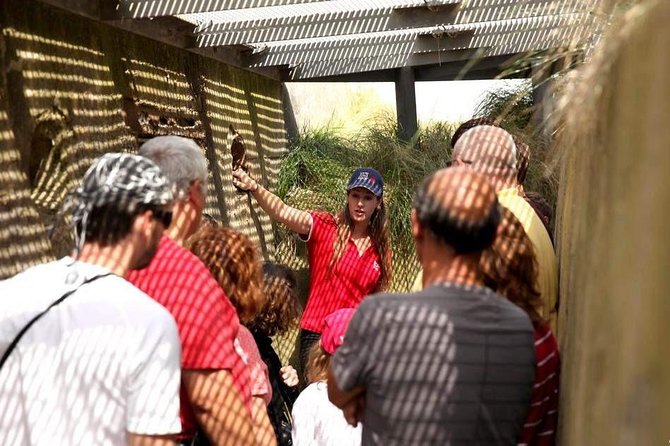
The grounds include excavated German bunkers near the beach. Going into these defenses helps you picture the obstacles facing the landing forces. The bunkers are not a substitute for the museum, but they make the German coastal system easier to understand.
Some departures include a Canadian guide at the center, and past guides have also allowed plenty of time to view the indoor exhibits independently. That balance is useful. You get expert explanation, but you are not forced to move through every display at the same speed.
The museum can also be emotionally heavy. If you prefer a quick visit, one hour may feel long. If you want photographs, first-hand accounts, and artifacts, you will appreciate having time to take it in without rushing.
Beny-sur-Mer Canadian War Cemetery
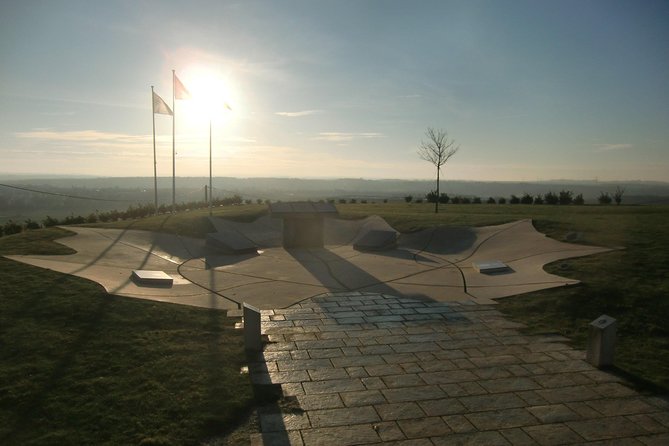
The stop at Beny-sur-Mer Canadian War Cemetery lasts about an hour. For many people, this is the most moving part of the day.
The cemetery gives the campaign a human scale. Instead of hearing a number such as 5,500 Canadian dead, you see row after row of individual graves. The setting is quiet, orderly, and focused on remembrance rather than spectacle.
An hour gives you time to walk among the graves and pay your respects. If you are researching a family member, bring names and unit information with you. One participant was able to follow a great-uncle’s landing and locate his grave with help from the guide, showing how valuable a personal connection can be on this route.
This is not a stop for quick photographs and a hurried explanation. Allow yourself time to be quiet. The day’s historical detail lands differently here, after you have seen the beach and learned what happened afterward.
A few more Bayeux trips worth weighing up
- Normandy American D-Day Experience – Group tour from Bayeux
★ 5.0 · 1,566 reviews - Normandy Beaches Half-Day Afternoon Trip from Bayeux (A2)
★ 4.5 · 1,116 reviews - Omaha Beach D-Day Experience – Afternoon group tour from Bayeux
★ 5.0 · 1,088 reviews - Omaha and Utah beaches
★ 5.0 · 1,085 reviews
Authie and the route toward Caen
The 30-minute stop at Authie shifts the focus from the landing to the fighting inland. Here, your guide explains the movement of the Canadian 9th Brigade on June 7 and the resistance it faced as it advanced toward Caen.
This is where the tour’s driving route becomes useful. You are not simply being taken from one memorial to another. The minivan follows the direction of the Canadian advance, and the guide links roads and villages to the larger military movement.
Authie may feel less immediately dramatic than Juno Beach. There is no large museum to organize your thoughts. Its value comes from the explanation, so stay close to the guide and ask questions. If you already have a strong grasp of the Normandy campaign, you may find this stop more useful for geography than for visual attractions.
Abbey d’Ardenne: a painful chapter inland
The Abbey d’Ardenne receives about an hour and adds one of the day’s darkest chapters. The abbey is tied to the Canadian advance and the capture of Carpiquet, and the guide places it within the wider fighting around Caen.
This stop helps explain why the campaign lasted so long after the beaches were taken. Canadian troops were not moving through an empty countryside. They faced organized German resistance, counter-attacks, and a difficult push through defended positions.
The abbey also changes the rhythm of the day. After the exposure of the coast and the solemn rows at Beny-sur-Mer, the inland setting makes the conflict feel less like a beach operation and more like a sustained ground campaign.
Give yourself room to process the information. Several hours of dates, units, commanders, and movements can become hard to retain. I recommend keeping a small notebook or using your phone to record names and places, provided photography and phone use fit the setting. The point is not to memorize everything. It is to understand how the Canadian advance unfolded.
Carpiquet and the fight for the airfield
The tour spends about an hour at Carpiquet, where the guide discusses the capture of the airfield and the fighting around it. This stop is especially helpful for understanding why the push toward Caen mattered.
Airfields were valuable military objectives, and Carpiquet became part of the larger struggle to break German control in the area. The tour follows the Canadian route and uses the site to connect the beach landing with the campaign’s inland goals.
Carpiquet is another place where the explanation matters more than a single dramatic structure. You are looking at a working area and surrounding countryside rather than entering a large memorial complex. The guide’s ability to read the ground and explain troop movements makes a big difference.
Past guides have included Emmanuel, Jeremy, Jeremiah, Remy, Manon, Bice, and Laurent, also called Wally. The strongest guiding experiences on this tour have combined precise military facts with personal stories and a friendly manner. Laurent has been praised for being bilingual and flexible, while Emmanuel has been especially effective at adding extra stops when time and family connections allowed.
One practical point: the minivan may feel tight when all eight seats are filled. The air-conditioning is available, but cooling is stronger in the front than in the rear, and opening the windows may not be permitted. If you are sensitive to heat or cramped seating, ask about the vehicle setup before booking.
Hill 67: ending with the wider battle
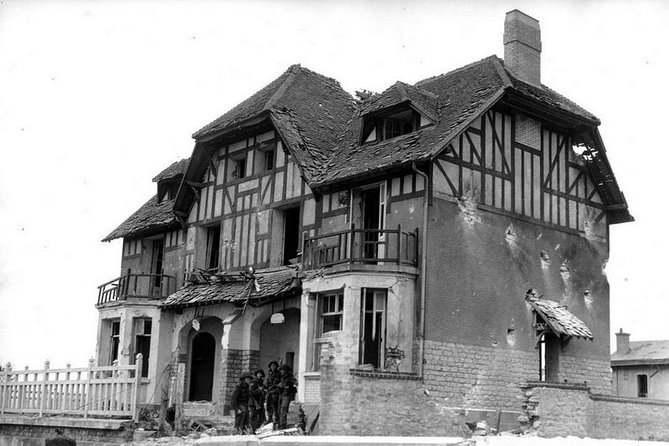
The final listed stop is the Hill 67 Canadian Memorial, south of Caen, with about 30 minutes to look around. This location marks the heavy fighting connected with the hill and helps close the story of the Canadian advance.
Ending inland rather than returning straight from the beach gives the day a proper arc. You have seen the landing area, learned about the troops, visited the graves, followed the advance, and reached a site tied to the struggle for Caen.
Thirty minutes is enough for a final explanation and a moment at the memorial, but it is not a long independent exploration. By this point, you may also be tired. That is normal. This is a serious full-day program, not a light sightseeing loop.
The return to Bayeux is expected around 6 p.m. Guides may have time for small adjustments or extra stops, but you should not plan an important evening reservation too close to the return time.
What the $161.32 price gets you
At $161.32 per person, the value depends on how much structure and historical guidance you want. The price includes a professional driver-guide, fuel surcharge, air-conditioned minivan transportation, pickup and drop-off at Bayeux hotels, and admission to the Juno Beach Centre.
You are paying for more than a ride to Juno. A rental car can get you to the coast, but it will not automatically explain the Canadian 9th Brigade’s advance, identify the significance of Hill 67, or connect Carpiquet to the wider campaign. Driving yourself also requires planning parking, route order, opening hours, and the geography between the sites.
The small group helps justify the cost. With no more than eight people, questions are easier to ask, and the guide can sometimes respond to family research or Canadian connections. That personal attention is one of the strongest reasons to choose this format.
Lunch is extra. The day includes enough time for a meal, and one past outing included a reasonably priced local restaurant, but you should budget for it or bring something with you. Bayeux hotel pickup is included, while pickup from Paris or cruise ports is not.
Who should book this day
I would choose this tour if you want a Canadian account of Normandy rather than a general D-Day overview. It suits Canadians, families researching relatives, military-history readers, and anyone who wants to understand the fighting after the initial landing.
It also works well if you are staying in Bayeux without a car. The route covers several places that would be awkward to combine by public transport, and the guide handles the driving between them.
This is less suitable if you want a relaxed coastal outing with lots of free time. The schedule is full, the subject is often upsetting, and the repeated movement in and out of a minivan can be tiring. Children can participate, but they must be accompanied by an adult, and the amount of military detail may be better suited to older children.
The tour is offered in English. Service animals are allowed, and most people can take part, though the information provided does not give detailed mobility guidance for every stop.
Practical advice for a better day
Wear layers, especially from autumn through spring. Juno Beach can be cold and windy even when Bayeux feels comfortable.
Choose supportive shoes. You will move between beaches, memorial grounds, museum areas, and outdoor historical sites. Weather can make grass and uneven ground less pleasant.
Bring water and lunch money. Food is not part of the price, and a full day of concentration is easier with a proper break.
Bring family records if you have them. A relative’s name, regiment, battalion, or cemetery location may allow the guide to make the day more personal.
Do not schedule a rushed evening. The tour starts at 8:30 a.m. and returns to Bayeux around 6 p.m., with traffic and timing able to affect the exact arrival.
Ask questions early. The day contains a great deal of information, and a good guide can adjust explanations to your interests. Guides such as Emmanuel, Jeremy, and Laurent have been praised for making room for personal stories and extra context.
Should you book the Canadian Battlefields tour?
Book it if Juno Beach is your priority and you want the Canadian campaign explained from landing to inland battle. The combination of beach, museum, bunkers, cemetery, villages, Abbey d’Ardenne, Carpiquet, and Hill 67 gives you a far fuller picture than a quick beach visit.
Skip it if you want to cover American, British, and Canadian sectors in one day, or if eight hours of military history sounds exhausting. You may also prefer a private tour if you need a slower pace or have extensive family research to pursue.
For most people interested in Canada’s role in Normandy, the price is fair. You get transport, admission, a very small group, and a guide who can turn scattered sites into one understandable story. Just come prepared for wind, emotion, tight seating, and a long day that may stay with you well after you return to Bayeux.
FAQ
Where does the tour begin?
You can meet the guide at Bayeux train station, Place de Quebec, or your Bayeux hotel.
What time does the tour start and end?
The tour starts at 8:30 a.m. and returns to Bayeux around 6 p.m.
Is hotel pickup included?
Hotel pickup and drop-off are included for hotels in Bayeux only. Pickup from Paris or cruise ports is not provided.
How many people can join the tour?
The tour has a maximum of eight travelers.
Is lunch included?
No. Lunch is not included in the tour price.
What does the tour price include?
The $161.32 price includes the fuel surcharge, driver-guide, professional guide service, air-conditioned minivan transportation, Bayeux hotel pickup and drop-off, and admission to the Juno Beach Centre.
Recently added around Bayeux
- From Bayeux: Half-Day Normandy WWII Sidecar Tour★ 5.0 · 49 reviews
- Private Tour of American Sites with an Expert Guide from DDAY★ 5.0 · 51 reviews
- WW2 Jeep or Dodge truck tour of the Omaha Beach site★ 5.0 · 51 reviews
- Mont Saint Michel Full Day Tour from Bayeux★ 5.0 · 52 reviews
- Bayeux: Band Of Brothers Full-Day Tour★ 4.9 · 53 reviews
- From Bayeux: D-Day American Beaches and US Airborne Day Tour★ 4.8 · 56 reviews
- From Bayeux: 2-hour private sidecar tour in Normandy★ 5.0 · 58 reviews
- Normandy – Mont Saint-Michel Full Day Tour from Bayeux★ 4.5 · 62 reviews
Normandy Tours, compared.
Normandy American D-Day Beaches Full Day Tour from Bayeux
Read our review →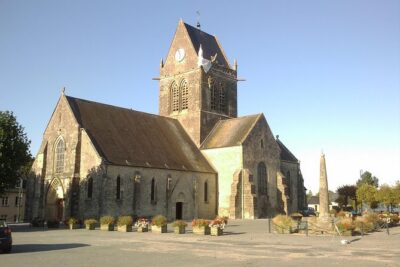
Normandy American D-Day Experience – Group tour from Bayeux
Read our review →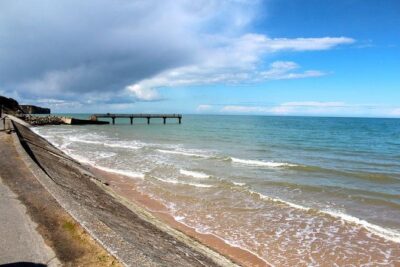
Normandy Beaches Half-Day Afternoon Trip from Bayeux (A2)
Read our review →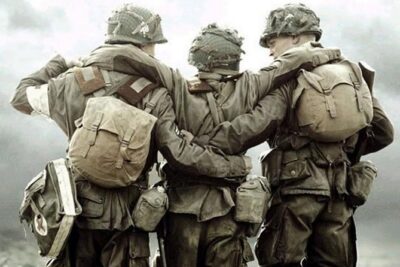
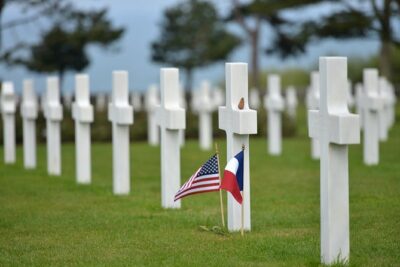
Omaha Beach D-Day Experience – Afternoon group tour from Bayeux
Read our review →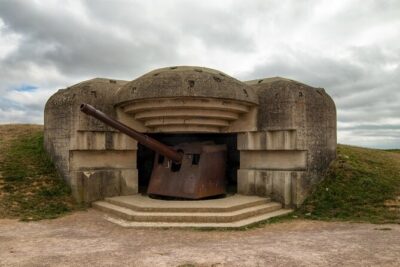
Normandy Battlefields Tour – American Sites (A3)
Read our review →
Browse the lists this tour appears in