
Reviewed · COOKING CLASSES
Hands-on Eclair and Choux Making with a Pastry Chef
Pastry skills make better souvenirs. This small-group Paris class turns butter, flour, eggs, and cream into éclairs you can eat and recreate at home. I like the hands-on format, since you do more than watch a chef demonstrate. I also like the maximum group size of eight, which gives the instructor time to help with piping and answer questions. The main consideration is that participants may work in pairs and take turns, so this is not always an individual workstation for every person.
The class runs about two and a half hours at Maison Fleuret, The Baking School, at 7 Rue de Béarn in the Marais. It is beginner-friendly, conducted in English, and ends with chocolate-glazed éclairs filled with pastry cream. At $132.75 per person, it is not a cheap snack stop, but it can be good value for families, couples, and food lovers who want a practical Paris memory rather than another quick tasting.
In This Review
- Key Points Before You Book
- Arriving at 7 Rue de Béarn in the Marais
- A Small English-Speaking Class With Real Participation
- Building the Choux Dough From Butter, Water, and Eggs
- Piping Long Éclairs Onto the Baking Sheet
- Baking at 200°C Until the Choux Is Crisp
- Cooking Vanilla, Chocolate, or Coffee Pastry Cream
- Filling and Glazing Three Finished Éclairs
- What $132.75 Means in Practical Terms
- Who Will Enjoy This Paris Baking Class Most
- Should You Book the Eclair Class?
- FAQ
- Where does the éclair and choux class begin?
- How long does the class last?
- Is the class taught in English?
- Do I need previous pastry experience?
- How many people can join the class?
- What happens to the éclairs after the class?
- Can I cancel for a full refund?
Key Points Before You Book
- You make the full éclair, not just the decoration: The class covers choux dough, piping, baking, pastry cream, filling, and chocolate glaze.
- The group is capped at eight people: This keeps the lesson personal, though pairs may share a setup.
- No pastry background is needed: The chef explains each stage and helps correct technique as you work.
- Expect three regular-size éclairs to take away: The finished pastries are packed up rather than necessarily eaten during a shared tea break.
- English instruction and metro access simplify the visit: The meeting point is a short walk from public transportation in the Marais.
- Book with some schedule flexibility: Most bookings are made well ahead, and rare chef illnesses have caused last-minute changes or cancellations.
Arriving at 7 Rue de Béarn in the Marais
The meeting point is 7 Rue de Béarn, 75003 Paris, in the Marais. The site is near public transportation and an easy short walk from the nearest metro station, so you do not need private transportation. That matters in Paris, where a class with a fixed start time is best reached without depending on a taxi crossing several busy neighborhoods.
Give yourself enough time to find the entrance. The class begins and ends at the same address, which keeps the logistics simple. You can arrive, bake, and then continue sightseeing in the Marais without arranging a second pickup point.
The setting itself may be more functional than polished. One participant described the room as small and the surrounding building as less attractive than expected. I would treat this as a working pastry classroom, not a grand culinary studio. The value is in the instruction and the food you make, not in elegant décor.
More Workshops in Paris
- Fragonard Paris: Mini Perfume Workshop
★ 4.5 · 1,924 reviews - Paris Cooking Class and Lunch with Wine plus Market Visit Option
★ 5.0 · 1,024 reviews - Paris Croissant Small-Group Baking Class with a Chef
★ 5.0 · 910 reviews
A Small English-Speaking Class With Real Participation
The class lasts approximately two hours and 30 minutes. With no more than eight people, the chef can watch your technique instead of leaving you to copy a demonstration from across a crowded room.
That personal attention is especially useful when you pipe the dough. Beginners often squeeze too hard, move too fast, or make uneven shapes. A chef can show you how to keep steady pressure and stop cleanly. Even shaky piping can produce attractive éclairs with a little help, and several participants left feeling ready to try the recipe at home.
The teaching staff varies. Past sessions have been led by chefs including Clara, Mathieu, Millie, Matteo, Manel, Amelia, Julie, and Alyssa. The strongest praise goes to instructors who were patient, encouraging, and clear in English. Matteo was noted for explaining each step slowly, while Millie received praise for her energy and easy-to-follow directions. Clara also offered suggestions for Paris pastry stops, a useful bonus if you want to continue eating after class.
The class is social. Ingredients are premeasured, so you can focus on method rather than weighing every item. That leaves room to chat with the people beside you. Solo participants can fit in well, and families have used the class as a birthday activity, including one celebration for a 16-year-old.
There is one detail to understand before paying. If the group size is uneven, you may be paired with another person and take turns with the preparation. One participant felt this was not made clear enough and expected an individual cooking station. I would ask about the workstation arrangement if solo hands-on time is essential to you.
Building the Choux Dough From Butter, Water, and Eggs
The first stage is the base of both éclairs and many other French pastries: choux pastry. You heat water, butter, and salt in a saucepan until the butter melts. Flour goes in next, and you mix until the dough pulls away from the sides of the pan.
This step teaches an important pastry habit: you are looking for texture, not just a clock. The dough must come together properly before the eggs are added. The chef can show you what the mixture should look like and help you avoid rushing.
The dough is moved to a bowl, then eggs are mixed in one at a time. You need to blend each egg before adding the next. For a first-time baker, this is a useful lesson in patience. Choux pastry may look simple on paper, but its final texture depends on careful mixing and the right consistency.
The premeasured ingredients make the class easier for beginners. You can pay attention to how the dough changes instead of worrying about bringing a scale or converting quantities during the lesson. The recipe is provided digitally by scanning it, and at least one participant wished for a paper copy. If you are not comfortable with your phone, ask the chef how to save the recipe before leaving.
Piping Long Éclairs Onto the Baking Sheet
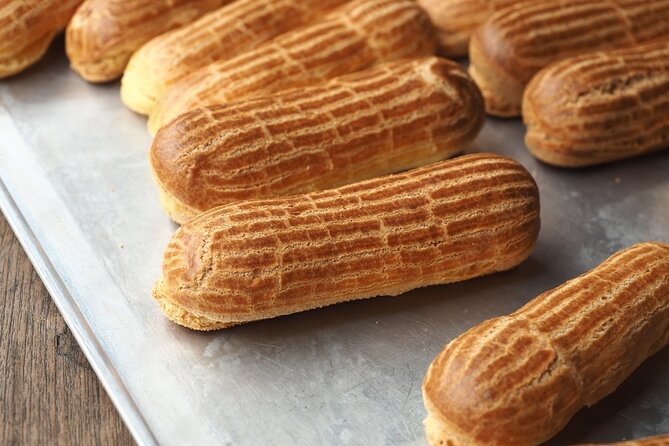
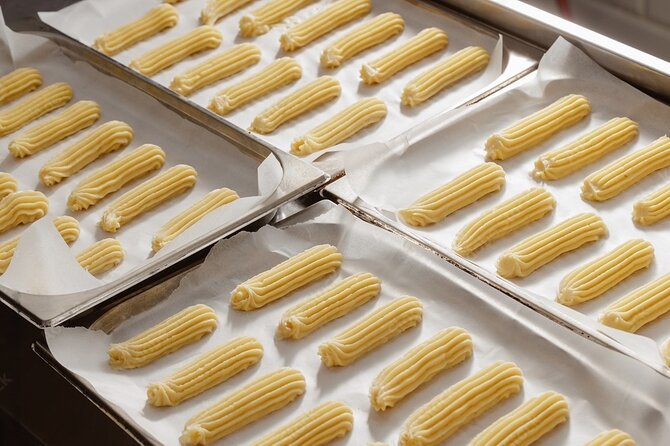
Once the dough is ready, you transfer it to a piping bag with a plain tip. You pipe long strips onto a parchment-lined baking sheet.
This is the most hands-on part of the class and the stage where individual results can differ. The first éclair may be too thin, too wide, or slightly crooked. That is fine. Chocolate glaze hides a great deal, and the class is meant to teach control rather than produce factory-perfect pastries.
The chef’s guidance matters here. You may learn how to hold the bag, keep pressure even, and finish each strip without leaving a large tail. These are small skills, but they are exactly what makes a class useful after you return home.
You should also expect a relaxed pace rather than a race to finish first. The instructors are there to look at the dough and piping, not simply hand you a finished pastry. That makes the result feel earned. It also explains why a two-hour-30-minute class is worthwhile even though the recipe itself uses ordinary ingredients.
More Cooking Classes in Paris:
- Paris: Montmartre Cheese, Wine & Pastry Guided Walking Tour
★ 4.8 · 2,255 reviews - Paris: Macaron Class at Galeries Lafayette
★ 4.3 · 905 reviews - Paris: French Croissant Baking Class with a Chef
★ 4.9 · 712 reviews - Paris Cooking Class: Learn How to Make Macarons
★ 5.0 · 634 reviews
Baking at 200°C Until the Choux Is Crisp
The piped dough goes into a preheated oven at 200°C for about 20 to 25 minutes. The goal is a golden, crisp shell.
This pause creates time for the chef to explain what you are watching for. Choux pastry needs enough heat and baking time to puff and dry out. If it is removed too early, the shells may not hold their shape well once filled.
You will not control every oven variable at home, but the class gives you a clear reference point. Pay attention to color, firmness, and the way the shells feel when they come out. Those visual cues are often more useful than blindly copying the exact number of minutes.
The baked éclairs must cool before filling. This is another practical lesson. Warm pastry cream and warm shells can create a messy result, so the class builds in time for the pastries to reach the right stage.
Cooking Vanilla, Chocolate, or Coffee Pastry Cream
While the shells cool, you make the pastry cream. Milk is heated in a saucepan. In a separate bowl, you whisk egg yolks, sugar, flour, and cornstarch.
The hot milk is poured over the egg mixture while you stir constantly. Then the mixture returns to the saucepan and cooks over low heat until thick. This is the point where clear instruction is valuable. You are combining hot liquid with eggs, so steady stirring helps keep the mixture smooth.
The available filling flavors include chocolate, vanilla, coffee, and other options depending on the session. Chocolate is a natural match for the final glaze, but vanilla gives you a more traditional contrast. Coffee is appealing if you like a stronger, less sugary pastry.
One reason I like this part of the class is that it turns the éclair into more than a decorated tube of dough. You learn the pastry cream separately, and that cream can be useful in other desserts at home. The lesson gives you two practical building blocks: choux pastry and a cooked cream filling.
Filling and Glazing Three Finished Éclairs
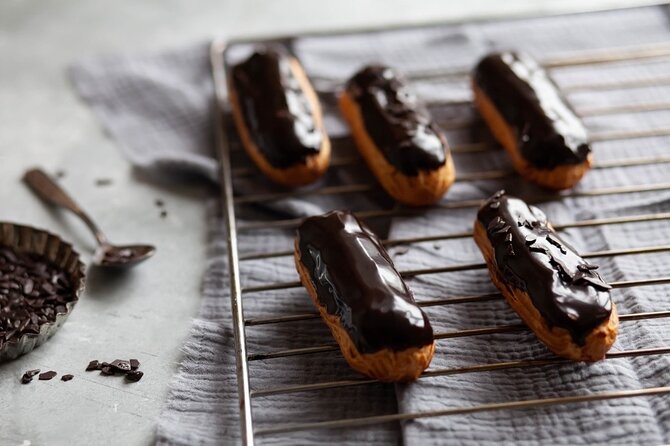
After cooling, the éclairs are cut in half and filled with pastry cream using a piping bag. The final step is a dark chocolate glaze made with melted chocolate and butter.
You dip the top of each éclair into the glaze. The result is less like a bright sugar icing and more like a dark, chocolate-forward finish. That appealed to people who usually find standard éclairs too sweet. The chocolate coating also helps disguise small imperfections in the piping, which is good news for beginners.
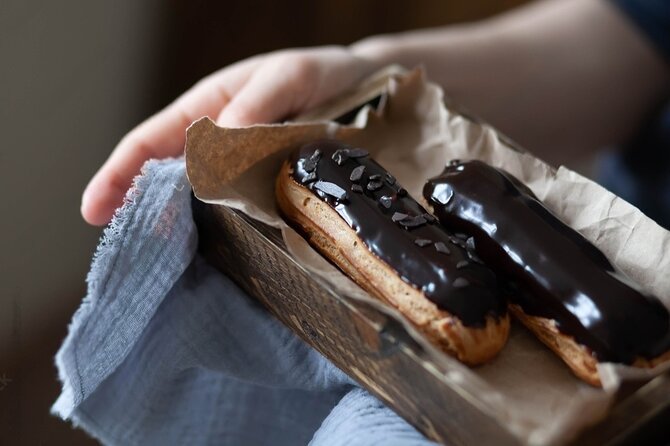
The finished amount is better than many first-time participants expect. You can leave with three regular-size éclairs rather than one small sample. The pastries are generally packed to take away, so bring a little care and patience when carrying them through Paris.
Coffee and tea are listed as included, but the class may not function as a sit-down pastry tasting with everyone gathered around a table. One participant expected to eat the éclairs with coffee or tea during the lesson and instead packed the pastries to go. If that shared café-style ending matters to you, confirm the plan before booking.
What $132.75 Means in Practical Terms
At $132.75 per person, this class costs more than buying an éclair at a pâtisserie. You are paying for instruction, ingredients, equipment, chef supervision, and a small group rather than just the finished pastry.
The value is strongest if you will use the recipe later. You are shown the complete process, from cooking the dough to making the cream and glazing the final pastry. Families and couples can also treat it as a shared activity, with the food serving as both the lesson and the souvenir.
The price is harder to justify if you mainly want to eat a perfect éclair in Paris. A bakery visit is cheaper and requires far less time. This class suits you if you enjoy learning by doing and want to bring a French baking skill home.
The reported score is 4.7 out of 5, with 93 percent of participants recommending the activity. The praise is strongest for patient chefs, small groups, clear English instruction, and delicious results. The weaker points are the plain room, occasional pairing, uncertain tea-and-pastry setup, and scheduling problems when a chef becomes ill.
Who Will Enjoy This Paris Baking Class Most
This is a good choice for first-time bakers. You do not need previous pastry experience, and the instructions are designed for beginners. Children can enjoy it too, with one family describing a successful class with a 9-year-old.
It also works well for families with older children and teenagers. A birthday session helped turn a 16th birthday into a lasting Paris memory, and the recipe gave the family something to repeat at home.
Couples and friends will appreciate the social side. You can work together, compare piping results, and leave with a box of pastries. Solo participants can join a small group without needing to bring a companion.
I would be more cautious if you expect each person to have a fully separate workstation. Ask ahead about pairing. I would also choose another activity if your Paris schedule is packed tightly, since the class takes a fixed two and a half hours and last-minute schedule changes have affected some bookings.
The activity allows service animals and is near public transportation. Confirmation is received when you book. Free cancellation is available up to 24 hours before the local start time. Cancellations or changes made later are not refundable, so keep that deadline in mind.
Should You Book the Eclair Class?
Book this class if you want a small, practical pastry lesson with a tasty payoff. The strongest reasons are the patient instruction, genuine participation, beginner-friendly method, and the chance to take home three éclairs plus a recipe you can use again.
Skip it if you only want a quick Paris dessert, dislike shared workstations, or need a perfectly fixed itinerary with no room for changes. For most food-loving families, couples, and curious beginners, the class offers a pleasant way to bring home more than a box of sweets. You bring home a technique, too.
FAQ
Where does the éclair and choux class begin?
The class begins at 7 Rue de Béarn, 75003 Paris, France, and finishes back at the same meeting point.
How long does the class last?
The activity lasts approximately two hours and 30 minutes.
Is the class taught in English?
Yes. The experience is offered in English.
Do I need previous pastry experience?
No. The class is beginner-friendly and does not require prior pastry experience.
How many people can join the class?
The maximum group size is eight participants. If the number is uneven, you may be paired with another participant and take turns using the workstation.
What happens to the éclairs after the class?
You fill and glaze the baked éclairs, then take the finished pastries with you. Three regular-size éclairs have been provided in some sessions, and coffee or tea is listed as included.
Can I cancel for a full refund?
Yes. You can cancel at least 24 hours before the local start time for a full refund. Cancellations or changes made less than 24 hours before the start are not accepted for a refund.
Recently added around Paris
- 2 hour outdoor group activity in Paris: SAINT GERMAIN★ 5.0 · 48 reviews
- Private Half-Day Guided Tour of Paris★ 4.5 · 48 reviews
- Paris Dinner Show Opera Bel Canto★ 4.5 · 48 reviews
- Paris Vintage Tour by Night on a Sidecar with Champagne★ 5.0 · 48 reviews
- Secrets & Scandals of the Louvre – Limited to 6 Guests★ 5.0 · 48 reviews
- Paris Photoshoot: Eiffel Tower Exclusive Private Experience★ 5.0 · 48 reviews
- Paris: Louvre Mona Lisa Discovery Guided Tour with Ticket★ 4.9 · 48 reviews
- From Paris: Versailles Full-Day Guided Tour with Lunch★ 4.9 · 48 reviews
Cooking Classes, compared.

Paris: Montmartre Cheese, Wine & Pastry Guided Walking Tour
Read our review →
Paris Cooking Class and Lunch with Wine plus Market Visit Option
Read our review →
Paris Croissant Small-Group Baking Class with a Chef
Read our review →
Paris: French Croissant Baking Class with a Chef
Read our review →
Paris Cooking Class: Learn How to Make Macarons
Read our review →
A Morning in Paris Food Tour: Croissants, Baguettes & Chocolate
Read our review →Browse the lists this tour appears in