
Reviewed · WINE TOURS
Libourne: Winery Tour with Wine and Chocolate Tasting
Wine tastes better when you know where it began. At Château Cruzeau, a five-generation family property near Libourne, you walk among the vines, see the working wine rooms, and finish with three estate wines paired with three dark chocolates from Les Chocolats de Sophie. I especially like the small family-run setting and the way the tour explains soil and farming before getting to the glass. The chocolate pairing also gives the tasting a playful twist without turning it into a gimmick.
The main thing to consider is timing. The experience is advertised as 75 minutes, while the detailed schedule describes about 1.5 hours. That is not a major issue, but you should leave a little breathing room before a train, lunch, or another appointment. The château is outside central Libourne, so you also need to arrange your own way there.
In This Review
- Key points at a glance
- A family château between Saint-Emilion and Pomerol
- Starting among the vines
- Inside the vat room and barrel cellar
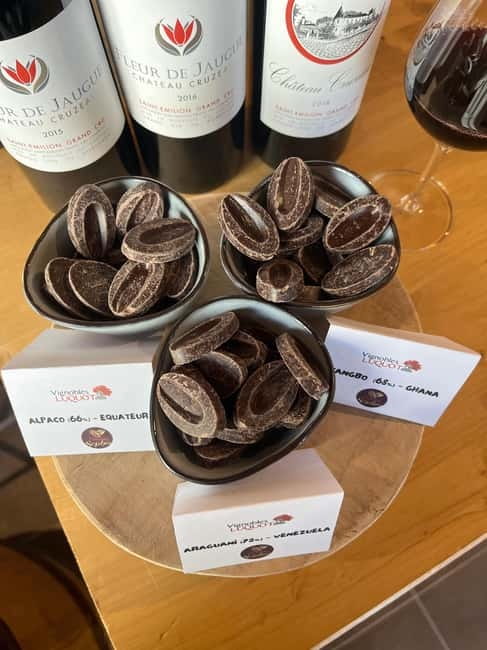
- Three wines, three dark chocolates
- How much learning do you get in 75 minutes?
- Getting there from Libourne
- Language, access, and the feel of the visit
- What the strongest praise gets right
- The trade-offs to keep in mind
- Should you book Château Cruzeau?
- FAQ
- Where does the Château Cruzeau tour begin?
- How long does the experience last?
- How much does the tour cost?
- Which languages are available?
- What does the tour include?
- Is transportation included?
- Is the experience wheelchair accessible?
- Can I book the tour all year?
Key points at a glance
- Five generations of the Luquot family: Learn how the family property has developed over time and why its personal scale matters.
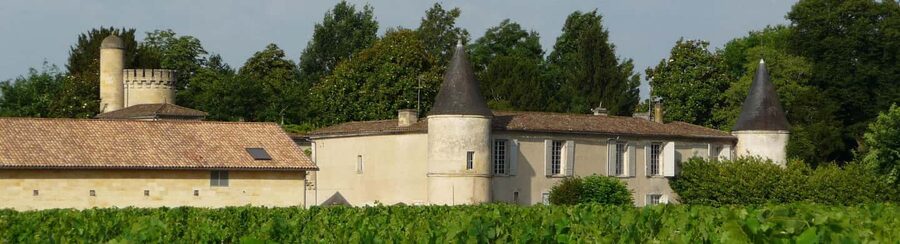
- Saint-Emilion Grand Cru location: The 12-hectare vineyard sits near the border of Saint-Emilion and Pomerol.
- Soil and farming explained outdoors: The tour connects agricultural choices with the taste and character of the wine.
- Working production spaces: Visit the vat room and barrel cellar rather than stopping at a tasting counter.
- Three wines with three chocolates: Local Libourne chocolatier Les Chocolats de Sophie supplies the dark chocolate pairings.
- English or French guiding: Guides can lead the experience in either language, and the visit is wheelchair accessible.
A family château between Saint-Emilion and Pomerol
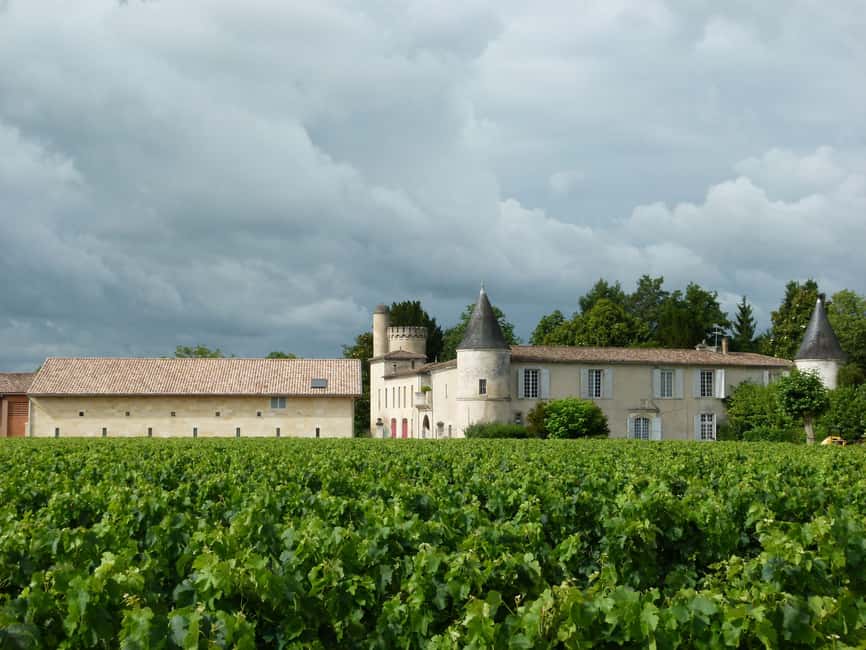
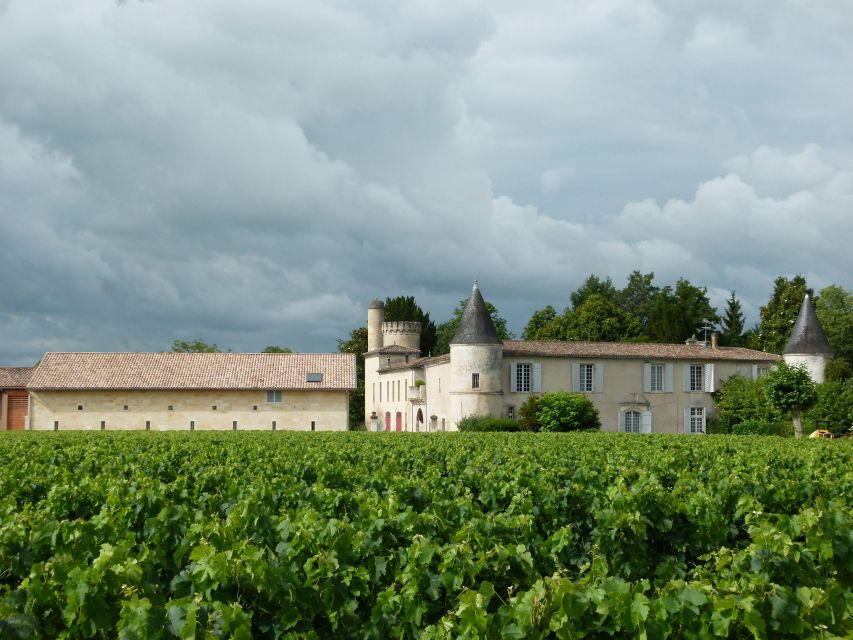
Château Cruzeau occupies 12 hectares in the Saint-Emilion Grand Cru appellation, close to the border with Pomerol. That location gives the visit useful context. You are not simply tasting an anonymous Bordeaux red. You are seeing wine made at a particular family estate, in a particular part of Libourne, with its own soil, farming choices, cellar work, and family story.
The Luquot family has managed the property for five generations. I find that detail more meaningful than a grand château name alone. A multigenerational estate gives the tour a human scale, and the experience focuses on the actual work behind the bottle rather than on formal grandeur.
The setting is described as green and rural, with the visit taking place among the vines. You should expect an active agricultural property, not a museum arranged solely for sightseeing. That makes the tour a good choice if you want to understand how Bordeaux wine is produced from ground to bottle.
The family connection also comes through in the guiding. Jessica, identified as the owner’s wife, has led tours in English and French. Her approach has been praised for warmth, clear explanations, and genuine enthusiasm for the wines. Another guide is described simply as Madame, with the same family connection and a patient approach to language questions.
More Wine Tours in France:
- Authentic Parisian Gourmet Food Tour with 10 Local Dishes & Wines
★ 5.0 · 4,754 reviews - Loire Valley Castles Day Trip from Paris with Complementary Wine
★ 4.5 · 3,907 reviews - Bordeaux: Cité du Vin Entry Ticket and Wine Tasting
★ 4.6 · 3,885 reviews
Starting among the vines
The tour begins at the accueil, or reception area, at 152 Avenue de l’Épinette. From there, you head into the vineyard for the first substantial part of the visit.
This outdoor section is not just a photo stop. The guide explains the agricultural practices used at Château Cruzeau and discusses soil life, including the role soil plays in shaping the character of the wine. That is one of the most useful parts of the experience because it links a broad wine term, terroir, to real decisions in the field.
You can expect to hear about the relationship between the soil, the vines, and the finished wine. The supplied information does not specify every farming method or certification, so I would not expect a technical lecture on every vineyard operation. Instead, the value comes from seeing the vines while someone explains why the ground matters.
The château promotes environmentally friendly practices. That makes the farming conversation especially relevant, though you should ask the guide for the current details if this is a major reason for your visit. Practices can change from season to season, and the tour description does not list a formal organic or biodynamic certification.
A camera is worth bringing. The property provides the kind of rural setting that makes a short stop feel connected to the place, although the focus remains education and tasting rather than a long scenic walk.
Inside the vat room and barrel cellar
After the vineyard, the route continues into the vat room and barrel cellar. These spaces explain what happens after grapes leave the vine.
The vat room lets you see where fermentation and early wine production take place. The barrel cellar then shifts the focus to maturation and storage. You will not just hear that Bordeaux wine is made in a cellar. You will see the rooms involved in the process and can ask how each stage affects the final bottle.
I like this sequence because it follows a sensible order: vineyard first, production room second, barrels third, tasting last. You get the basic story before your palate is asked to judge anything. That is particularly helpful if you are new to wine, or if you usually enjoy drinking it more than talking about it.
The exact equipment, barrel types, and cellar conditions are not specified, so the depth of the technical detail will depend on your questions and the guide leading your visit. Still, the chance to see both the vat room and barrel cellar gives this experience more substance than a simple tasting appointment.
The tour is also a good fit for mixed groups. One family said the clear English worked well for children aged 12, 15, and 16. Another parent said a teenager enjoyed the visit. A non-wine drinker also found the experience worthwhile, which suggests the explanations and chocolate help keep the visit accessible to people who are not already Bordeaux enthusiasts.
Three wines, three dark chocolates
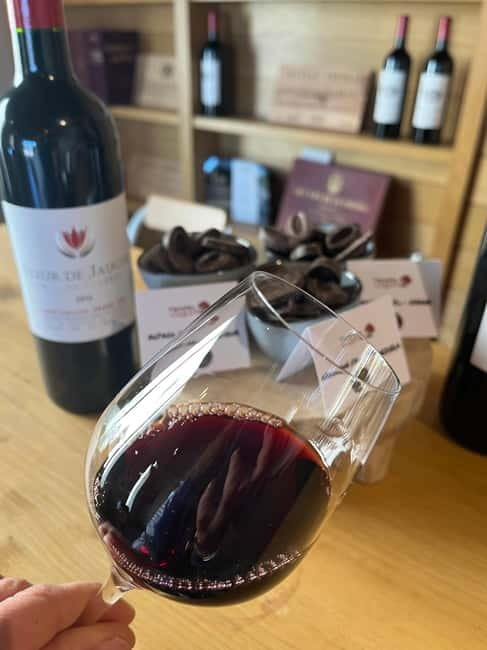
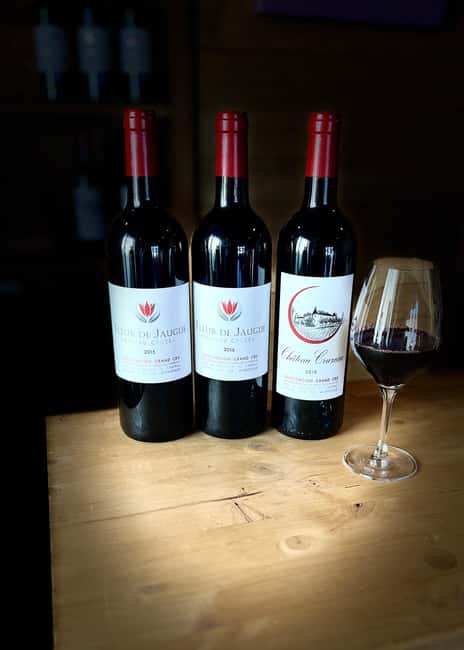
The final section is the tasting. You sample three wines from the property alongside three dark chocolates supplied by Les Chocolats de Sophie, a local chocolate maker in Libourne.
The tasting is designed as a pairing rather than two separate samplings. You first consider the wine, then taste the chocolate with it, and notice how the sweetness, bitterness, texture, and fruit notes interact. One visitor described the pairing as a revelation, while another said the tasting clearly showed the differences between the wines.
The wines are red, according to the tasting details provided in the personal accounts. The exact labels and vintages are not listed, so do not assume that the same bottles will be poured at every appointment. Wine selections can change with stock and season.
That uncertainty is normal at a working château, but it does mean you should ask which wines you are tasting if you want to buy a particular bottle later. The experience includes the tasting, while any purchases or shipping arrangements are separate.
The chocolate is more than a sweet finish. Dark chocolate can bring out the fruit, spice, tannin, or oak in a red wine, but it can also make a dry wine seem sharper if the pairing is not balanced. Having three chocolates with three wines gives you a chance to compare rather than simply eat a piece of candy after the tour.
The local connection is another plus. Les Chocolats de Sophie is based in Libourne, so the tasting supports a nearby producer and keeps the final course tied to the area.
A few more France trips worth weighing up
- Paris: Day or Sunset Cruise with Drink, Ice Cream or Dessert
★ 4.4 · 4,225 reviews - Paris: Entrance Ticket to the Chocolate Museum
★ 4.1 · 1,105 reviews - Private Montmartre Food Tour with Wine, Cheese & Pastries
★ 5.0 · 1,027 reviews - Paris French Sweets Tasting Tour with Pastries and Chocolates
★ 4.5 · 947 reviews
How much learning do you get in 75 minutes?
The experience is listed at $21 per person, which is a strong price for a guided vineyard visit, production-room tour, three-wine tasting, and three-chocolate pairing. You are paying for more than a pour at a shop counter, but less than many grand château visits that include elaborate grounds or extensive facilities.
The short format is useful if you are building a day around Libourne, Saint-Emilion, or nearby Pomerol. You can learn the basic production story without giving up half a day. I would allow 90 minutes in your schedule because the itinerary is also described as lasting 1.5 hours.
That difference may simply reflect a rounded tour length versus a booking system estimate. Either way, you should not plan a train connection with only a few minutes to spare.
At $21, the experience is particularly good value for:
- First-time Bordeaux wine tasters who want plain explanations.
- Couples looking for a compact activity near Libourne.
- Families with older children or teenagers.
- Wine drinkers who want to understand farming and cellar work.
- People who enjoy food pairings as much as wine itself.
It may be less suitable if you want a large, stately château with ornate interiors, sweeping formal gardens, or a long premium tasting. Château Cruzeau offers intimacy and access to the working process, not a grand theatrical production.
Getting there from Libourne
Transportation is not included, so you need to reach 152 Avenue de l’Épinette independently. One useful local tip is to consider the train and bus combination from Bordeaux.
A visitor who traveled by train from Bordeaux advised ignoring the first Google Maps walking directions after leaving the station. Just beyond the parking lot is the stop for bus number 4, which goes close to the château, and the bus is free. That is a practical detail worth checking before you leave, especially if you do not have a car.
Because this information may change, confirm the current route and operating times before setting out. The important point is that a car is not necessarily your only option. The property can be reached on foot by some people from the surrounding area, but the distance and route will depend on where you start.
Do not count on transport being arranged by the château. The activity specifically excludes transportation, so plan the final leg yourself.
Language, access, and the feel of the visit
Guiding is available in English and French. The English has been praised as clear enough for families, and the guide has been flexible when someone needed a point repeated or explained in another language.
That flexibility matters in a wine tour. Terms about soil, fermentation, aging, and tasting can be hard to follow in a second language. You should feel comfortable asking questions, particularly during the tasting when the guide explains how to compare the wines.
The experience is wheelchair accessible. The information does not describe every surface or individual room, so anyone with specific mobility needs should confirm the details before booking. Still, formal wheelchair accessibility is an important advantage for a vineyard visit, where uneven outdoor ground can otherwise be a concern.
Visits are available all year by appointment. That makes the activity useful beyond the summer season, and it gives you more flexibility when your trip is built around dates rather than peak vineyard scenery. The look of the property will change with the season, but the core tour remains focused on family history, farming, production, and tasting.
What the strongest praise gets right
The most consistently praised feature is the guide. People describe the host as warm, patient, engaging, and genuinely enthusiastic about the estate. Jessica’s ability to explain the visit in English has been especially helpful for families and international visitors.
The second major strength is the educational balance. You get information about the grounds, soil, wine production, and tasting without the visit becoming too formal. The format works for someone who knows little about wine and still gives experienced drinkers room to ask questions.
The tasting earns equal praise. The three wines make comparison possible, while the three dark chocolates add a local food connection and give non-wine drinkers something extra to enjoy. The pairing has even appealed to people who normally do not choose wine.
The small scale can also lead to a more personal visit. One appointment ended up being a tour for only two people, creating plenty of time for questions. Group size is not specified as a standard feature, so do not assume every date will be private, but a family property can feel more direct than a large commercial operation.
The trade-offs to keep in mind
The visit is short, and that is both a strength and a limit. You get a useful introduction, but not an exhaustive course in Bordeaux wine. If you want detailed discussion of every grape variety, vintage, barrel, or vineyard parcel, you may need to ask focused questions or seek a longer specialist visit.
The property is family-run rather than designed as a major sightseeing complex. That means the appeal is the personal explanation and working wine spaces. If your ideal château tour involves grand architecture, elaborate gardens, or many wines from different estates, this may feel modest.
The wine selection can also vary. Three wines are included, but the exact bottles are not named. Anyone hoping to taste a specific vintage should contact the property in advance.
Finally, the visit requires independent transport. The free number 4 bus from Libourne may help, but you should verify the current route and leave enough time for the journey.
Should you book Château Cruzeau?
I would book this tour if you want a reasonably priced, personal introduction to Bordeaux wine near Libourne. The combination of vineyard, vat room, barrel cellar, and tasting gives you a clear sense of how the wine is made, while the family connection keeps the visit from feeling impersonal.
It is an especially good choice for English-speaking visitors, families with teenagers, curious beginners, and anyone who likes the idea of wine with local chocolate. The $21 price also makes it an easy addition to a wider day in the Saint-Emilion and Libourne area.
Choose something else if you want a grand château setting, a long cellar visit, or a highly technical tasting centered on named vintages. For most people seeking a friendly, informative 75 to 90 minute visit, though, Château Cruzeau offers a lot for the money. Free cancellation up to 24 hours ahead and the option to reserve now and pay later make the planning low-risk.
FAQ
Where does the Château Cruzeau tour begin?
The meeting point is the accueil at 152 Avenue de l’Épinette.
How long does the experience last?
The activity is listed as 75 minutes, while the detailed schedule describes about 1.5 hours. Check the available starting time and allow some extra time in your day.
How much does the tour cost?
The price is $21 per person.
Which languages are available?
The live guide can lead the tour in English or French.
What does the tour include?
It includes a guided vineyard visit, a visit to the vat room and barrel cellar, a wine tasting, and a pairing of three wines with three chocolates from Les Chocolats de Sophie.
Is transportation included?
No. You must arrange your own transportation to and from 152 Avenue de l’Épinette.
Is the experience wheelchair accessible?
Yes, the activity is listed as wheelchair accessible.
Can I book the tour all year?
Yes. Visits are available all year by appointment.
More Food Tours in France
- Paris: Seine Cruise & Crepe Tasting near the Eiffel Tower
★ 4.4 · 11,231 reviews - Normandy D-Day Small-Group Day Trip with Omaha Beach, Cemetery & Cider Tasting
★ 5.0 · 2,786 reviews - Paris: Illuminated Evening River Cruise & Waffle Tasting
★ 4.1 · 2,697 reviews - Montmartre Hill French Gourmet Food and Wine Tasting Walking Tour
★ 5.0 · 2,588 reviews
Recently added around France
- The essential in Bordeaux, private tour with a local★ 4.9 · 48 reviews
- Avignon, Les Baux, St Remy and Arles from MARSEILLE★ 4.5 · 48 reviews
- Visit Avignon and Villeneuve lez Avignon aboard a Double-Decker Bus★ 4.0 · 48 reviews
- 2 hour outdoor group activity in Paris: SAINT GERMAIN★ 5.0 · 48 reviews
- Private Half-Day Guided Tour of Paris★ 4.5 · 48 reviews
- Blind Test Room & karaoke Montpellier★ 5.0 · 48 reviews
- Paris Dinner Show Opera Bel Canto★ 4.5 · 48 reviews
- The Grand Bike Tour of Lyon – 3h★ 4.5 · 48 reviews
Wine Tours, compared.
Authentic Parisian Gourmet Food Tour with 10 Local Dishes & Wines
Read our review →
Loire Valley Castles Day Trip from Paris with Complementary Wine
Read our review →
Bordeaux: Cité du Vin Entry Ticket and Wine Tasting
Read our review →
Bordeaux: River Garonne Cruise with Glass of Wine and Canelé
Read our review →
Montmartre Hill French Gourmet Food and Wine Tasting Walking Tour
Read our review →
Paris: Montmartre Cheese, Wine & Pastry Guided Walking Tour
Read our review →
From Paris: Loire Valley Castles Day Trip With Wine Tasting
Read our review →
From Bordeaux: Afternoon Saint-Emilion Wine Tasting & snack
Read our review →Browse the lists this tour appears in