
Reviewed · WORKSHOPS
Paris: 45-minute Chocolate Making Workshop at Choco-Story
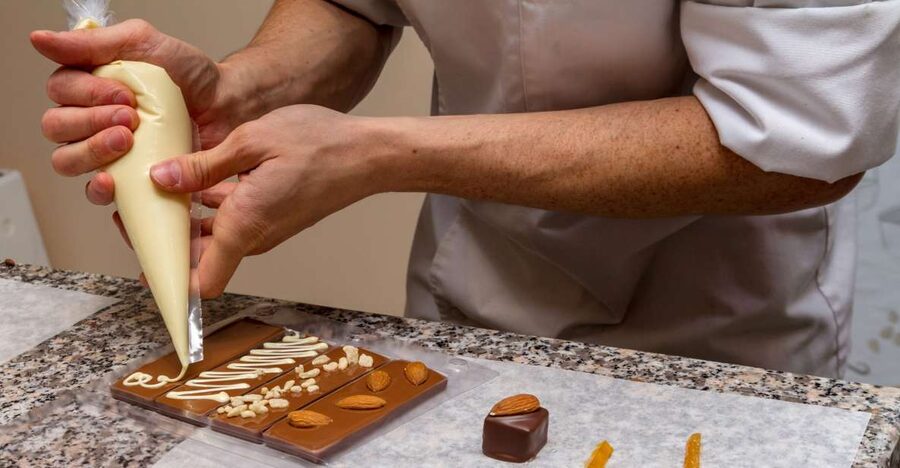
Chocolate makes a fine Paris souvenir. This hands-on Choco-Story session lets you decorate a personal chocolate bar, dip treats, and carry home 250 to 300 grams of chocolate, plus an apron. I like the mix of practical fun and museum time, and I like that instructors such as Stephen and Stefan explain each stage in both French and English. The main catch: this is more a decoration class than a true chocolate-making lesson, and the workshop moves quickly.
You spend about 45 minutes with the chocolatier, then explore three floors at Le Musée Gourmand du Chocolat Choco-Story. The museum adds useful context, tastings, and a virtual demonstration, so the two-hour visit feels fuller than the class alone. At $58 per person, the value is strongest for families and chocolate fans who will enjoy both the edible results and the exhibits.
In This Review
- Five things to know before you book
- A short workshop with a very sweet payoff
- Decorating bars, dipping treats, and choosing your finish
- What you take home: 250 to 300 grams of chocolate
- Three museum floors that add real value
- The value of $58 per person
- Who will enjoy this most
- How to make the most of your visit
- Should you book the Choco-Story workshop?
- FAQ
- Where does the chocolate workshop take place?
- How long does the full experience last?
- How much chocolate can I take home?
- Is the chocolate made from scratch during the class?
- What toppings can I use?
- Is museum admission included?
- What else is included besides the workshop?
- Is the activity available in English?
- What is the minimum age?
- What happens if I arrive late?
Five things to know before you book
- You decorate rather than make chocolate from cocoa beans: The chocolate is prepared for you, while you shape, dip, layer, and finish it.
- Your take-home haul is generous: Expect roughly 250 to 300 grams of chocolate, though warm weather can make transport tricky.
- The 45-minute class is brisk: You get several techniques, but not a long lesson on tempering, fillings, or chocolate selection.
- The museum is part of the value: Three floors cover chocolate from its South American origins to its place in modern France.
- French and English instruction is available: Chocolatiers demonstrate each step and help children and adults as they work.
- Arrive 15 minutes early: Late arrivals are not accepted under the stated rules, and the booking is non-refundable.
A short workshop with a very sweet payoff
The activity begins at the Musée du Chocolat, at 28 Boulevard de Bonne Nouvelle in Paris’s 10th arrondissement. You should arrive at least 15 minutes before your scheduled start. The workshop begins promptly, and the late-arrival rule is strict, so this is not a good activity to squeeze between two appointments across town.
The class itself lasts 45 minutes. That is short enough for a child who cannot sit through a long cooking lesson, yet long enough to produce a bag of finished treats. The timing also explains the mixed expectations: if you want to learn professional chocolate work, the session may feel thin. If you want to make something attractive and delicious during a busy Paris day, it hits the mark.
Your chocolatier gives demonstrations before each stage. You then work with the ingredients in front of you, making choices about shapes, toppings, and patterns. The instructors speak French and English, and the bilingual approach has worked well for mixed-language groups. Stephen received particular praise for making a hen-party session lively, while Stefan handled French and English explanations with humor and patience.
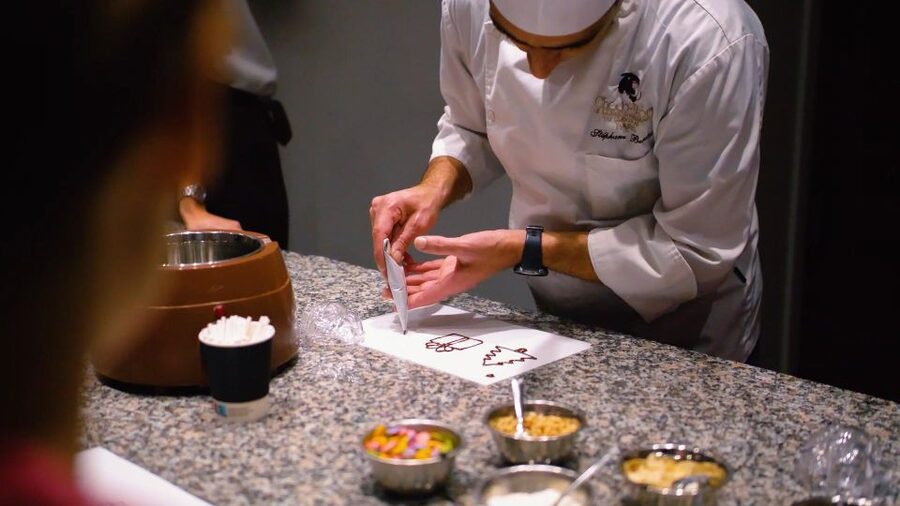
You are not starting with raw cacao or learning the full process from bean to bar. The chocolate is already prepared and melted. Think of this as a guided chocolate decorating workshop, with some dipping, molding, and finishing work. That distinction matters if the phrase chocolate making brings a pastry-school lesson to mind.
More Workshops in Paris
- Fragonard Paris: Mini Perfume Workshop
★ 4.5 · 1,924 reviews - Paris Cooking Class and Lunch with Wine plus Market Visit Option
★ 5.0 · 1,024 reviews - Paris Croissant Small-Group Baking Class with a Chef
★ 5.0 · 910 reviews
Decorating bars, dipping treats, and choosing your finish
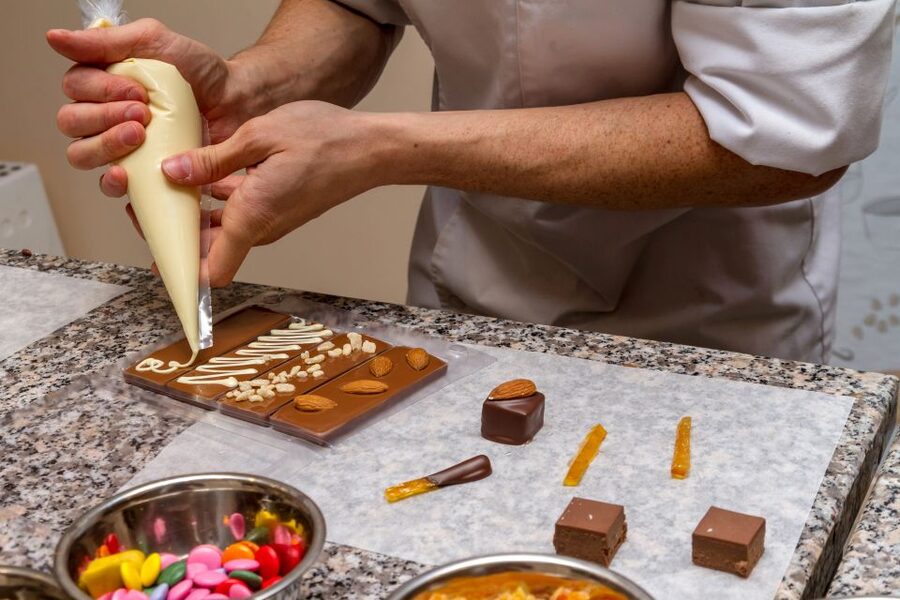
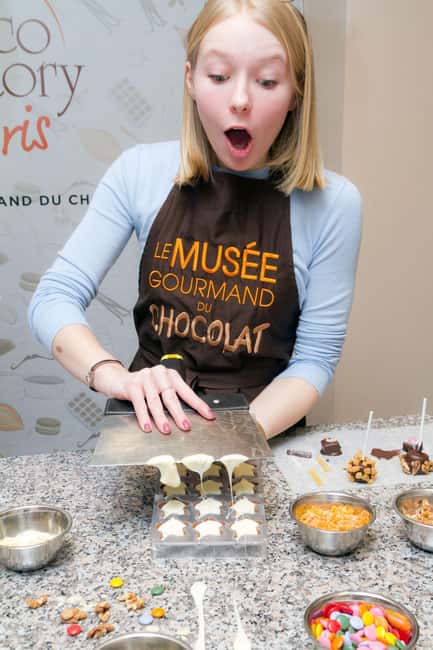
The most appealing part is the freedom to make your own design. You choose the shape and build your chocolate with toppings such as orange strips, marshmallows, hazelnut cubes, and mini-tablets. Other finishing touches may include coconut, nuts, and colorful sweets.
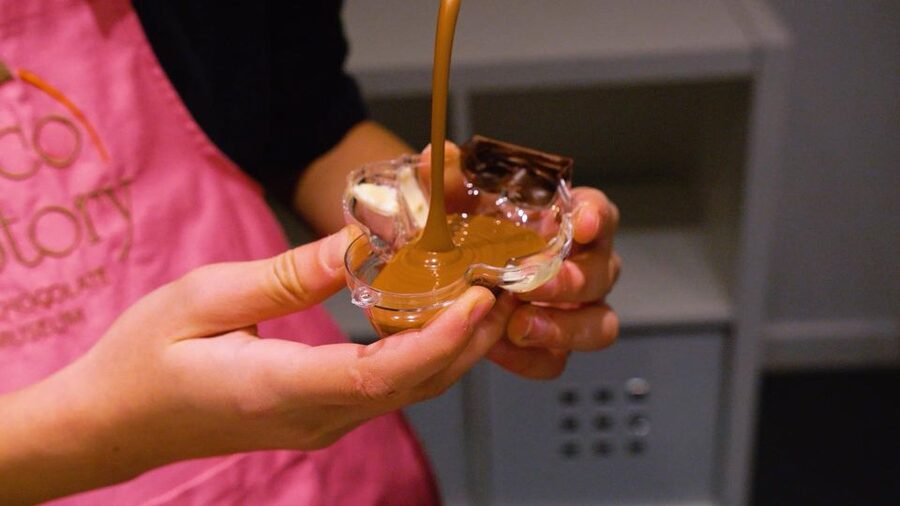
One stage involves dipping items into a chocolate fondue. You may dip orange, marshmallows, and other small treats, then roll or sprinkle them with toppings. Another stage uses molds, where you pipe or pour chocolate into a bar shape and decorate the surface.
The process gives children clear jobs and quick results. They can dip, swirl, sprinkle, and arrange toppings without waiting for a complicated recipe to set. Adults can have just as much fun, especially when everyone compares designs at the end.
The class is hands-on, but not especially technical. You will not get a detailed lesson on cocoa quality, tempering temperatures, or which fillings work best. One older description of the session pointed out that the chef explained the steps and then left participants to work, rather than teaching gourmet chocolate skills. That remains the right way to set your expectations.
The short schedule can also feel rushed. You have several things to create, and the group must move through them together. A few participants wished the class lasted closer to 50 minutes. I would not book this for a slow, meditative afternoon of confectionery work. Book it for energy, mess, and a quick edible project.
What you take home: 250 to 300 grams of chocolate
The take-home amount is one of the strongest reasons to consider the price. You receive approximately 250 to 300 grams of chocolate that you decorated yourself. That is far more satisfying than a single small sample, especially for children who want to show family members what they made.
You also receive a Choco-Story apron. It is a practical souvenir from the workshop, and it helps protect clothing during the messy parts. The chocolate itself is the real prize, though. Several people found they had enough to eat over the rest of their Paris stay.
Plan the return journey carefully in hot weather. A family attending on a sunny day found that some chocolate melted because it was carried in clear plastic bags. The supplied information does not promise insulated packaging, so keep the chocolate out of direct sun and avoid leaving it in a warm car. This is a small but useful point: your carefully decorated bar can become a modern art project if the temperature rises.
The chocolate is meant to be eaten, not admired forever. Some of the molded pieces may look homemade, and that is part of the charm. Your result reflects your choices, not a factory-perfect finish.
Three museum floors that add real value
After the workshop, admission includes Le Musée Gourmand du Chocolat Choco-Story. The museum spreads across three floors and follows chocolate from its origins in South America through its development and modern role in France.
The exhibits give the workshop a wider frame. You have just worked with melted chocolate and toppings, then you can see how chocolate developed into the product used in European kitchens and confectionery shops. A virtual demonstration adds another visual explanation of the process.
You also receive a chocolate tasting. This helps make the museum more than a collection of displays, especially for children who may not read every panel. The exhibits are designed to be engaging and chocolate-focused, with interactive elements that keep younger visitors interested.
Do not expect a major Paris art museum or a full professional chocolate academy. The museum is compact enough to fit into a two-hour outing, yet detailed enough that some people spent a good deal of time reading and looking around. The museum portion is especially useful for families who need an indoor activity that mixes learning with treats.
Some participants wished for a guided tour of the museum or hot cocoa. Those extras are not included. You explore the exhibits on your own after the workshop, with the virtual demonstration and tasting included in the visit.
A completely different sort of day in Paris:
- Paris: Louvre Museum Timed-Entrance Ticket
★ 4.6 · 71,977 reviews - Disneyland® Paris 1-Day Ticket
★ 4.6 · 49,412 reviews - Paris: Versailles Palace and Gardens Full Access Ticket
★ 4.6 · 41,579 reviews - Paris: Evening River Cruise with Music
★ 4.4 · 22,721 reviews
The value of $58 per person
At $58, this is not a cheap way to buy chocolate. Paris has plenty of excellent confectionery shops where you can spend less on a box of sweets. The price makes more sense when you count the workshop, apron, take-home chocolate, tasting, virtual demonstration, and museum admission together.
For a child and parent who want an activity rather than another sightseeing stop, the cost can feel fair. You get a structured event, something to do with your hands, and a souvenir you can eat. Families also avoid the problem of a long class that loses a young child’s attention.
For adults, the value depends on your goal. A birthday outing, friend-group activity, or hen party can make good use of it. Solo adults can enjoy it too, though the room may have many families and younger children. One solo participant in her late twenties had a good time despite that setting.
If your main aim is to learn professional technique, I would spend the money elsewhere. This class does not appear designed to teach tempering, recipe development, or advanced decoration. You are paying for a playful experience and a substantial edible souvenir, not a certificate or serious confectionery training.
The 4.4 rating from 444 reviews suggests a strong overall experience, with the same qualifications appearing repeatedly: the staff are friendly, the chocolate is tasty, the activity suits children, and the workshop can feel rushed or less technical than its name suggests.
Who will enjoy this most
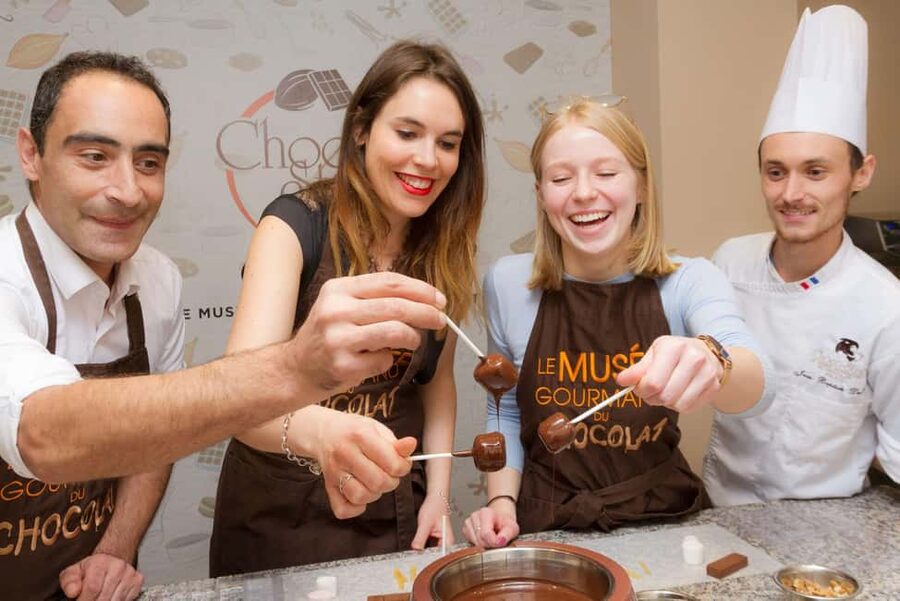
This is a natural fit for families with children aged seven and older. Children under seven are not permitted, and the structured 45-minute format works well for school-age kids. The instructor demonstrates each task, then helps as needed, so children do not need prior cooking experience.
It also suits adults who enjoy making things together. A birthday, hen party, or rainy Paris afternoon gives the session a clear purpose. The bilingual instruction makes it workable for French-English groups, and the practical format does not depend on advanced language skills.
Chocolate fans who want to learn the full craft should be more cautious. You will see the finished chocolate being used, but you will not make it from the beginning. The museum supplies the history and the tasting; the workshop supplies the decorating and eating.
I would also consider your day’s schedule. The complete visit takes about two hours, but the 45-minute class is fixed and punctual. Since late arrival is not accepted and tickets are non-refundable, leave a generous buffer for public transportation.
How to make the most of your visit
Arrive early. The stated requirement is 15 minutes before the workshop, and that is worth treating as a firm rule. A late start can mean missing demonstrations, upsetting the flow of the class, or being turned away.
Wear clothes that can tolerate a little mess. The apron helps, but this is still a hands-on food activity involving melted chocolate, toppings, and dipping. Children will have more fun if you are not worried about every spot.
Use the design time well. Decide whether you want a neat geometric bar, a topping-heavy creation, or a mix of orange, marshmallow, nuts, and sweets. Since the class is brief, you do not have much time to rethink your design after the chocolate is in the mold.
Keep the museum for after the workshop. The session gives you a clear starting point, and the exhibits then explain the larger story behind what you just handled. Set aside enough time for all three floors rather than treating the museum as a quick corridor on the way out.
Protect your chocolate afterward. On a warm day, carry it in shade and avoid long outdoor stops. If you are buying other souvenirs, put the chocolate near the top of your bag instead of under heavy items.
Should you book the Choco-Story workshop?
Book it if you want a cheerful, family-friendly Paris activity with a sizeable edible souvenir. The combination of a 45-minute decorating class, bilingual instruction, tasting, apron, and three-floor museum makes this more useful than a simple chocolate sample.
Skip it if you expect to temper chocolate, create fillings, or receive a serious lesson from bean to bar. You will decorate pre-prepared chocolate rather than make the chocolate itself.
For most families with children seven and older, I think the experience is a good choice, especially on a rainy day or during a trip packed with monuments. Adults in a birthday or friend group can enjoy it too. Just arrive early, expect a brisk pace, and judge the $58 price as payment for an activity and museum visit, not only for the sweets.
FAQ
Where does the chocolate workshop take place?
It takes place at Musée du Chocolat, 28 Boulevard de Bonne Nouvelle, 75010 Paris, France.
How long does the full experience last?
The complete experience lasts about two hours. The chocolate workshop itself lasts 45 minutes.
How much chocolate can I take home?
You can take home approximately 250 to 300 grams of chocolate that you create and decorate.
Is the chocolate made from scratch during the class?
No. The chocolate is prepared and melted for you. The activity focuses on dipping, shaping, molding, layering, and decorating.
What toppings can I use?
Available toppings include orange strips, marshmallows, hazelnut cubes, mini-tablets, nuts, coconut, and colorful sweets.
Is museum admission included?
Yes. Admission to Le Musée Gourmand du Chocolat Choco-Story is included.
What else is included besides the workshop?
The package includes a Choco-Story apron, a chocolate tasting, and a virtual demonstration.
Is the activity available in English?
Yes. Instruction is available in French and English.
What is the minimum age?
Children must be at least seven years old to join the workshop.
What happens if I arrive late?
Late arrivals are not accepted under the stated rules, and the tickets are non-refundable. Arrive at least 15 minutes before the workshop.
More Dessert Tours in Paris
- Paris: Day or Sunset Cruise with Drink, Ice Cream or Dessert
★ 4.4 · 4,225 reviews - Paris: Entrance Ticket to the Chocolate Museum
★ 4.1 · 1,105 reviews - Private Montmartre Food Tour with Wine, Cheese & Pastries
★ 5.0 · 1,027 reviews - Paris French Sweets Tasting Tour with Pastries and Chocolates
★ 4.5 · 947 reviews
Recently added around Paris
- Private Half-Day Guided Tour of Paris★ 4.5 · 48 reviews
- 2 hour outdoor group activity in Paris: SAINT GERMAIN★ 5.0 · 48 reviews
- Paris Dinner Show Opera Bel Canto★ 4.5 · 48 reviews
- Paris Vintage Tour by Night on a Sidecar with Champagne★ 5.0 · 48 reviews
- Secrets & Scandals of the Louvre – Limited to 6 Guests★ 5.0 · 48 reviews
- Paris Photoshoot: Eiffel Tower Exclusive Private Experience★ 5.0 · 48 reviews
- From Paris: Versailles Full-Day Guided Tour with Lunch★ 4.9 · 48 reviews
- Paris: Louvre Mona Lisa Discovery Guided Tour with Ticket★ 4.9 · 48 reviews
Workshops, compared.
Paris Cooking Class and Lunch with Wine plus Market Visit Option
Read our review →
Paris Croissant Small-Group Baking Class with a Chef
Read our review →
Fragonard Eze: Perfume Making Class and Factory Tour
Read our review →
Paris: French Croissant Baking Class with a Chef
Read our review →
Grasse: Perfume Making Class and Fragonard Factory Tour
Read our review →Browse the lists this tour appears in