
Reviewed · COOKING CLASSES
Paris: Bread and Croissant-Making Class
Fresh bread makes Paris even better. This hands-on class at Le Petit Mitron takes you behind the counter of a family-run bakery, where you learn to shape baguettes and croissants with a real artisan baker. I like the small groups, limited to eight people, and I like that the class teaches both technique and French food traditions. The main drawback is the price, $258 per person for two hours, which feels high if you want a long, fully practical baking course.
The baker, Didier, brings plenty of personality to the lesson, and interpreters such as Luis, Luce, and Elsa help English-speaking students follow every step. I also like that you taste warm bread and pastries during the class and receive recipes by email. You should know, though, that the balance can lean toward demonstration and explanation rather than nonstop hands-on work.
In This Review
- Key points to know before you book
- Entering Le Petit Mitron on rue Oberkampf
- Meeting Didier, the baker behind the class
- Working the dough with your own hands
- Making the classic baguette and La Parisse
- Shaping croissants and tasting warm pastries
- A lesson in French bread culture
- How much hands-on time should you expect?
- Is $258 worth paying for two hours?
- Timing, languages, and practical details
- Who should book this Paris baking class?
- Should you book Le Petit Mitron?
- FAQ
- Where does the bread and croissant class meet?
- How long does the class last?
- How much does the class cost?
- What breads do you make?
- Are croissants included?
- What languages are available?
- How large is the group?
- Are children allowed to attend?
- What is included in the price?
Key points to know before you book
- You work inside a working family bakery: The class takes place at Le Petit Mitron on rue Oberkampf, not in a detached cooking school.
- Two baguettes are part of the lesson: You make a classic French baguette and La Parisse, the bakery’s special version.
- Croissant shaping is included: You learn the basic handling and shaping techniques, then taste the finished pastries.
- The group is small: With no more than eight participants, the baker can give personal attention.
- Didier is a big part of the experience: His humor, energy, and family baking background turn a technical lesson into a lively Paris activity.
- You leave with useful follow-up material: Ingredients, tools, and an apron are supplied, and the recipes are sent by email.
Entering Le Petit Mitron on rue Oberkampf
Your meeting point is Le Petit Mitron, at 8 rue Oberkampf, 75011 Paris. The bakery sits in the 11th arrondissement, an area that gives this activity a more everyday Paris feel than a grand culinary school in a tourist district.
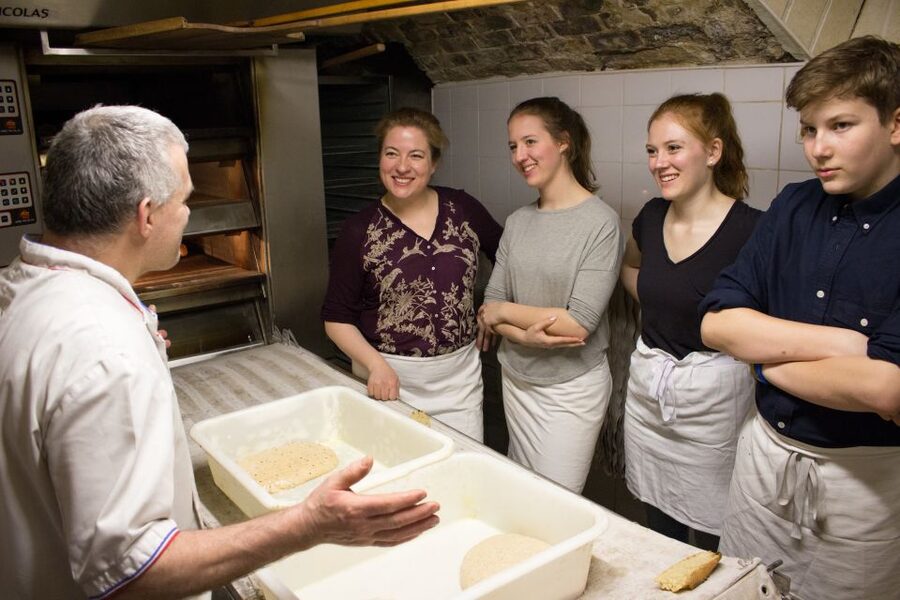
The setting matters. You are not simply watching a staged demonstration from a distance. You go behind the counter, put on an apron, handle the dough, and see how bread is made in the place where the baker normally works. That connection to a real boulangerie gives the class its strongest sense of place.
The bakery is family-run, and Didier’s family has baked for generations. His father and grandfather were bakers, and he shares techniques passed down through that family line. One especially interesting detail is his attention to flour: he sources his own wheat and grinds it in the shop.
That kind of detail helps explain why the class goes beyond a basic recipe. You learn that French bread depends on flour, fermentation, shaping, heat, and timing. It is not just a matter of adding yeast and hoping for the best.
The bakery is described as modern, clean, and spacious enough for the small group. That is useful if you dislike cramped cooking demonstrations. Still, remember that this is a bakery counter, not a quiet classroom. You are working around the tools and production space of a real shop.
More Workshops in Paris
- Fragonard Paris: Mini Perfume Workshop
★ 4.5 · 1,924 reviews - Paris Cooking Class and Lunch with Wine plus Market Visit Option
★ 5.0 · 1,024 reviews - Paris Croissant Small-Group Baking Class with a Chef
★ 5.0 · 910 reviews
Meeting Didier, the baker behind the class
Didier is the engine of the experience. He teaches with high energy, jokes freely, and gives the class a relaxed tone. His humor can be a little naughty, but the repeated praise for his warmth and ability to include everyone suggests that he knows how to handle a mixed group.
That matters in a short class. Two hours can feel rushed if the instructor simply races through measurements and commands. Didier slows down to explain why the bread behaves as it does, then demonstrates the movements rather than leaving you to guess.
He also brings context to the lesson. You may hear stories about the history of French bread, the shape of the baguette, the evolution of French food, and current issues facing a bakery. This gives the class more substance than a simple make-and-take activity.
The language setup is practical. The baker may teach in French, while a translator explains in English or another supported language. English, French, Japanese, and Spanish are listed as available languages. Luis, Luce, and Elsa are among the interpreters praised for clear, quick translations.
If you want to practice French, this can work well. One participant noted that Didier spoke slowly and clearly enough to follow much of the lesson in French, while the translator kept the technical information understandable. You do not need to speak French to take part.
Working the dough with your own hands
The class begins with the basic ingredients and the feel of the dough. You get to put your hands into the flour and work with the mixture directly. That tactile part is important because bread dough rarely behaves exactly as a printed recipe suggests.
You learn how the dough should feel, how to handle it without overworking it, and how small changes affect the final loaf. The focus is not just on memorizing quantities. It is on noticing texture and learning what the baker sees and feels.
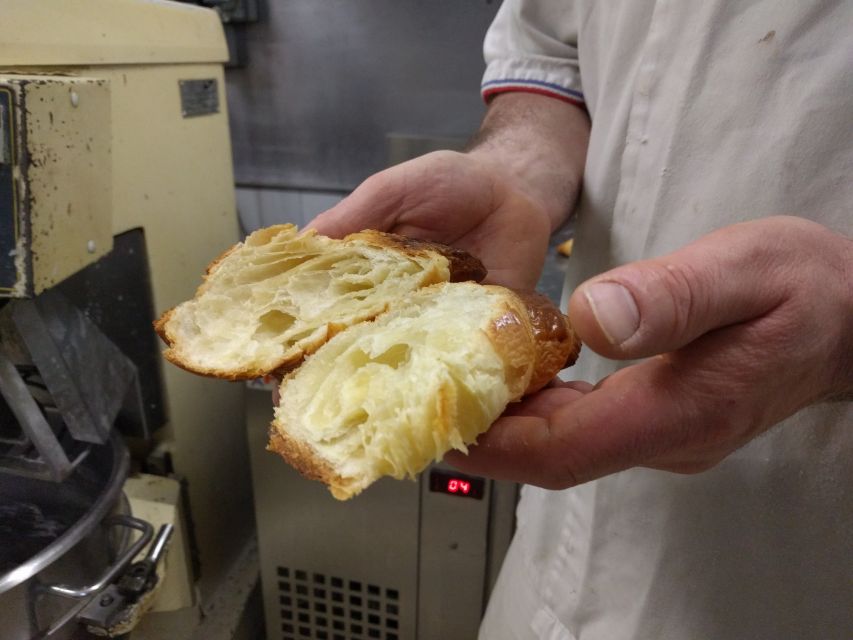
This is where the class is most useful for anyone who already bakes at home. Several participants who regularly make bread found the technical advice valuable, particularly the tips for creating a crusty golden exterior with a soft, warm center.
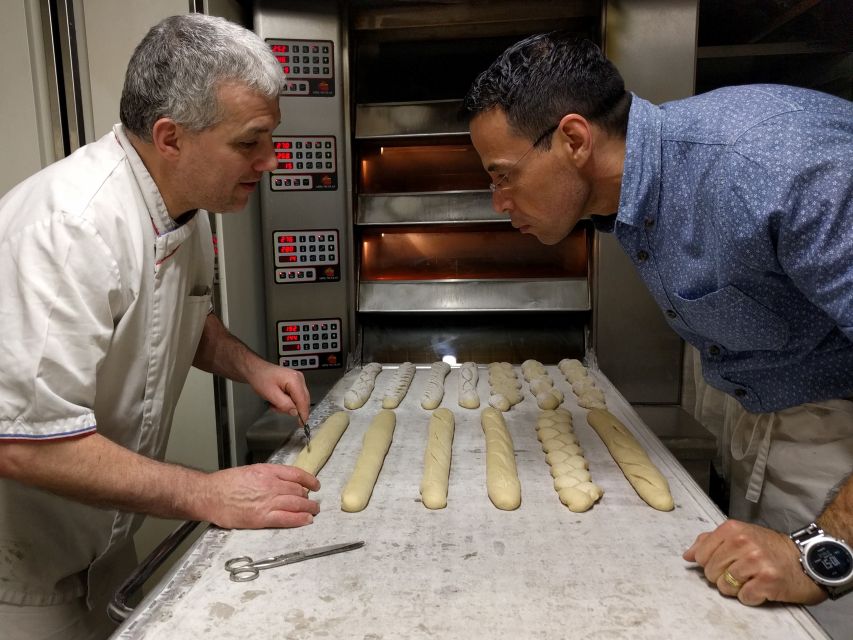
The class also covers shaping. A baguette must be formed with care so it keeps its structure and bakes evenly. Didier demonstrates the process, then gives students the chance to try the method themselves.
You should keep your expectations realistic. This is not a full professional bakery apprenticeship, and the short format means you may not personally perform every stage from start to finish. Some participants expected more hands-on time and found the demonstrations more prominent than anticipated.
That is not necessarily a flaw. Bread making involves waiting, fermentation, oven timing, and many steps that cannot fit neatly into two hours. The value here is seeing the complete process while practicing key movements under guidance.
Making the classic baguette and La Parisse
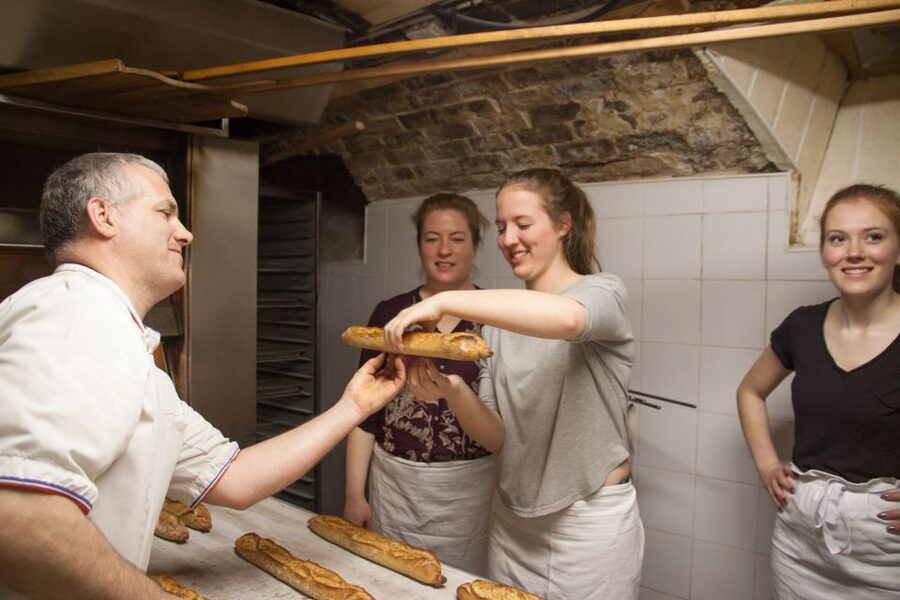
The central bread lesson covers two baguettes. The first is a classic French baguette, the long, crisp loaf that is part of daily life in France. The second is La Parisse, a special baguette associated with this bakery.
Making two versions gives you a useful comparison. You can see how a standard loaf differs from the bakery’s own creation, and you can taste the results rather than relying only on a demonstration. The baker explains the details that affect the crust, interior, shape, and flavor.
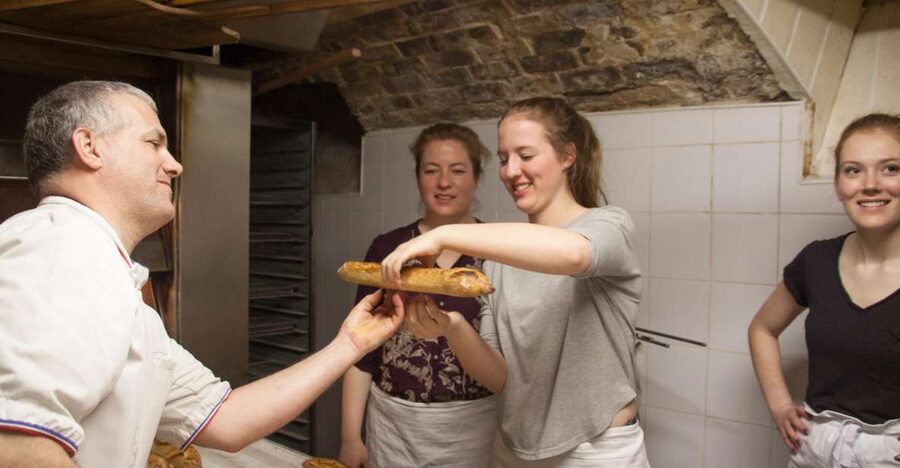
The tasting is one of the best parts of the class. Warm baguette fresh from the oven is a fine reward for an hour of flour on your hands. It also lets you judge the methods immediately, while the bread is at its best.
Come hungry. You taste baguettes and croissants during the class, and some groups have left with a generous bag of bread. The precise amount to take home may vary, so I would not book this as a guaranteed substitute for a bakery shopping trip. Think of the take-home bread as an added benefit, not the main value.
One useful result is that you can compare your own work with the baker’s finished example. That makes it easier to understand what a proper crust and crumb should look like when you try the recipe later.
More Cooking Classes in Paris:
- Paris: Montmartre Cheese, Wine & Pastry Guided Walking Tour
★ 4.8 · 2,255 reviews - Paris: Macaron Class at Galeries Lafayette
★ 4.3 · 905 reviews - Paris: French Croissant Baking Class with a Chef
★ 4.9 · 712 reviews - Paris Cooking Class: Learn How to Make Macarons
★ 5.0 · 634 reviews
Shaping croissants and tasting warm pastries
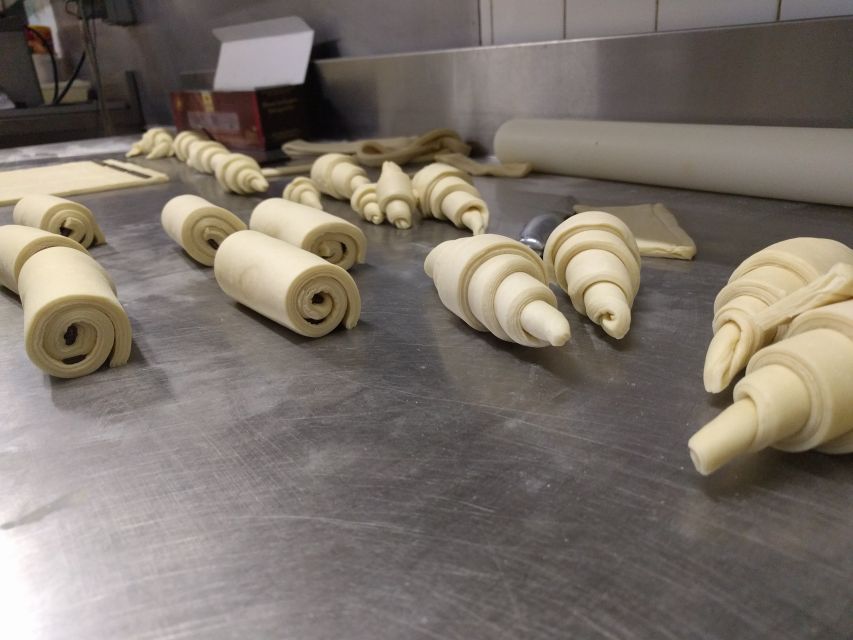
The class also introduces croissant making and shaping. Croissant dough requires a different kind of care from baguette dough, and the lesson gives you a chance to see how the pastry is handled and formed.
The shaping is practical and visual. You learn how the dough is cut and rolled into the familiar crescent form, with attention to the basic technique needed to create an attractive pastry. The class is not long enough to cover every detail of a full professional croissant production schedule, but it gives you a clear starting point.
The finished croissants are tasted warm. One participant called the result the best croissant they had enjoyed, while others praised both the pastries and the chance to recreate them at home.
Some sessions have also included pain au chocolat, although the main activity description centers on croissants and two types of baguette. If pain au chocolat matters to you, treat it as a possible extra rather than a fixed part of the advertised program.
Pastry work can be especially appealing to families. Children can see a familiar food take shape in front of them, and the activity gives them something to do with their hands. The baker has been praised for keeping children engaged, including groups with children aged eight, ten, eleven, and twelve.
Children under six are not accepted. Older children can enjoy the class, but adults should remember that there is flour, waiting, tasting, and technical explanation mixed together. It is not designed as a simple children’s entertainment session.
A lesson in French bread culture
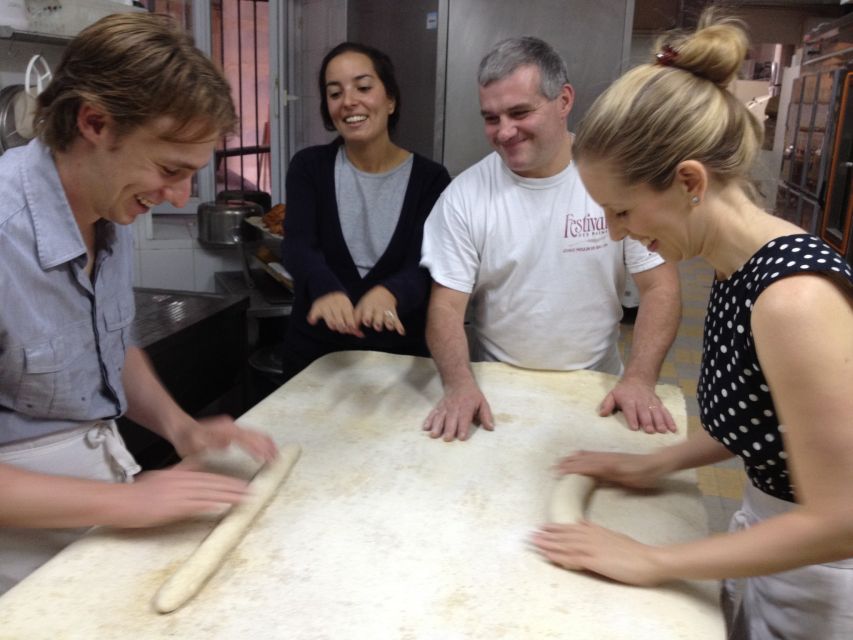
Bread in France is not merely a side dish. The baguette is tied to daily routines, neighborhood bakeries, and the basic pleasure of buying a loaf and eating part of it before you reach home.
This class puts that habit into context. You learn why the baguette has its familiar shape and hear stories about how French bread and pastries developed. The interpreter may add historical background and explain the meaning behind different styles of bread.
Didier also discusses the challenges facing his business and his approach to sourcing and milling flour. That makes the class feel connected to modern bakery work rather than frozen in postcard France.
I find this cultural layer especially valuable because it changes the way you look at every boulangerie afterward. Instead of seeing only a row of attractive loaves, you start noticing crust, color, crumb, flour, and shaping.
The experience also gives you a chance to ask questions. A small group makes a difference here. With eight people or fewer, the baker can watch individual attempts, answer follow-up questions, and make sure no one gets lost in translation.
How much hands-on time should you expect?
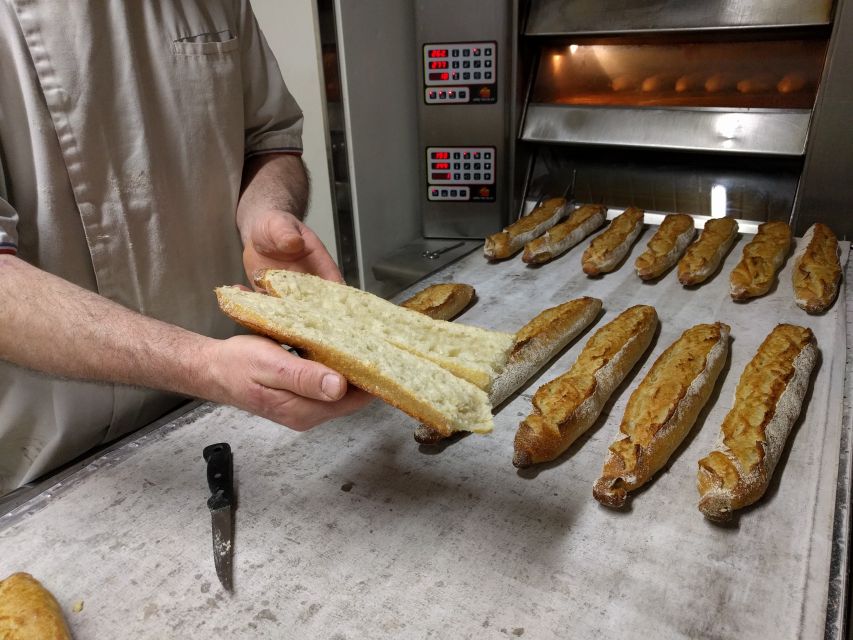
The phrase hands-on is accurate, but it needs a little explanation. You handle ingredients, work dough, shape bread, and take part in the process. You are not simply standing behind a glass window.
At the same time, the baker must demonstrate several stages for the whole group. Some processes take longer than the class itself, so you may watch part of the preparation and then work on selected steps. The lesson aims to show the process from start to finish, not give every participant a separate bakery production line.
I would recommend this class if you want to understand bread making and learn methods you can use at home. I would be more cautious if your only goal is to spend two hours making a large quantity of pastries entirely by yourself.
The class appears particularly strong for mixed-experience groups. Experienced home bakers can ask technical questions, while beginners can follow the demonstrations and practice the basic movements. Families also benefit from the informal atmosphere and the baker’s easy manner.
Is $258 worth paying for two hours?
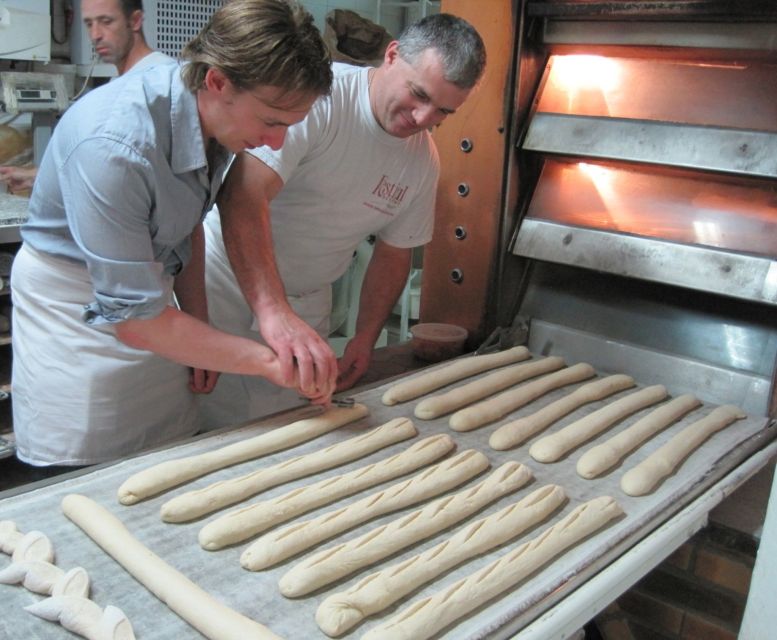
At $258 per person, this is an expensive Paris activity. The price is easier to justify if you place value on instruction, access to an artisan bakery, a small group, tasting, and the chance to learn techniques that stay useful after your trip.
All ingredients, utensils, and an apron are included. You also receive a copy of the recipe by email, which means the class does not end when you leave the bakery. The recipes give you a way to repeat the experience at home.
The personal attention helps the value. A large demonstration class could show you similar ingredients, but eight people or fewer gives you a better chance to work directly with the dough and ask questions.
The baker’s experience is another part of the cost. You are learning from someone who has worked in the family trade for years and who sources and mills his own wheat. That is a very different experience from following a generic tourist recipe.
Still, I would not describe this as a bargain. If you mainly want to eat excellent baguettes and croissants, Paris bakeries offer a cheaper route. Book this when you want the story, the instruction, the humor, and the chance to make the food yourself.
Timing, languages, and practical details
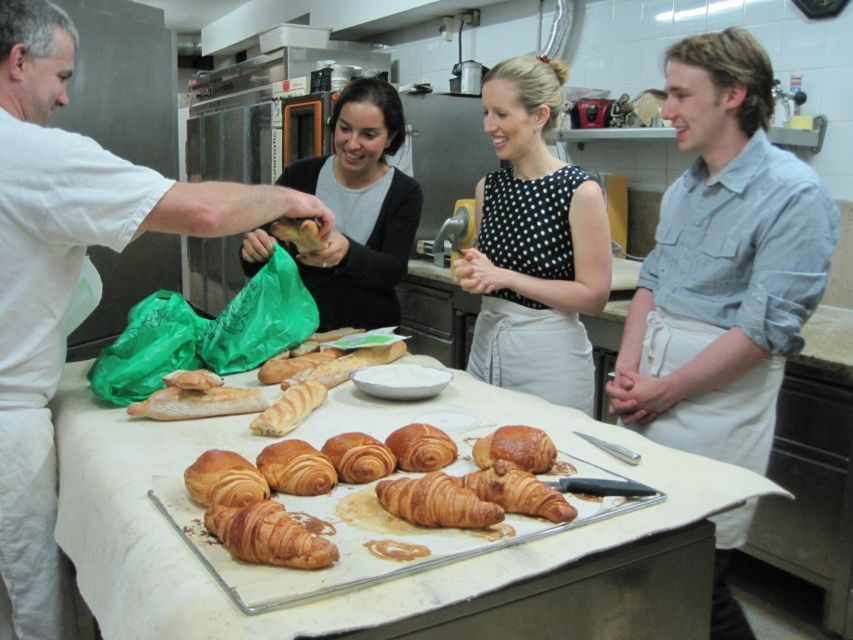
The activity lasts two hours, with starting times based on availability. That makes it easy to fit into a Paris schedule, but you should leave enough room around it for the possibility of a relaxed finish. Some groups have stayed longer because the conversation continued.
The small-group limit is eight participants. A smaller group may feel more personal, while a full group will naturally give you less individual attention than a private lesson.
Instruction is available in English, French, Japanese, and Spanish. Translators are part of the experience when needed, and the strongest praise has gone to interpreters who understood both the language and the bread-making terms.
You can cancel up to 24 hours in advance for a full refund. The reserve-now, pay-later option also helps if your Paris plans are still moving around.
Wear something practical. The bakery supplies an apron, but you are working with flour and dough, so this is not the moment for your most delicate outfit. The activity is not suitable for children under six.
Who should book this Paris baking class?
I would choose this class for home bakers, food-focused visitors, families with older children, and anyone who wants an activity with a strong local connection.
It is also a good pick for repeat visitors to Paris who have already seen the major monuments. Working inside a neighborhood bakery offers a different view of the city, one tied to ordinary food and daily life.
Couples can enjoy the shared task, and parent-child pairs have a natural way to spend time together. The class has worked well for groups ranging from children to older adults because the baker adjusts his style and keeps the mood light.
I would skip it if you dislike group instruction, have very limited time, or want a fully private lesson with uninterrupted personal practice. I would also think twice about the cost if your main priority is simply taking home bread.
Should you book Le Petit Mitron?
Yes, if you want more than a quick pastry stop. The strongest reasons to book are Didier’s lively teaching style, the family bakery setting, the clear translation, and the chance to learn both baguette and croissant techniques in one short class.
The price is high, and the class includes a fair amount of demonstration. But you receive more than a recipe card. You get the feel of the dough, the logic behind the crust, the story of a working boulangerie, warm tastings, and practical advice you can use back home.
For a first Paris visit, this is a smart choice when you want a break from monuments and museums. Come hungry, expect flour on your hands, and do not judge the class only by how much bread you carry away. Its real value is learning why French bread tastes the way it does.
FAQ
Where does the bread and croissant class meet?
The class meets at Le Petit Mitron, located at 8 rue Oberkampf, 75011 Paris.
How long does the class last?
The experience lasts two hours.
How much does the class cost?
The listed price is $258 per person.
What breads do you make?
You make two baguettes: a classic French baguette and La Parisse, a special baguette associated with the bakery.
Are croissants included?
Yes. The class teaches you how to make and shape croissants, followed by tasting.
What languages are available?
The listed languages are English, French, Japanese, and Spanish.
How large is the group?
The class is limited to eight participants.
Are children allowed to attend?
Children under six are not suitable for the activity. Older children have attended, including children aged eight, ten, eleven, and twelve.
What is included in the price?
Ingredients, utensils, and an apron are included. A copy of the recipe is sent by email after the class.
Recently added around Paris
- Private Half-Day Guided Tour of Paris★ 4.5 · 48 reviews
- 2 hour outdoor group activity in Paris: SAINT GERMAIN★ 5.0 · 48 reviews
- Paris Dinner Show Opera Bel Canto★ 4.5 · 48 reviews
- Paris Vintage Tour by Night on a Sidecar with Champagne★ 5.0 · 48 reviews
- Secrets & Scandals of the Louvre – Limited to 6 Guests★ 5.0 · 48 reviews
- Paris Photoshoot: Eiffel Tower Exclusive Private Experience★ 5.0 · 48 reviews
- Paris: Louvre Mona Lisa Discovery Guided Tour with Ticket★ 4.9 · 48 reviews
- From Paris: Versailles Full-Day Guided Tour with Lunch★ 4.9 · 48 reviews
Cooking Classes, compared.

Paris: Montmartre Cheese, Wine & Pastry Guided Walking Tour
Read our review →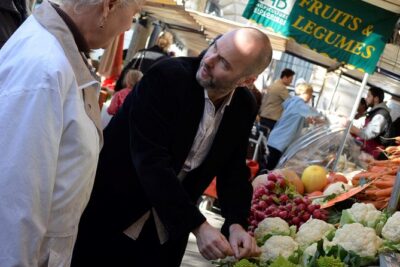
Paris Cooking Class and Lunch with Wine plus Market Visit Option
Read our review →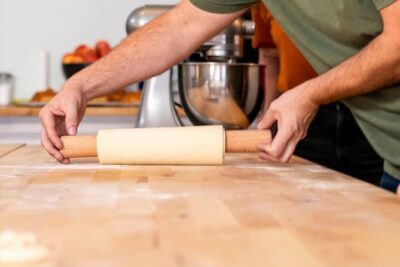
Paris Croissant Small-Group Baking Class with a Chef
Read our review →
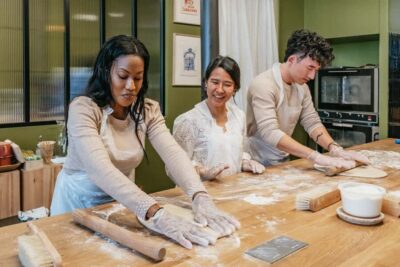
Paris: French Croissant Baking Class with a Chef
Read our review →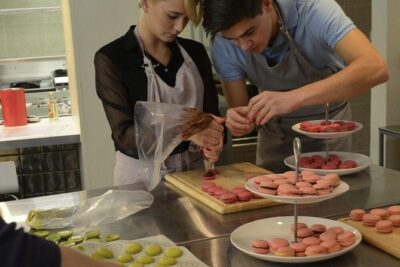
Paris Cooking Class: Learn How to Make Macarons
Read our review →
A Morning in Paris Food Tour: Croissants, Baguettes & Chocolate
Read our review →Browse the lists this tour appears in