
Reviewed · COOKING CLASSES
Paris Croissant and Breakfast Pastry Class with a French Chef
Butter makes Paris better. This three-hour pastry class gives you hands-on practice with croissants and pain au chocolat in a group limited to six people. I like the small class size, which leaves room for questions, and I like that you take home a generous supply of freshly baked pastries rather than only a recipe card.
The class is taught in English by a professional French pastry chef, with aprons, equipment, coffee, tea, and printed recipes included. The main drawback is that croissant dough takes time, so some stages are prepared in advance or exchanged with dough made during an earlier class. You still work through the methods, but you will not complete every part from one raw batch to finished pastry in three hours.
In This Review
- Key points at a glance
- Starting at 9 Rue Thimonnier in Paris
- A small class with room to ask questions
- What you actually learn about croissant dough
- Why some dough preparation happens in advance
- Shaping croissants and pain au chocolat
- The Thursday morning bicolor pastry option
- Eating the results with coffee and tea
- What the $131.54 price includes
- Who will enjoy this class most
- Practical booking advice for allergies and timing
- Should you book the Paris croissant class?
- FAQ
- Where does the croissant class meet?
- How long does the class last?
- Is the class taught in English?
- How many people are in each class?
- What pastries will I make?
- Can I take pastries home?
- What is the minimum age?
- Can I cancel for a refund?
Key points at a glance

- Six people maximum: This is small enough for step-by-step help and plenty of questions.
- Real croissant technique: You practice beurrage, folding, rolling, shaping, and fermentation basics.
- Two French classics: The standard class covers buttery croissants and pain au chocolat.
- Thursday morning variation: The Thursday morning session includes bicolor croissants filled with chocolate praline.
- Breakfast included: Coffee and tea are served while the pastries bake, so you can eat some fresh from the oven.
- Take-home treats: You receive bags for your pastries, along with recipes and an Everyday Gourmet French Tarts eBook.
Starting at 9 Rue Thimonnier in Paris
The class meets at Patisserie a la Carte, at 9 Rue Thimonnier, 75009 Paris. The address is near public transportation, and the activity begins and ends at the same location. There is no hotel pickup, so plan your route before class day.
The meeting time matters. After five minutes, the instructor begins without late participants. If nobody arrives within 15 minutes, the class is automatically canceled and the booking may be treated as a last-minute, nonrefundable cancellation. I would leave extra time for the journey, especially if you are crossing Paris from a hotel or apartment.
The setting is a professional kitchen rather than a traditional neighborhood bakery counter. That gives you the right equipment and working space, though one participant felt the atmosphere did not have as much of a French feel as expected. You are coming here to learn pastry, not to watch a demonstration from the customer side of a shop.
Wear casual clothes and flat, comfortable shoes. Tie back long hair. This is a working class, with rolling, folding, shaping, and handling dough, so sensible clothing is better than anything you would wear to a fancy Paris dinner.
More Workshops in Paris
- Fragonard Paris: Mini Perfume Workshop
★ 4.5 · 1,924 reviews - Paris Cooking Class and Lunch with Wine plus Market Visit Option
★ 5.0 · 1,024 reviews - Paris Croissant Small-Group Baking Class with a Chef
★ 5.0 · 910 reviews
A small class with room to ask questions
The maximum of six participants is one of the strongest features of this experience. Croissant dough can be confusing even when an instructor makes it look easy. In a group this size, you can watch the demonstration closely, then get help with your own dough before a small mistake becomes a large one.
The instructors receive especially strong praise for patience, clear English, and careful demonstrations. Names mentioned in the class feedback include Julie, Gaëlle, Marie, Mary, Hiba, and Gail. Teaching styles may vary by session, but the repeated strengths are consistent: clear steps, calm correction, and time for questions.
Gaëlle is praised for making the process relaxed and fun while explaining each stage carefully. Julie is described as precise, encouraging, and especially good at explaining the technical side of the dough. Marie is praised for kindness and patience, while Hiba helped a mother and daughter produce attractive croissants and pain au chocolat.
That range of instructors is useful to keep in mind. You are booking a class led by the Patisserie a la Carte team, not necessarily one particular chef. The experience appears to depend partly on the chef assigned that day, but the teaching record is notably strong, with a 4.9 rating and 99 percent recommendation rate from 68 ratings.
What you actually learn about croissant dough
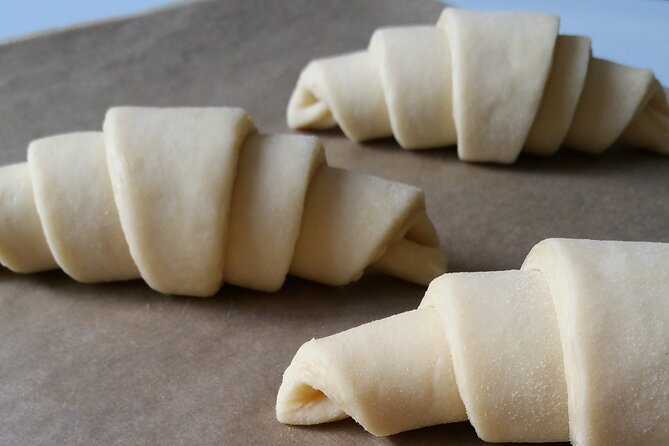
This is not simply a class where you cut triangles from prepared dough and put them in the oven. You are introduced to the technical work that creates the pastry’s thin, crisp layers.
The first key term is beurrage, the process of adding butter to the dough. The dough itself is called the détrempe before the butter is enclosed. Once the butter has been folded into the dough to form a sealed block, the combined piece is known as the pâton.
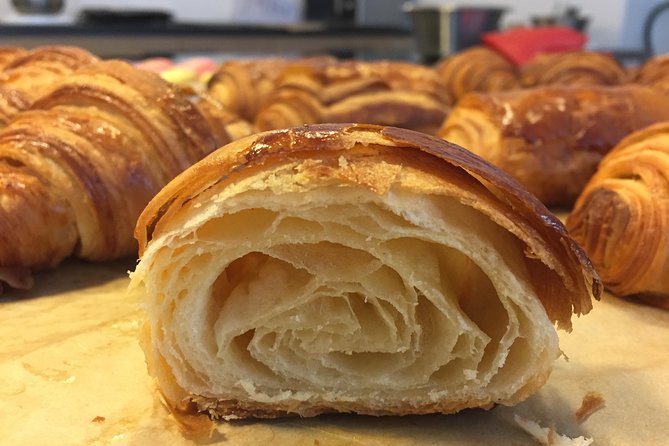
From there, you practice making the turns. This means rolling the pâton and folding it in a controlled way. Each turn builds layers of dough and butter. The French term feuilleter refers to creating those thin leaves, or layers, that give a properly baked croissant its flaky texture.
You also learn about la pousse, the fermentation and rising stage caused by yeast. This is an important lesson for home bakers. Croissants are not difficult because the ingredient list is long. They are difficult because timing, temperature, butter handling, rolling, folding, shaping, and rising all affect the final result.
The class helps you see why a bakery croissant can be light and crisp outside while remaining soft inside. You learn the motions, but you also gain a better sense of what the dough should look and feel like at each stage. That practical awareness may be more useful at home than memorizing a recipe.
Why some dough preparation happens in advance
Layered, yeast-leavened dough needs a lot of resting and rising time, often beginning the day before. A three-hour class cannot realistically include every waiting period and still give you baked pastries before you leave.
The class handles this by preparing certain stages ahead of time. You still work through the techniques during the session, but some dough may already have completed an essential rest or fermentation period. One participant described making a batch of dough that was wrapped and refrigerated for the following day, then receiving another prepared batch to roll and shape into four croissants and four pain au chocolat.
This arrangement is practical, but it is worth understanding before booking. If your dream is to begin with flour, butter, yeast, and liquid, then wait through every rise and bake that exact same dough, this is not that type of course. If your priority is to learn the method and eat the finished pastries during the same morning, the preparation system makes good sense.
The class also gives you a glimpse of professional bakery workflow. In a pastry kitchen, batches are always at different stages. One dough is resting, another is being shaped, and another is baking. Seeing this process helps explain how a bakery can produce laminated pastries regularly without asking customers to wait a full day.
More Cooking Classes in Paris:
- Paris: Montmartre Cheese, Wine & Pastry Guided Walking Tour
★ 4.8 · 2,255 reviews - Paris: Macaron Class at Galeries Lafayette
★ 4.3 · 905 reviews - Paris: French Croissant Baking Class with a Chef
★ 4.9 · 712 reviews - Paris Cooking Class: Learn How to Make Macarons
★ 5.0 · 634 reviews
Shaping croissants and pain au chocolat
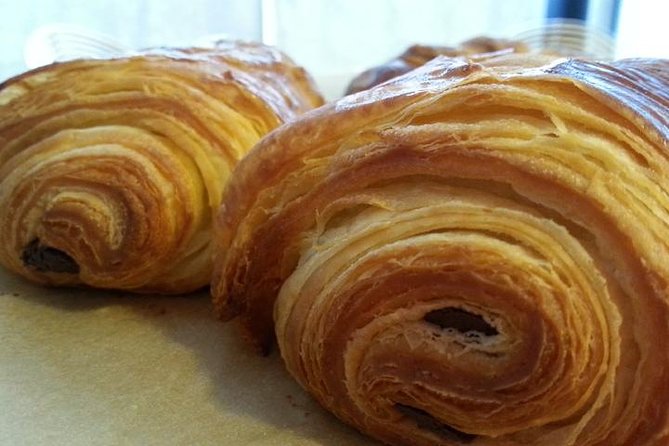
The practical heart of the class is shaping. You work with the prepared dough after it has been rolled and layered, then form the familiar crescent shape for plain croissants. Pain au chocolat is made with chocolate inside the dough, creating a rectangular pastry with a rich center.
A typical session can result in four plain croissants and four chocolate pastries per person, based on the class experience described in the supplied details. The exact quantity may depend on the session and dough preparation, but you should expect more than one pastry to eat on site.
The best part is that you are not only watching the chef’s hands. Each participant gets a chance to complete the steps. That matters because rolling laminated dough requires a different touch from ordinary bread dough. Too much pressure can flatten the layers. Too little can leave the dough uneven. The small group makes it easier to receive guidance as you work.
The pastries are then baked, and the class finishes with coffee or tea. Eating one while it is still warm gives you an immediate lesson in texture. You can compare the crisp shell, tender interior, and melted chocolate with what you may have tasted in a Paris bakery.
You also receive bags and wrapping materials to take the remaining pastries with you. Several people had enough to continue eating them over the next few days. That is a useful perk, though remember that delicate laminated pastry is at its best fresh.
The Thursday morning bicolor pastry option
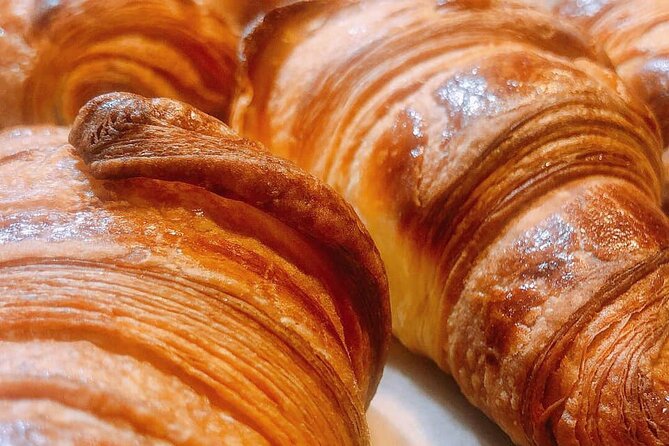
Thursday morning classes offer a special variation: bicolor croissants filled with chocolate praline. These are visually different from the standard golden croissant and add a more decorative pastry technique to the morning.
If that specific pastry appeals to you, check that you are selecting the Thursday morning session before paying. The standard class focuses on classic croissants and pain au chocolat, while the bicolor version is tied to the Thursday morning schedule.
The supplied information does not promise that every session includes pain aux raisins. One participant expected to make them but found that they were only shown in a cookbook rather than prepared during class. If pain aux raisins is important to you, ask before booking rather than assuming it is part of the menu.
Eating the results with coffee and tea
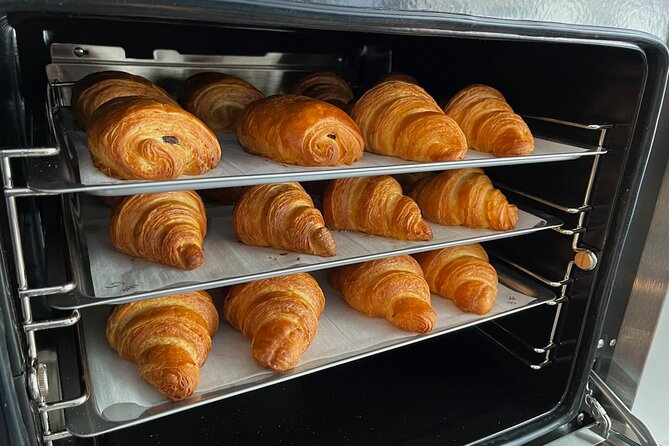
The finish is simple and well judged. After the work is done, you can enjoy some of the pastries with coffee or tea while they are fresh from the oven. This gives the class a natural reward after the rolling and folding.
It also makes the morning feel social. You meet the other five or fewer participants, compare shapes, and share the small triumph of seeing the dough puff in the oven. The class is suitable for a couple, friends, a parent and teenager, or a solo participant who enjoys cooking with a small group.
The minimum age is 15. Children must attend with a registered adult, with one adult required per child. This is not set up as a children’s activity, and the work involved makes it better for teenagers and adults who are willing to concentrate and get their hands busy.
What the $131.54 price includes

At $131.54 per person, this is not a cheap breakfast. You are paying for a three-hour lesson, a professional chef, a six-person limit, kitchen equipment, an apron, recipes, coffee or tea, and a sizeable amount of pastry to take home.
The value depends on how you use the class. If you only want to eat a croissant, a Paris bakery will cost far less. If you want a practical skill, direct instruction, and a chance to ask questions in a professional kitchen, the price is easier to justify.
You also avoid buying special equipment for a one-time attempt. The class supplies the work area and tools, while the English recipe copy gives you a starting point for practicing later. The included Everyday Gourmet French Tarts eBook adds another set of recipes, although it should be viewed as a bonus rather than the main reason to book.
For a food-focused morning in Paris, I consider the price reasonable for people who value participation over sightseeing. It is less appealing if you are trying to keep costs down or would rather spend the morning visiting museums and bakeries on your own.
Who will enjoy this class most
This is a good choice if you like to understand how food is made, not just taste it. You do not need to be an expert baker, but patience helps. One participant with baking experience noted that the class involved plenty of work and might suit people who already have some familiarity with baking.
That does not mean beginners should stay away. The strongest teaching comments come from people who appreciated the clear, step-by-step approach. You should be ready to listen, repeat the motions, and accept that laminated dough rewards care more than speed.
I would especially recommend it for:
- Couples looking for a shared morning activity
- Teenagers aged 15 and older who enjoy cooking
- Home bakers who want better croissant technique
- Food lovers who want a break from museums and walking tours
- Visitors staying near Montmartre or the 9th arrondissement
- Anyone who wants a tangible souvenir that can be eaten
It may not suit you if you want a fully traditional bakery atmosphere, a drop-in demonstration, or a class where every dough stage is completed from start to finish. It also requires careful timing, so it is not a good activity to squeeze between a hotel breakfast and a distant timed attraction.
Practical booking advice for allergies and timing
Tell the operator about allergies or special dietary needs when you book. The class centers on butter, wheat, and chocolate pastries, so you should not assume substitutions are available.
Confirmation is sent within 48 hours, subject to availability. The activity requires a minimum number of participants, so a confirmed booking can still be canceled if that minimum is not reached. In that case, you are offered an alternative or a full refund.
Free cancellation is available up to 24 hours before the start time. Cancellations or changes made less than 24 hours in advance are not refunded or accepted. Cutoff times use Paris local time, so keep that in mind if you are changing plans from another time zone.
The class is booked, on average, 35 days ahead. That is a useful sign that you should reserve early if your Paris dates are fixed, especially if you want the Thursday morning bicolor pastry session or need a particular morning.
Should you book the Paris croissant class?
Book it if you want to learn by doing. The six-person limit, patient English-speaking chefs, professional equipment, and take-home pastries give this class more substance than a quick pastry demonstration.
I would book it for a relaxed morning with a partner, friend, or older teenager. I would also choose it for a serious home baker who wants to improve the handling of laminated dough. The main caution is simple: croissants take time, so the class uses prepared stages. You learn the full process, but you should not expect to complete every rise and rest period in one visit.
At $131.54, it is a splurge. Still, you leave with useful technique, printed recipes, coffee, and plenty of croissants and pain au chocolat. For many people, that is a better Paris souvenir than another purchased trinket.
FAQ
Where does the croissant class meet?
It meets at Patisserie a la Carte, 9 Rue Thimonnier, 75009 Paris, France.
How long does the class last?
The class lasts approximately three hours.
Is the class taught in English?
Yes. The experience is offered in English, and an English copy of the recipes is provided.
How many people are in each class?
The class has a maximum of six participants.
What pastries will I make?
The standard class covers classic buttery croissants and pain au chocolat. Thursday morning classes also offer bicolor croissants filled with chocolate praline.
Can I take pastries home?
Yes. Take-home bags are provided, and you can bring your freshly prepared pastries with you after the class.
What is the minimum age?
The minimum age is 15. Children must attend with a registered adult, with one adult required per child.
Can I cancel for a refund?
You can cancel up to 24 hours before the experience start time for a full refund. Cancellations or changes made less than 24 hours before the start time are not accepted or refunded.
Recently added around Paris
- Private Half-Day Guided Tour of Paris★ 4.5 · 48 reviews
- 2 hour outdoor group activity in Paris: SAINT GERMAIN★ 5.0 · 48 reviews
- Paris Dinner Show Opera Bel Canto★ 4.5 · 48 reviews
- Paris Vintage Tour by Night on a Sidecar with Champagne★ 5.0 · 48 reviews
- Secrets & Scandals of the Louvre – Limited to 6 Guests★ 5.0 · 48 reviews
- Paris Photoshoot: Eiffel Tower Exclusive Private Experience★ 5.0 · 48 reviews
- From Paris: Versailles Full-Day Guided Tour with Lunch★ 4.9 · 48 reviews
- Paris: Louvre Mona Lisa Discovery Guided Tour with Ticket★ 4.9 · 48 reviews
Cooking Classes, compared.

Paris: Montmartre Cheese, Wine & Pastry Guided Walking Tour
Read our review →
Paris Cooking Class and Lunch with Wine plus Market Visit Option
Read our review →
Paris Croissant Small-Group Baking Class with a Chef
Read our review →
Paris: French Croissant Baking Class with a Chef
Read our review →
Paris Cooking Class: Learn How to Make Macarons
Read our review →

A Morning in Paris Food Tour: Croissants, Baguettes & Chocolate
Read our review →Browse the lists this tour appears in