
Reviewed · COOKING CLASSES
Paris: Croissant Baking Class with a Chef
Paris smells better when butter is involved. This three-hour class at Studio Pâtisserie turns a famous French pastry into a practical lesson, with Chef Léo or another English-speaking pastry chef guiding you through dough, butter, folding, shaping, and baking. I like the small group of up to eight, which gives you real time at the worktable, and I like that you finish with pastries you made yourself. The main consideration is physical effort: rolling and kneading laminated dough takes strength, and the dough must rest between stages.
You meet at a gray-fronted bakery near Rome and Villiers Metro stations, then work in a professional kitchen rather than simply watching a demonstration. The class costs $140 per person, so it is not a cheap snack stop, but the hands-on instruction, equipment, recipe, and generous batch of pastries make the price easier to justify for food lovers and keen home bakers.
In This Review
- Key points at a glance
- Finding Studio Pâtisserie near Rome and Villiers
- A three-hour class built around waiting dough
- Rolling, folding, and the work behind flaky layers
- Shaping crescents and pain au chocolat
- Baking day ends with warm pastries
- Chef Léo, Chef Maria, and the teaching style
- Is $140 good value?
- Who should book this pastry class?
- The bi-colour croissant option
- Practical advice before you go
- Should you book the Paris croissant class?
- FAQ
- Where does the croissant class take place?
- How do I reach Studio Pâtisserie by Metro?
- How long does the class last?
- What language is the class taught in?
- How many people are in the group?
- Who teaches the class?
- What is included in the price?
- Do I make chocolate pastries as well as butter croissants?
- Is the bi-colour croissant class always available?
- Can children attend?
- Can I cancel the booking?
Key points at a glance
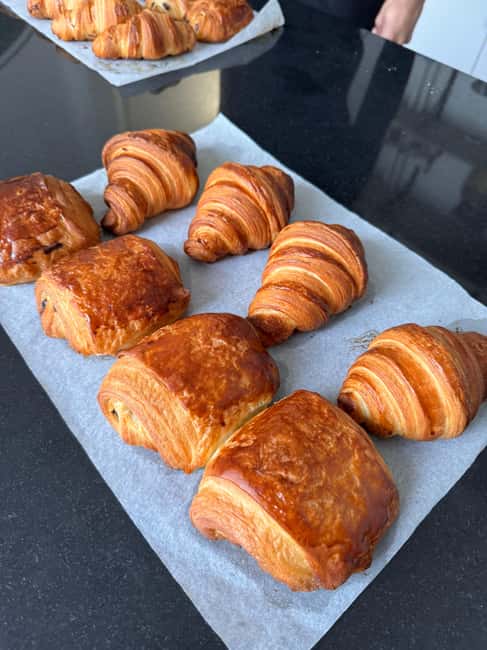
- Eight pastries to make and taste: The class format commonly produces four classic croissants and four pain au chocolat per person, enough to eat fresh and carry back to your hotel.
- Small groups of eight or fewer: A compact class means the chef can check your rolling, cutting, and shaping instead of leaving you to guess.
- Chef Léo is a popular instructor: He is described as warm, funny, patient, and clear, while Chef Maria also leads some sessions with the same friendly, hands-on approach.
- You learn the reason behind each step: Butter quality, resting, proofing, and dough handling all get attention, giving you a better chance of repeating the recipe at home.
- The dough requires real arm work: Rolling laminated dough is not difficult in theory, but it can be tiring, especially if you have limited strength or mobility.
- A bi-colour option is offered on selected days: Choose it if you want to add colored dough and a little extra flair to your pastries.
Finding Studio Pâtisserie near Rome and Villiers
The meeting point is Studio Pâtisserie, recognizable by its gray-colored storefront. It is in the Ile-de-France region of France and is served by Metro Line 2 at Rome and Metro Line 3 at Villiers.
That location works well for a morning or afternoon in Paris. You do not need to arrange a complicated transfer outside the city. Still, give yourself enough time to find the storefront, especially if you are carrying luggage or arriving from the other side of Paris. The class begins at a set time, and laminated dough waits for nobody.
The venue is described as clean, attractive, and easy to find. You work with professional-grade kitchen tools and ingredients, so this is more than a pastry talk in a café. It feels designed for actually making the dough, not just taking a few photographs beside it.
More Workshops in Paris
- Fragonard Paris: Mini Perfume Workshop
★ 4.5 · 1,924 reviews - Paris Cooking Class and Lunch with Wine plus Market Visit Option
★ 5.0 · 1,024 reviews - Paris Croissant Small-Group Baking Class with a Chef
★ 5.0 · 910 reviews
A three-hour class built around waiting dough
Croissant making has a built-in rhythm. You work, the dough rests, you learn, then you work again. That pause is part of the craft, not wasted time.
The session opens in the bakery kitchen, where the chef explains the plan and introduces the basic ingredients. You gather around the workstation and begin preparing the dough. The chef demonstrates each stage, then you carry it out yourself with help nearby.
This structure suits beginners. You are not expected to arrive with pastry-school skills. Chef Léo is praised for making the process easy to follow and for helping people at different levels. Chef Maria is also described as patient, funny, and careful to check that everyone understands the purpose of each step.
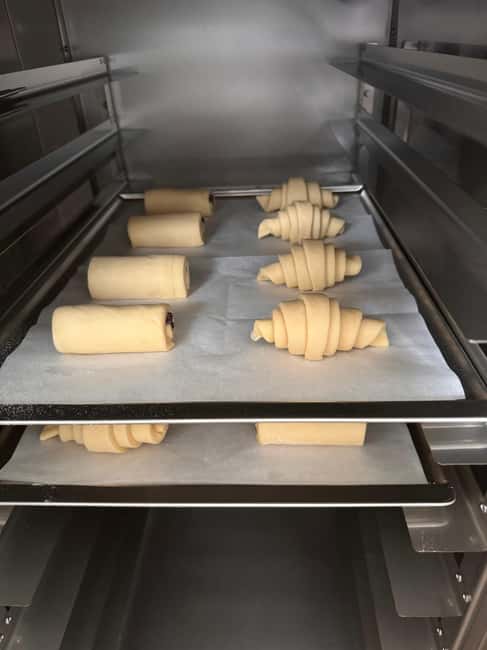
The class moves at a sensible pace, but you should not expect three nonstop hours of rolling. Dough needs time to relax and rise. One practical advantage is that these intervals allow the chef to explain the science and answer questions without rushing through the hands-on work.
Rolling, folding, and the work behind flaky layers
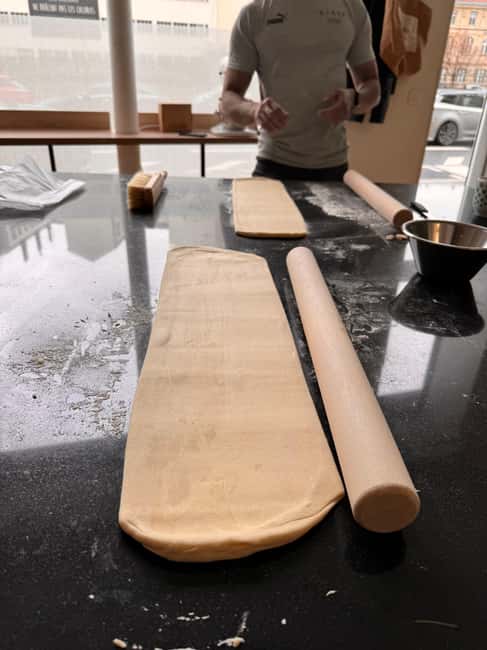
The heart of the class is lamination, the process that creates the thin, flaky layers in a croissant. You work with butter and dough, rolling and folding them with care so the layers remain distinct.
This is where the class earns much of its value. A recipe can tell you to roll the dough to a certain thickness or fold it in a certain way. It cannot easily show you what the dough should feel like, how much pressure to use, or when to stop. Having a chef watch your technique gives you useful feedback that a home kitchen video cannot always provide.
You also learn why butter quality matters. The butter must work with the dough rather than tear through it or become too soft. Proofing receives attention as well, since the final texture depends on allowing the shaped pastries enough time to develop before baking.
The physical side deserves an honest warning. Several participants point out that kneading and rolling call for arm strength. You do not need to be an experienced baker, but you should be comfortable working dough by hand for part of the session. This helps explain the age rules: children under 15 are not suitable for the class, and anyone under 17 must attend with a paying adult.
Shaping crescents and pain au chocolat
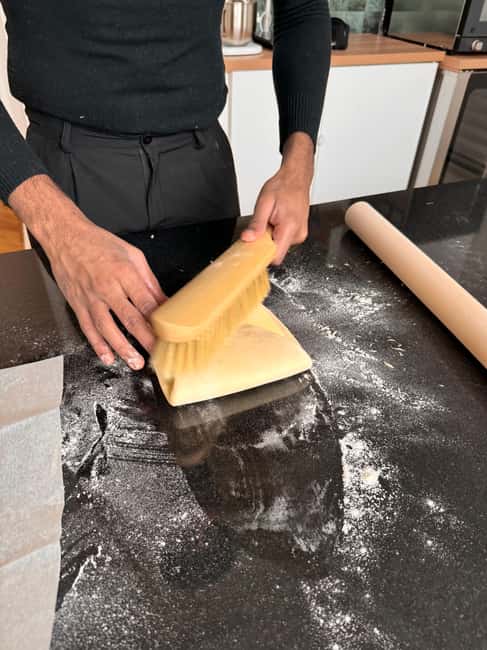
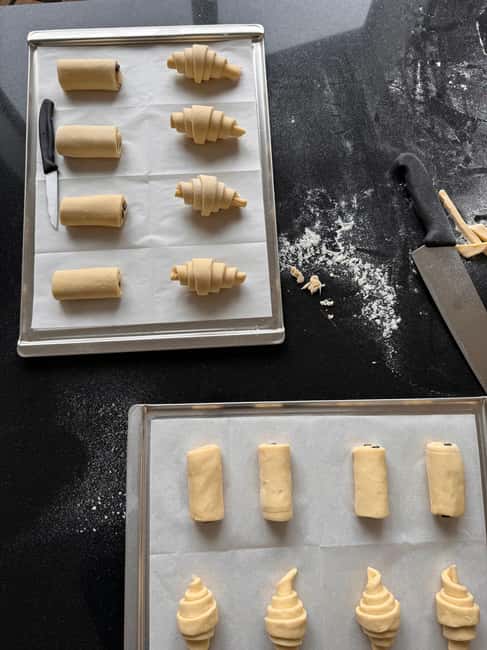
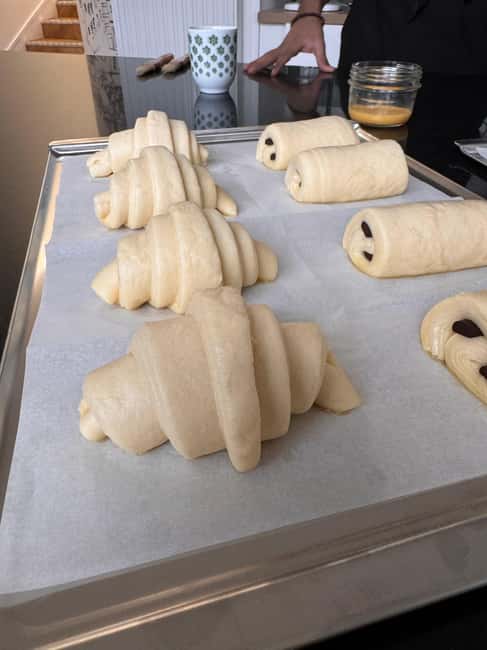
Once the dough is ready, the class shifts from technique to presentation. You cut the dough, roll it, and shape the pieces into classic crescent croissants. This step looks simple until you try to make each pastry even, tidy, and properly curved.
You may also prepare pain au chocolat. The format described by participants is often four butter croissants and four chocolate pastries per person. That is a generous amount for one class and gives you a useful comparison between two familiar French pastry shapes.
The chef moves around the workstation to correct small problems as they appear. A crooked cut or loose roll is not a disaster. It becomes a chance to learn how small changes affect the finished pastry.
This is also the most satisfying part for families and pairs. People can work beside one another, compare shapes, and laugh at the less-than-perfect first attempts. You do not need to be an avid baker to enjoy it. Several accounts describe non-bakers, teenagers, older relatives, and mixed groups having a good time.
More Cooking Classes in Paris:
- Paris: Montmartre Cheese, Wine & Pastry Guided Walking Tour
★ 4.8 · 2,255 reviews - Paris: Macaron Class at Galeries Lafayette
★ 4.3 · 905 reviews - Paris: French Croissant Baking Class with a Chef
★ 4.9 · 712 reviews - Paris Cooking Class: Learn How to Make Macarons
★ 5.0 · 634 reviews
Baking day ends with warm pastries
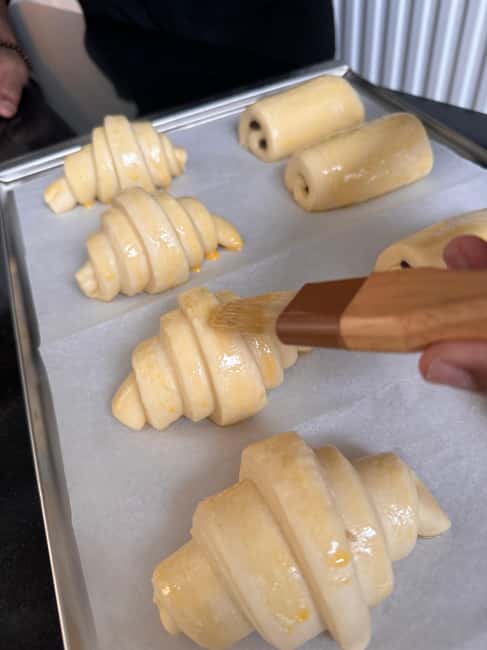
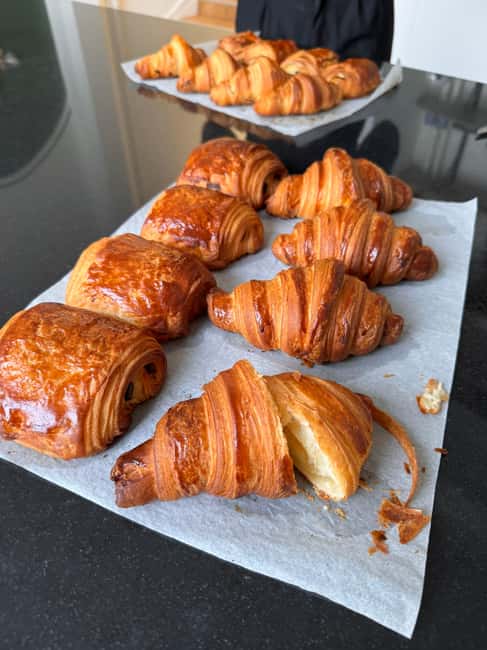
The best part comes near the end, when your pastries leave the oven. You get to sample the freshly baked results during the class, often with a drink, then take the remaining pastries with you.
Freshness matters here. A croissant straight from the oven has crisp edges, a light interior, and a buttery smell that makes the whole process feel worthwhile. Your pastries may not all look identical, but that is part of the charm. You made them by hand, and the chef has helped you get them to a convincing Parisian standard.
The quantity can create a small practical problem. Eight pastries per person is a lot, especially after a full meal or if two people in your party each make a full batch. Bring a bag or plan to carry the pastries carefully. The food is a benefit, but it is also something you need to manage for the rest of your day.
A useful touch is the take-home recipe. You leave with more than a sweet souvenir. You have instructions to consult when you try the process again in your own kitchen, along with tips about dough, butter, folding, proofing, and shaping.
Chef Léo, Chef Maria, and the teaching style
The strongest part of this experience is the instruction. Chef Léo is repeatedly praised for his energy, humor, patience, and ability to keep the class moving. He interacts with each person rather than staying at the front of the room.
That matters in pastry. A good instructor must explain both the action and the reason behind it. The class aims to do exactly that, covering the background of croissant making alongside the practical work. You learn not only what to do, but why a particular fold, rest, or proofing period affects the result.
Chef Maria is also named as an instructor in several sessions. She is described as warm, organized, funny, and generous with small tips. The exact chef may depend on the date, so check your booking details if meeting a particular instructor matters to you.
The class atmosphere sounds relaxed without becoming careless. You can ask questions, make mistakes, and still keep up. One useful extra is that the chef may take photographs and videos during the session, though this should not be treated as a guaranteed feature for every class.
Is $140 good value?
At $140 per person, this class costs more than buying a tray of croissants from a Paris bakery. That comparison, however, misses the point. You are paying for three hours of instruction, ingredients, kitchen use, a small class, a recipe, and a substantial amount of food.
The value is strongest if you want a skill you can use again. You learn the parts that are hardest to judge alone, particularly dough handling, rolling pressure, butter control, and proofing. The personal guidance also reduces the risk of going home with a recipe but no idea why your croissants turned dense or greasy.
The value is weaker if you only want a quick pastry tasting. You will spend much of the session working with dough, waiting for it to rest, and cleaning or organizing your station. For a casual food stop, a bakery crawl costs less and gives you more time to explore Paris.
The small group helps justify the price. With no more than eight participants, the chef has a realistic chance to look at your work. The experience is not private, but it is personal enough for questions and corrections.
Who should book this pastry class?
I would recommend it most strongly to:
- First-time bakers who want clear guidance
- Home bakers hoping to improve laminated dough
- Couples looking for a shared Paris activity
- Families with teenagers who enjoy cooking
- Food lovers who want something more active than a tasting
- Visitors who like returning home with a usable recipe
It also works well on a rainy morning or afternoon. You are indoors, busy with your hands, and still doing something strongly tied to French food culture.
I would be more cautious about booking it for young children, anyone who dislikes repetitive hand work, or anyone with limited strength for kneading and rolling. The age rules are clear, and the physical requirement is real.
The bi-colour croissant option
On selected days, you can book a bi-colour croissant class. This adds colored dough to the process and gives the finished pastries a more playful appearance.
The option may suit experienced bakers or anyone who wants a more unusual result. It is not necessary for learning the basic skills, so beginners who prefer to focus on classic butter croissants may want the standard session.
Check the available date and option carefully before booking. The standard class itself may include both butter croissants and pain au chocolat, while the bi-colour format adds a different visual technique.
Practical advice before you go
Wear clothes you can work in comfortably. This is a kitchen class, and your hands and arms will be busy for much of the active portion.
Arrive ready to participate rather than observe. The class is designed around hands-on work, and the best results come when you ask questions and let the chef correct your technique.
Plan your meals around the pastry haul. You may leave with eight pastries per person, including butter croissants and pain au chocolat, plus the one you eat warm in the studio. That can easily replace a breakfast, but it can also be too much if you arrive after a large meal.
The class is taught in English. You can cancel up to 24 hours in advance for a full refund, and the reserve-now, pay-later option allows you to hold a place without paying immediately. Starting times vary, so check availability for your chosen date.
Should you book the Paris croissant class?
Book it if you want to do something active, social, and genuinely connected to French food. The chef guidance, small group, professional tools, and warm pastries make this a stronger choice than a basic demonstration.
The main caution is price and effort. At $140, you should care about learning the method, not just eating a croissant. If that sounds right, this class gives you a memorable Paris activity and a recipe you can test at home. If you want only a cheap pastry, visit a bakery instead.
FAQ
Where does the croissant class take place?
The class takes place at Studio Pâtisserie in the Ile-de-France region of France. The building has a gray-colored storefront.
How do I reach Studio Pâtisserie by Metro?
The nearest listed stations are Rome on Metro Line 2 and Villiers on Metro Line 3.
How long does the class last?
The class lasts three hours. Starting times depend on availability for your selected date.
What language is the class taught in?
The instruction is in English.
How many people are in the group?
The group is limited to eight participants.
Who teaches the class?
Chef Léo is listed as the main chef for the experience. Chef Maria also leads some sessions, so check the details for your selected date if the instructor is important to you.
What is included in the price?
The price includes chef guidance, ingredients, professional kitchen equipment and tools, a recipe to take home, sampling of the pastries you make, and instruction about the history and science of croissant making.
Do I make chocolate pastries as well as butter croissants?
The class format commonly includes both. Participants have made four classic croissants and four pain au chocolat per person, though you should check the details for your chosen option.
Is the bi-colour croissant class always available?
No. The bi-colour option is offered on selected days. It includes the ingredients and instruction needed to add color to the croissant dough.
Can children attend?
Children under 15 are not suitable for the class. Anyone under 17 must be accompanied by a paying adult.
Can I cancel the booking?
You can cancel up to 24 hours in advance for a full refund. A reserve-now, pay-later option is also available.
Recently added around Paris
- Private Half-Day Guided Tour of Paris★ 4.5 · 48 reviews
- 2 hour outdoor group activity in Paris: SAINT GERMAIN★ 5.0 · 48 reviews
- Paris Dinner Show Opera Bel Canto★ 4.5 · 48 reviews
- Paris Vintage Tour by Night on a Sidecar with Champagne★ 5.0 · 48 reviews
- Secrets & Scandals of the Louvre – Limited to 6 Guests★ 5.0 · 48 reviews
- Paris Photoshoot: Eiffel Tower Exclusive Private Experience★ 5.0 · 48 reviews
- From Paris: Versailles Full-Day Guided Tour with Lunch★ 4.9 · 48 reviews
- Paris: Louvre Mona Lisa Discovery Guided Tour with Ticket★ 4.9 · 48 reviews
Cooking Classes, compared.

Paris: Montmartre Cheese, Wine & Pastry Guided Walking Tour
Read our review →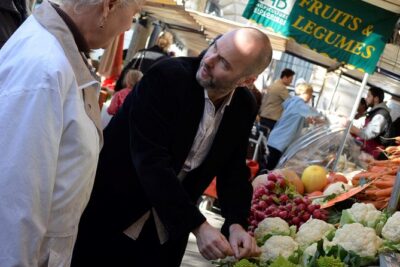
Paris Cooking Class and Lunch with Wine plus Market Visit Option
Read our review →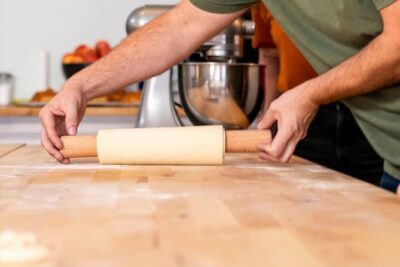
Paris Croissant Small-Group Baking Class with a Chef
Read our review →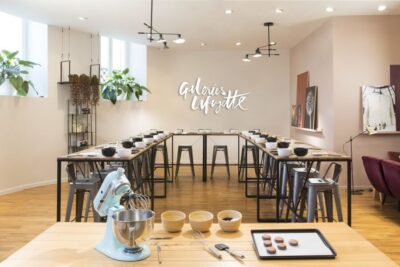
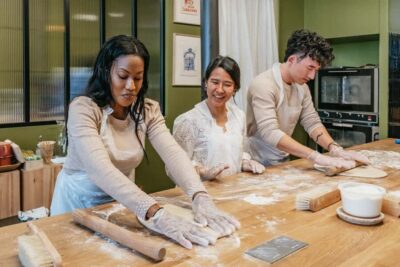
Paris: French Croissant Baking Class with a Chef
Read our review →
Paris Cooking Class: Learn How to Make Macarons
Read our review →
A Morning in Paris Food Tour: Croissants, Baguettes & Chocolate
Read our review →Browse the lists this tour appears in