
Reviewed · COOKING CLASSES
Paris French Baking Class Baguettes and Croissants in a Bakery
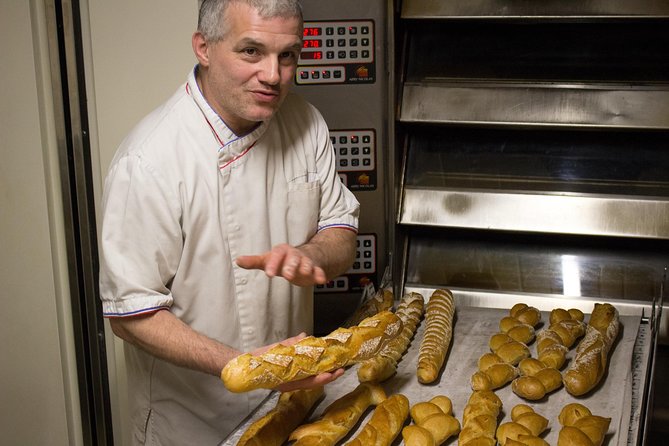
Bread can be the best Paris souvenir. This small-group baking class takes you behind the counter at Boulangerie Pâtisserie Le Petit Mitron, where you learn how baguettes and croissants are made in a working Paris bakery. I like the warm, personal teaching style and the chance to taste bread straight from the oven. I also like that you leave with recipes, not just a pastry and a few photographs. The main consideration is that this is more hands-on with baguettes than croissants, so anyone expecting to make a full batch of croissant dough may be disappointed.
The class lasts about two and a half hours and costs $264.95 per person. That is a serious price for a baking lesson, but the group is capped at 10, and the session includes instruction, tastings, recipes, and access to a real bakery kitchen. The baker, Didier, is praised for his humor and passion, while an English-speaking translator helps make his instruction clear.
In This Review
- Key Details Before You Book
- Arriving at Le Petit Mitron on Rue Oberkampf
- Didier’s Bakery Lesson Starts With the Basics
- Shaping Baguettes Takes Center Stage
- Croissants and Pain au Chocolat Are More of a Taster
- A Small Group Makes the Teaching Personal
- What You Actually Take Home
- Is $264.95 a Fair Price?
- Who Will Enjoy This Paris Baking Class?
- Should You Book the Baguette and Croissant Class?
- FAQ
- Where does the baking class take place?
- How long does the class last?
- Is the class offered in English?
- What will I make during the class?
- Do I get to eat what I make?
- Are recipes included?
- Can children attend?
- What happens if the class is canceled because too few people book?
- Can I cancel for a refund?
Key Details Before You Book
- You work inside a traditional bakery: The class takes place at Boulangerie Pâtisserie Le Petit Mitron at 8 Rue Oberkampf in Paris’s 11th arrondissement.
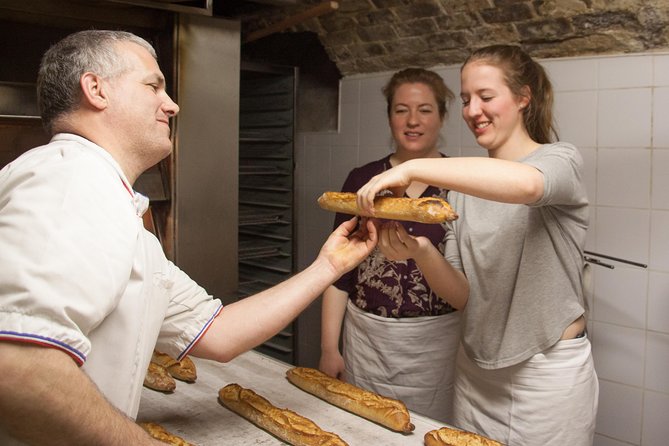
- Baguettes get most of the hands-on time: You shape and score bread, learn about flour and dough, and watch the baker handle the process at close range.
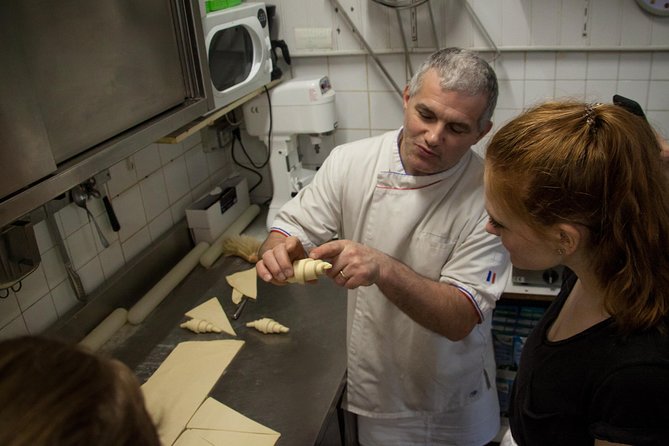
- Croissants are part lesson, part demonstration: You learn about lamination, roll croissant dough, and may also prepare pain au chocolat, but you should not expect to make the entire dough from scratch during the short class.
- The baker is Didier: His teaching is energetic, funny, and full of practical advice about flour, ingredients, equipment, and French baking traditions.
- English support is available: Didier may not speak English, but an English-speaking translator helps throughout the lesson.
- The class suits families: Children must be at least 6 years old and accompanied by an adult. The session requires enough focus for roughly two and a half hours.
Arriving at Le Petit Mitron on Rue Oberkampf
You meet at Boulangerie Pâtisserie Le Petit Mitron, 8 Rue Oberkampf, 75011 Paris. The bakery is near public transportation, and the activity both starts and ends at this same location. There is no hotel pickup or drop-off, so you need to make your own way there.
That simple meeting point is useful. You are not being led through a large cooking school or a hotel kitchen built for tourists. You are entering a working bakery, where the lesson connects directly to the bread sold in Paris every day.
I would arrive early enough to find the bakery without rushing. The experience is short enough that a late start matters, especially since the class packs a lot into 150 minutes. One account describes arriving five to 10 minutes late and still being welcomed, but I would not count on that. A bakery class depends on timing, rising dough, oven schedules, and a prepared workspace.
You can choose a morning or afternoon session. The choice matters more than it might seem. A morning class can fit well before sightseeing, while an afternoon class gives you something relaxed to do after a museum or monument. Since you finish at the bakery, you can also plan a simple meal or picnic nearby afterward, using the bread you take home.
More Workshops in Paris
- Fragonard Paris: Mini Perfume Workshop
★ 4.5 · 1,924 reviews - Paris Cooking Class and Lunch with Wine plus Market Visit Option
★ 5.0 · 1,024 reviews - Paris Croissant Small-Group Baking Class with a Chef
★ 5.0 · 910 reviews
Didier’s Bakery Lesson Starts With the Basics
The heart of the experience is Didier, the baker who leads the lesson. His teaching style is not formal or stiff. He is described as funny, energetic, patient, and deeply serious about making good bread. That combination gives the class its character.
Didier explains how flour, ingredients, dough, and equipment affect the final loaf. He also talks about the history of baguettes and croissants, including the traditions behind these familiar French staples. This extra context gives the class more purpose than simply following a recipe.
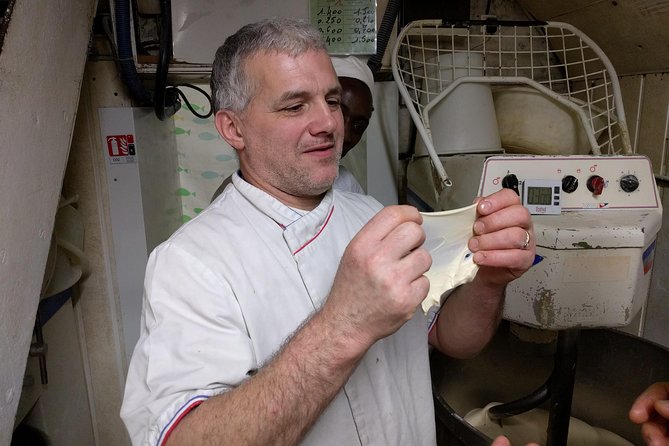
One unusual feature is the bakery’s approach to flour. Didier makes his own flour on site by milling grain, and he explains why flour quality and additives matter. That is a valuable lesson because home bakers often focus on shaping while overlooking the ingredient that controls the bread’s texture, flavor, and rise.
The English support is important. Didier does not speak English, so an interpreter helps translate the instruction and answer questions. The language arrangement does not remove the French character of the experience. Instead, you get the pleasure of watching a French baker teach in his own setting while still understanding the techniques.
Some sessions have included Luz as the translator, and she is praised for being friendly and clear. The exact translator may vary, but the experience is offered in English, and the class is designed to be understandable for English-speaking participants.
Shaping Baguettes Takes Center Stage
The baguette portion receives most of the practical attention. This is the section to focus on if you want useful skills to take home.
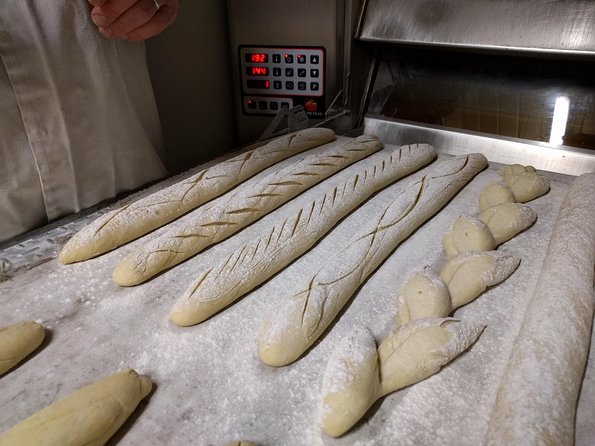
You watch the baker demonstrate how dough is handled, then try shaping it yourself with help as needed. You may also score the dough and create different patterns on the surface. Cutting those marks is not just decoration. It helps control how the loaf opens in the oven, and it gives you a chance to see how small changes affect the finished bread.
The class has been described as very hands-on with baguettes, though the exact amount of dough preparation can vary. Some participants have said they did not make the dough itself, but rolled and shaped prepared dough while learning how the full process works. That distinction matters. If you want a technical lesson in mixing, kneading, fermentation, and shaping from beginning to end, ask for clarification before booking.
Still, watching an expert handle dough close up has real value. A recipe can tell you how much flour or water to use, but it cannot easily show when dough feels ready. Didier can point out texture, elasticity, handling, and shaping techniques in a way that is difficult to learn from a cookbook.
You may also get to place bread in the oven with a long wooden paddle. That small task gives you a direct connection to the bakery’s daily work. It is also a good reminder that French bread is shaped by tools, timing, heat, and touch, not simply by a printed formula.
The reward comes at the end, when the bread is warm. You taste baguette and pastries during the class, and you can take your own baguette with you. Fresh bread loses some of its magic once it has cooled and traveled, so eating it soon after the lesson is part of the pleasure.
Croissants and Pain au Chocolat Are More of a Taster
The croissant portion is worthwhile, but you should set realistic expectations. The class teaches you how croissants are made and introduces lamination, the process of layering butter and dough. You get to roll the dough and learn the basic techniques behind that flaky structure.
The timetable limits how much full croissant production can happen in two and a half hours. Dough needs resting and chilling time, so a single short session cannot cover every stage from mixing to baking in the same way as a multi-day pastry course.
Some sessions have also included pain au chocolat. That is a welcome bonus, especially if you are more excited by chocolate-filled pastry than plain croissants. You may get to shape both kinds, then taste the baked results.
I would describe this as a class about understanding croissants rather than mastering them in one afternoon. You learn what lamination does, how the dough is rolled, and how the pastry is formed. You may not leave with the ability to reproduce bakery-perfect croissants immediately, but you will have a clearer idea of why the process is demanding.
That honesty helps with the price. If you expect a professional pastry certificate, this is not the right activity. If you want a lively introduction, a look at the process, and a few practical techniques to try at home, the pastry section adds plenty.
More Cooking Classes in Paris:
- Paris: Montmartre Cheese, Wine & Pastry Guided Walking Tour
★ 4.8 · 2,255 reviews - Paris: Macaron Class at Galeries Lafayette
★ 4.3 · 905 reviews - Paris: French Croissant Baking Class with a Chef
★ 4.9 · 712 reviews - Paris Cooking Class: Learn How to Make Macarons
★ 5.0 · 634 reviews
A Small Group Makes the Teaching Personal
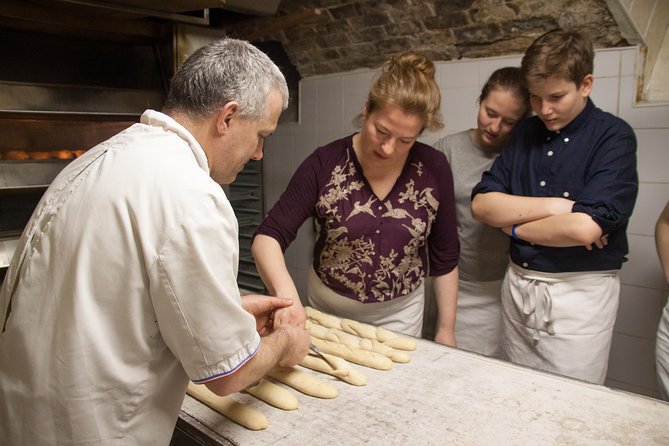
The maximum group size is 10 people. That is a useful limit for a practical class. You can see the demonstration, ask questions, and get help while shaping dough without being lost in a crowd.
The class can be especially good for families. Children as young as 6 may participate, and the baker has been praised for giving children attention and making the process entertaining. Older children and teenagers who enjoy food, French culture, or practical activities may get more from it than they would from another museum visit.
There is one catch for families: two and a half hours requires patience. This is not a quick pastry stop where children simply decorate a croissant. Kids need to stand, listen, wait for demonstrations, and follow instructions. A child who already enjoys cooking or baking is likely to have a better time than one who wants constant action.
The intimate format also suits couples, solo participants, and adult learners. Some sessions may be very small, even with only a couple of participants. That can make the lesson feel almost private, though the minimum number requirement means the operator can cancel if too few people are booked.
What You Actually Take Home
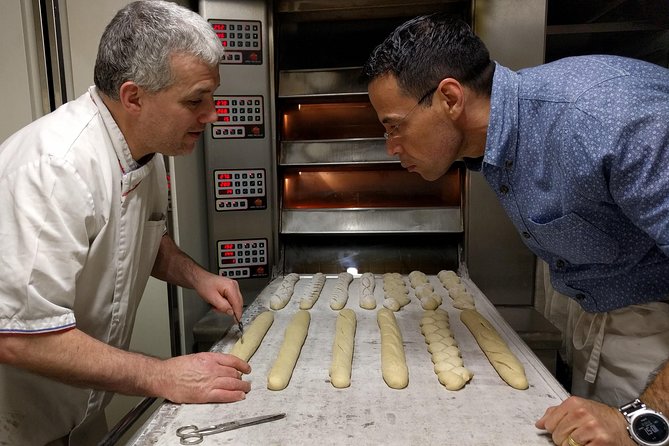
The clearest physical souvenir is the baguette you make and bake. You also taste baguettes and pastries during the lesson, including croissants and possibly pain au chocolat depending on the session’s preparation.
Recipes are included, and the teaching goes beyond ingredient lists. Didier shares tips about flour, equipment, and home baking. Advice about working without professional bakery equipment is particularly useful because most home kitchens do not have the ovens, worktables, or tools found in a commercial bakery.
The recipe information gives the experience value after you leave Paris. A photograph of a pastry is nice, but a recipe lets you try again. You can also use the class as a test of your interest in baking before buying specialized equipment.
Do not assume your first home attempt will look like the bakery version. Baguettes and croissants are sensitive to flour, temperature, timing, and oven performance. The class gives you a better starting point, not a guarantee of perfect results. One of the appealing touches is that participants have been encouraged to send photographs of their home baking to the bakery, which suggests a friendly connection beyond the class.
A practical tip: plan your next meal around the bread. A good cheese shop and a simple picnic can turn your baguette into an easy Paris lunch. Carrying fresh bread through several attractions is less appealing than eating it soon, so leave room in your schedule afterward.
Is $264.95 a Fair Price?
At $264.95 per person, this is not a budget activity. You are paying much more than the cost of buying a baguette, croissant, and pain au chocolat at a neighborhood bakery.
The value comes from access, instruction, and time. You enter the bakery kitchen, work with guidance from an experienced baker, learn about French bread traditions, taste the results, receive recipes, and take bread home. The group limit also matters. A cheaper large-group demonstration would give you less opportunity to shape dough and ask questions.
I would consider the price reasonable for someone who already enjoys baking and wants a personal lesson in a real French bakery. It is also easier to justify for a family treating the class as a special Paris activity rather than a simple meal.
The price is harder to defend if you mainly want to eat pastries or expect extensive hands-on croissant production. Paris offers excellent bakeries where you can buy those items for a fraction of the cost. Book this for the teaching and setting, not just the food.
The 92 percent recommendation rate and 4.7 rating from 172 ratings suggest strong overall satisfaction, but the two operational complaints deserve attention. One class was canceled very close to the start time because the minimum number was not met, and another participant had trouble after a time change was not reflected clearly in the booking information. These problems appear separate from the baker’s teaching, but they show why you should check your confirmed time and messages before leaving for the bakery.
Free cancellation is available up to 24 hours before the start time. Changes or cancellations inside that window are not refunded, and the operator may offer another date or a full refund if the minimum number is not reached.
Who Will Enjoy This Paris Baking Class?
I would recommend it most strongly to:
- Home bakers who want better baguette and croissant technique
- Families with children age 6 and older who can focus for 2.5 hours
- Couples seeking a break from museums and monuments
- Food lovers interested in French ingredients and baking traditions
- Visitors who value a small class over a large demonstration
You do not need to be an experienced baker. Beginners can watch, try, and ask for help. Still, a little home baking experience may help you get more from the fast-moving instruction, especially during the baguette work.
This is less suitable for anyone with sensitive airborne allergies. The class takes place in a bakery, where flour and other ingredients are part of the working environment. Minors must be accompanied by an adult.
Should You Book the Baguette and Croissant Class?
Book it if you want a personal, good-humored lesson inside a real Paris bakery. Didier’s passion, the English translation, the small group, and the chance to taste warm bread make this more memorable than a standard cooking demonstration.
Go in expecting baguette shaping to receive most of the hands-on time. Treat the croissant section as an introduction to lamination and pastry shaping, not a complete professional course. If that matches your expectations, the experience offers a rare chance to learn directly from a French baker and bring both practical skills and a warm loaf into the rest of your Paris day.
FAQ
Where does the baking class take place?
The class begins and ends at Boulangerie Pâtisserie Le Petit Mitron, 8 Rue Oberkampf, 75011 Paris, France.
How long does the class last?
The experience lasts approximately 2 hours and 30 minutes.
Is the class offered in English?
Yes. The activity is offered in English, and an English-speaking translator helps interpret the baker’s instruction. Didier may not speak English directly.
What will I make during the class?
You learn how baguettes and croissants are made. The baguette portion includes practical shaping and handling, while the croissant portion includes instruction and rolling. Some sessions also include pain au chocolat.
Do I get to eat what I make?
Yes. Baguettes and pastries are tasted during the class, including warm baked items. You can also take your own baguette home.
Are recipes included?
Yes. Recipes are included with the class so you can try the techniques at home.
Can children attend?
Yes. The minimum age is 6, and minors must be accompanied by an adult.
What happens if the class is canceled because too few people book?
If the minimum number is not met, you may be offered an alternative date or experience, or a full refund.
Can I cancel for a refund?
Yes. You can cancel at least 24 hours before the start time for a full refund. Cancellations or changes made less than 24 hours before the experience are not accepted for a refund.
Recently added around Paris
- Private Half-Day Guided Tour of Paris★ 4.5 · 48 reviews
- 2 hour outdoor group activity in Paris: SAINT GERMAIN★ 5.0 · 48 reviews
- Paris Dinner Show Opera Bel Canto★ 4.5 · 48 reviews
- Paris Vintage Tour by Night on a Sidecar with Champagne★ 5.0 · 48 reviews
- Secrets & Scandals of the Louvre – Limited to 6 Guests★ 5.0 · 48 reviews
- Paris Photoshoot: Eiffel Tower Exclusive Private Experience★ 5.0 · 48 reviews
- From Paris: Versailles Full-Day Guided Tour with Lunch★ 4.9 · 48 reviews
- Paris: Louvre Mona Lisa Discovery Guided Tour with Ticket★ 4.9 · 48 reviews
Cooking Classes, compared.

Paris: Montmartre Cheese, Wine & Pastry Guided Walking Tour
Read our review →
Paris Cooking Class and Lunch with Wine plus Market Visit Option
Read our review →
Paris Croissant Small-Group Baking Class with a Chef
Read our review →
Paris: French Croissant Baking Class with a Chef
Read our review →
Paris Cooking Class: Learn How to Make Macarons
Read our review →
A Morning in Paris Food Tour: Croissants, Baguettes & Chocolate
Read our review →Browse the lists this tour appears in