
Reviewed · MONTMARTRE & SACRé-CœUR TOURS
Paris: Le Marais & Montmartre Jewish History Walking Tour
Paris reveals its past in layers. This walk connects Jewish heritage, wartime memory, and bohemian art across two very different neighborhoods. Over 210 minutes, you move from the old Jewish quarter of Le Marais to the hilltop streets of Montmartre, finishing beneath Sacré-Cœur with a broad view over the city.
I especially like the small group of up to nine people, which gives the guide room to answer questions and adjust the pace. I also like the route’s range: the Agoudas Hakehilos Synagogue and Shoah Memorial provide serious historical focus, while Montmartre adds stories of Jewish artists and writers. The main consideration is the amount of walking, plus a 30-minute public transport transfer between districts. This is not a gentle stroll.
Guides such as Benjamin, Benoit, Pierre-Louis, Achilles, and Pilu have earned praise for clear explanations, strong English, and a sensitive approach to difficult subjects. Still, meeting points can be hard to identify, especially at BHV Marais, so arrive early and confirm exactly where to stand.
In This Review
- Key points at a glance
- Starting near BHV Marais
- Le Marais and the streets of Jewish Paris
- Village Saint-Paul and the changing neighborhood
- Agoudas Hakehilos and Hector Guimard’s design
- The Shoah Memorial and the weight of memory
- Hôtel de Ville and the transfer to Montmartre
- Montmartre’s artists, writers, and Jewish voices
- Sacré-Cœur and the final view
- What the guides do best
- Cost, pace, and practical value
- Who should book this walk?
- Should you book the Le Marais and Montmartre Jewish History Tour?
- FAQ
- How long does the tour last?
- Which neighborhoods does the tour visit?
- Is the tour conducted in English?
- How large is the group?
- Does the tour enter the synagogue?
- Does the tour enter the Shoah Memorial?
- Are public transport tickets included?
- Is the tour suitable for wheelchair users?
Key points at a glance
- Two neighborhoods, two moods: Begin with Jewish Paris in Le Marais, then shift to the artistic world of Montmartre.
- Hector Guimard’s synagogue: See the exterior of Agoudas Hakehilos, an Art Nouveau design by the architect of Paris Métro entrances.
- A solemn stop at the Shoah Memorial: The outside memorial gives the wartime section a serious human focus.
- Public transport is part of the route: Allow about 30 minutes to travel from Hôtel de Ville toward Montmartre.
- Montmartre through a Jewish lens: Stories about artists, writers, cafés, and creative circles add a less familiar angle to the neighborhood.
- The final view is memorable: End at Sacré-Cœur and Square Louise-Michel, with open views across Paris.
Starting near BHV Marais
You may begin at BHV Marais or at L’Elephant Du Nil, depending on the option you book. The exact meeting point matters here. BHV has several entrances, and one person had trouble finding the correct one. Do not cut it close. Arrive at least 15 minutes before departure, and make sure you have the guide’s meeting instructions in front of you.
The tour is offered in English, with a live local guide. Private and small-group formats are available, though the smaller shared groups are capped at nine people. That size is a real advantage on narrow streets. You can hear the guide without standing in a wide cluster, and questions are less likely to disappear into the crowd.
There is also a practical safety point: the tour does not allow weapons or sharp objects. If you arrive after the walk has started, you cannot simply catch up later, so punctuality is essential.
More Historical Tours in Paris
- Paris: Dark History and Ghostly Guided Walking Tour
★ 4.7 · 1,000 reviews - Le Marais/Paris – The Historic, Trendy, Jewish, LGBT district
★ 5.0 · 341 reviews - Paris City of Fashion History Private Guided Walking Tour
★ 5.0 · 221 reviews
Le Marais and the streets of Jewish Paris
The first 90 minutes focus on Le Marais, Paris’s best-known Jewish district. The guide places today’s shops, cafés, streets, and community life within a much longer story, reaching from the Middle Ages to the present.
This part works best when you enjoy context rather than a long parade of photo stops. Much of the history is told outdoors, beside streets and buildings that have changed over time. You learn what once happened in the area, how Jewish communities lived and worked here, and how the neighborhood developed into its present form.
Le Marais is also a busy part of modern Paris. It has independent fashion, food, architecture, and a large LGBTQ community, all sharing space with Jewish institutions and businesses. One useful feature of this route is the way it connects the neighborhood’s current identity with its earlier communities instead of treating Jewish Paris as a vanished chapter.
The guide-led storytelling is the heart of this section. Benjamin has been praised for linking historical events with the present-day feel of Le Marais. Benoit is also noted for bringing French history and Jewish history together while offering food suggestions at the end of the walk. If you like asking questions, the small format gives you a fair chance to do so.
Village Saint-Paul and the changing neighborhood
The walk passes through Le Village Saint-Paul, an area that helps show the changing character of the Marais. The precise stop is brief, but the setting supports the larger discussion about old streets, trade, homes, and community life.
Do not expect a preserved Jewish quarter in the same form you might find in another major city. Parts of Le Marais have become polished, commercial, and highly gentrified. That is both a strength and a limitation. You get a pleasant, walkable neighborhood with plenty to see, but the visible traces of earlier Jewish life can be subtle.
This is where a guide adds genuine value. Without explanation, you may pass through attractive streets without understanding what has disappeared, what remains, and why the area matters. One participant specifically felt that much of the tour involved hearing about what used to be there. That is an important expectation to set before booking.
Agoudas Hakehilos and Hector Guimard’s design
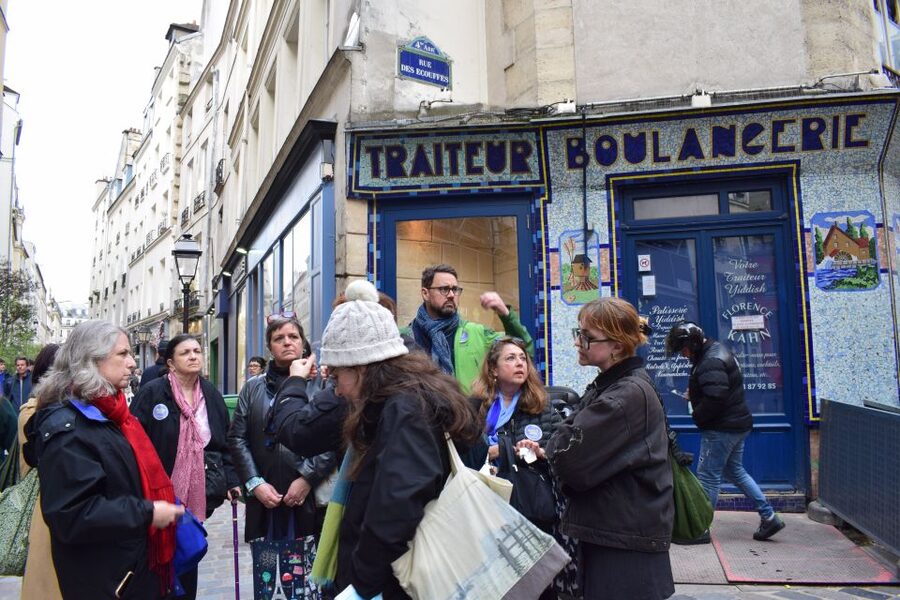
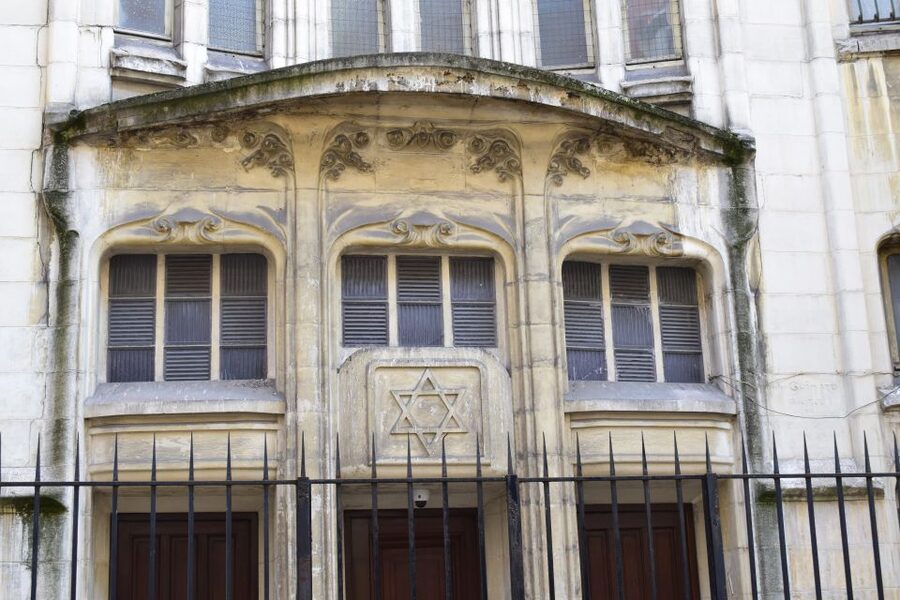
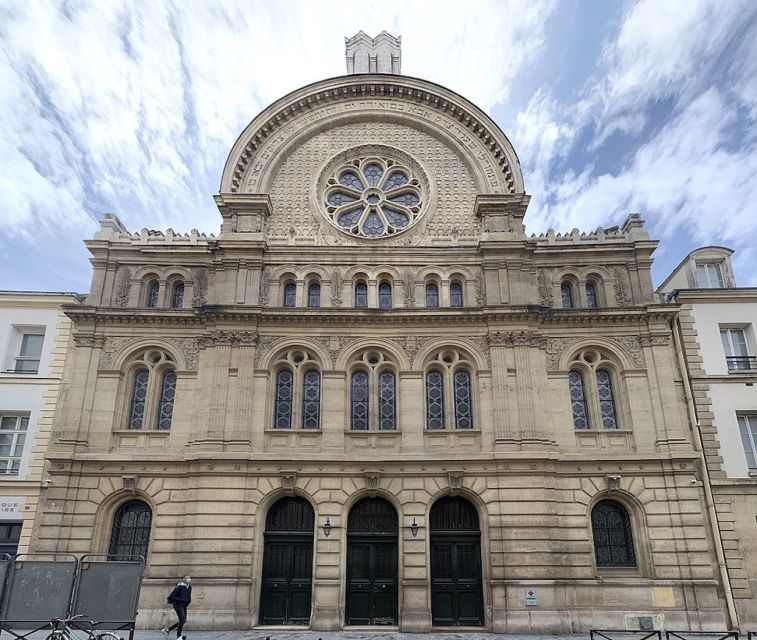
Agoudas Hakehilos Synagogue is one of the visual highlights. The building was designed by Hector Guimard, the Art Nouveau architect best known for the decorative entrances to many Paris Métro stations.
You see the synagogue from the outside only. Indoor synagogue visits are not included, and the tour does not include entry to monuments or historical sites. Even so, the exterior offers a strong architectural pause within the walking route. Guimard’s style makes this more than a standard religious building stop, and the guide explains its place in the neighborhood’s Jewish story.
If architecture interests you, pay attention to the details rather than rushing past for a quick photograph. The stop also works well for visitors who want to see how Jewish institutions became part of Paris’s wider urban fabric.
More Walking Tours in Paris
- Paris Top Sights Half Day Walking Tour with a Fun Guide
★ 5.0 · 2,893 reviews - Montmartre Hidden Gems and Scenic Highlights Walking Tour
★ 5.0 · 2,684 reviews - Montmartre Hill French Gourmet Food and Wine Tasting Walking Tour
★ 5.0 · 2,588 reviews - Paris Île de la Cité and Notre-Dame Walking Tour With Crypt
★ 5.0 · 2,272 reviews
The Shoah Memorial and the weight of memory
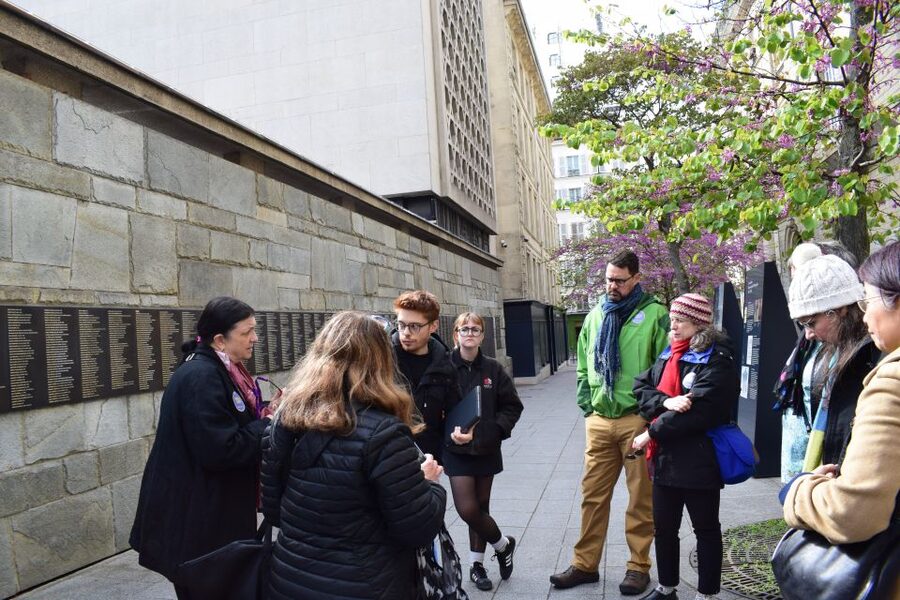
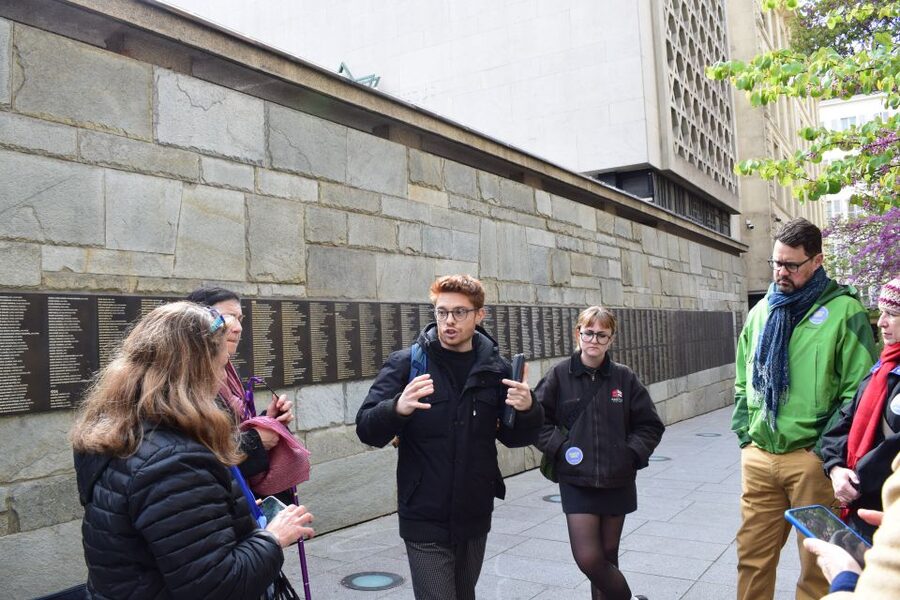
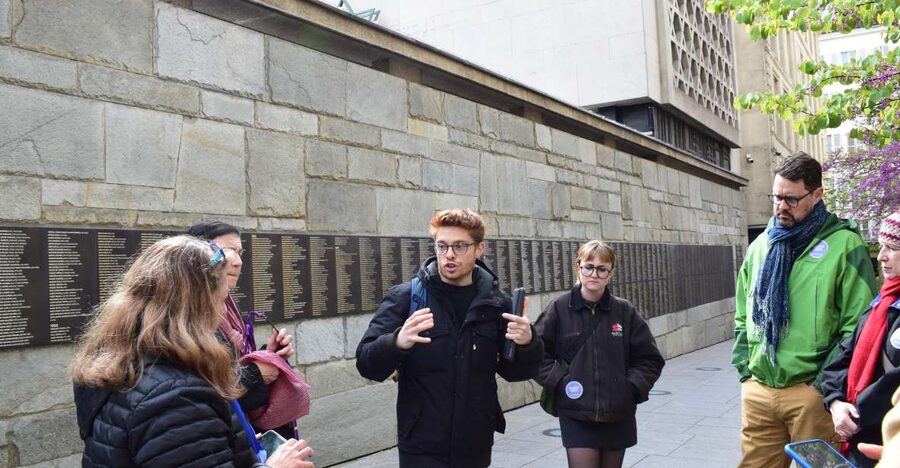
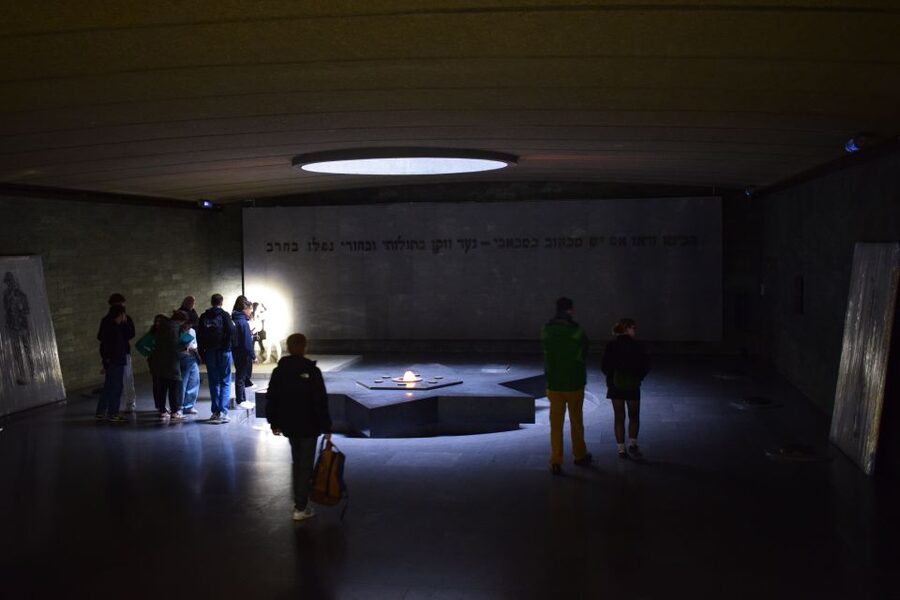
The Shoah Memorial, or Mémorial de la Shoah, is the most solemn stop in Le Marais. The guide discusses its historical meaning from the exterior, including the memorial elements connected with Jews murdered during the Second World War and those who helped others escape persecution.
This is not a museum visit. You do not enter an exhibition as part of the tour, so the impact comes through the memorial space, the guide’s explanation, and the quiet pause the location creates. One participant described the stop as particularly moving, especially the wall of names and the crypt.
The subject requires care, and this is an area where the guides receive especially strong praise. David appreciated the way difficult issues were handled with sensitivity. Other participants singled out the guides’ empathy, preparation, and ability to discuss historic mistreatment without turning the subject into a performance.
You should expect the tone to change here. The tour is not only about culture, food, architecture, or famous streets. It addresses persecution, loss, survival, and the responsibility to remember. That makes the memorial an important counterweight to the more cheerful parts of the day.
Hôtel de Ville and the transfer to Montmartre
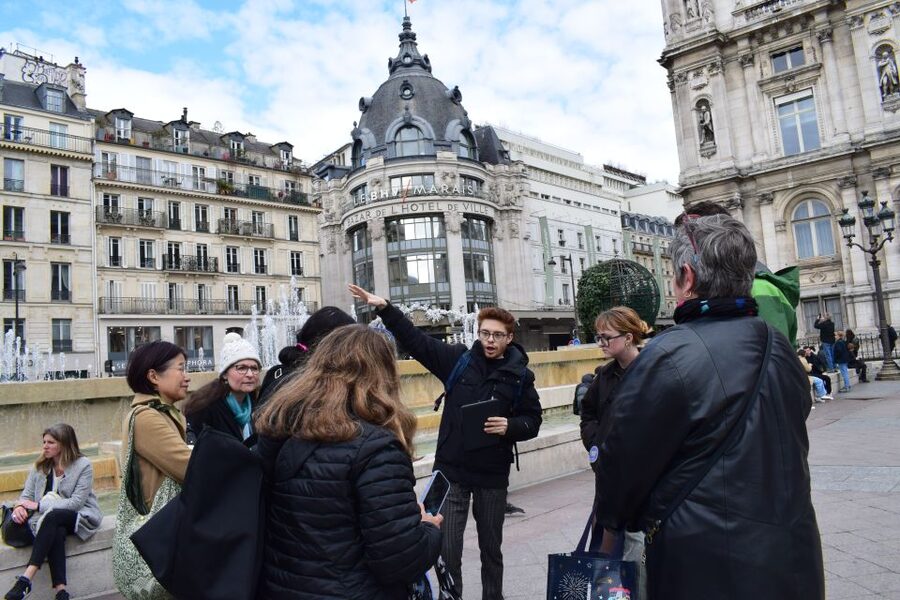
The Marais portion wraps up near Hôtel de Ville, Paris’s City Hall. From here, the group uses public transport for roughly 30 minutes to reach Montmartre. Public transport tickets are included, which removes one small nuisance, but you still need to stay close to the group during the transfer.
This break divides the tour into two clear sections. The first is centered on Jewish community life and memory. The second looks at Jewish identity through art, literature, and the creative culture of Montmartre.
The change of district is useful, but it also adds time on your feet and a little logistical effort. If you are tired after a full morning of sightseeing, the second half may feel demanding. The tour is not suitable for wheelchair users or people with mobility impairments, and the route includes the climb toward Sacré-Cœur.
Montmartre’s artists, writers, and Jewish voices
Montmartre receives about 90 minutes of guided walking. The neighborhood is famous for artists, studios, cafés, and writers, but this tour looks for the Jewish people who helped shape that creative world in the late 19th and early 20th centuries.
The route includes 7 Rue Ravignan and Le Bateau-Lavoir, along with a pass by the Musée de Montmartre. These places connect the streets of Montmartre with the artists and creative circles that made the hill famous. The Jewish focus gives the familiar neighborhood a different frame. Instead of hearing only about painters and tourist legends, you consider how Jewish artists, writers, and thinkers contributed to modern Paris.
At 16 Rue du Mont-Cenis, the guide continues the story before the group heads toward Sacré-Cœur. The exact balance between Jewish history and general Montmartre history may vary with the guide and the questions from the group. One participant felt the tour spent a little too much time on non-Jewish subjects, including church architecture. If your main goal is Jewish history, say so early and ask the guide to keep that emphasis clear.
On the other hand, the wider setting is part of the appeal. Jewish life in Montmartre cannot be separated from the neighborhood’s artistic culture. The tour is strongest when it shows how communities, ideas, and creative ambition overlapped rather than presenting each subject in isolation.
Sacré-Cœur and the final view
The route reaches Sacré-Cœur Basilica, one of Paris’s most recognizable landmarks. The tour includes sightseeing at the basilica, but not entry to monuments or historical sites, so you should not expect an interior visit as part of the booking.
The final stop is Square Louise-Michel, where the broad view over Paris gives you a chance to pause. After several hours of streets, memorials, and layered stories, the open panorama changes the pace. The guide uses this ending to reflect on Jewish identity, artistic expression, and the place of these stories in the modern city.
This is a good finish because it leaves you with both a physical sense of Paris and a wider idea of how its neighborhoods change. You have moved from a district shaped by community and memory to a hill associated with art and invention. The view does not erase the harder parts of the tour, but it gives the experience room to breathe.
What the guides do best
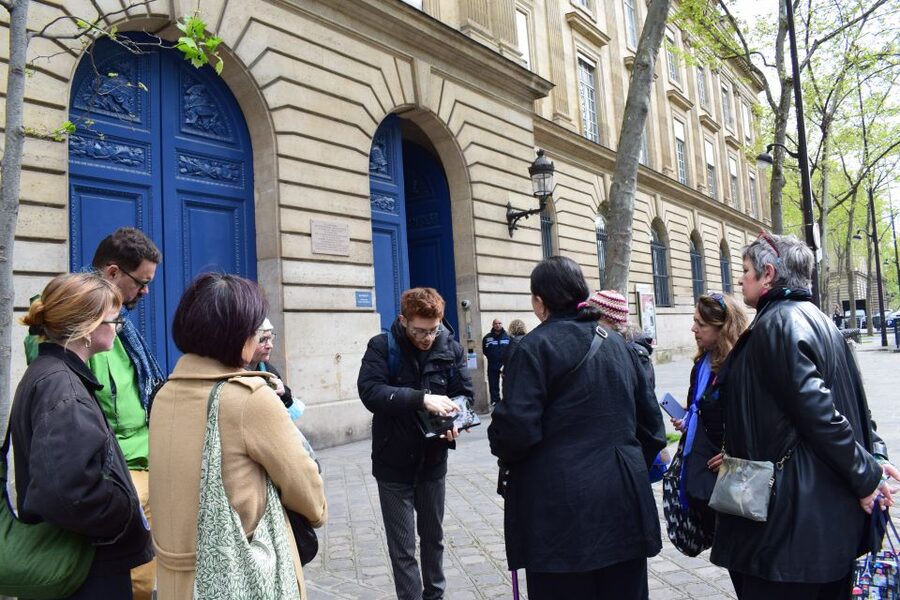
The strongest part of this tour is its guiding. Names vary by departure, but Benjamin, Benoit, Pierre-Louis, Achilles, Pilu, and others have been praised for clear English, enthusiasm, and a serious grasp of French and Jewish history.
Pierre-Louis is repeatedly described as a strong communicator who makes the past feel relevant. Achilles is praised for covering nearly 2,000 years of Jewish life in France without trying to cram in every possible fact. Pilu and Benoit are noted for answering questions and presenting difficult subjects with empathy.
That consistency matters because this is not a route where the buildings alone tell the whole story. A synagogue exterior, a memorial wall, or an old street needs explanation. The guide provides the link between what you see and what has been lost, preserved, or transformed.
The tour can also be responsive. A guide has adjusted the pace for a participant who needed a rest and made room for camera batteries and personal interests. That flexibility is more likely in a group of four or six than in a large city tour.
Cost, pace, and practical value
At $80 per person, the tour is not the cheapest way to walk through Le Marais and Montmartre. You are paying for 3.5 hours of English-language guiding, a small group, the public transport transfer, and a route built around a specific subject rather than general sightseeing.
I think the price is reasonable if Jewish Paris is important to your trip. The guide’s interpretation is the main product, and the best parts of the route, especially the Shoah Memorial and the historical connections between streets and communities, would be easy to miss on your own.
The value is weaker if you mainly want landmark photos. You do not enter the synagogue, the Shoah Memorial, Sacré-Cœur, or other monuments. Much of the experience takes place on public streets, with the guide explaining what happened there.
Wear comfortable shoes and bring water. Rain can affect the walk, as several departures have taken place in wet weather. Heat can also be tiring, and one group completed the route during a very hot day. The climb toward Sacré-Cœur adds effort at the end, so plan your day around the walk rather than squeezing it between several major attractions.
The free cancellation period ends 24 hours before the start, and you can reserve while paying later. Those policies help if your Paris schedule is still shifting, but they do not change the need to arrive early.
Who should book this walk?
I would choose this tour if you want Jewish history presented within the wider story of Paris. It suits couples, families with older children, solo visitors, and anyone who prefers a thoughtful guide to a quick list of famous buildings.
It is especially useful if you have already seen the major monuments and want a more focused side of the city. The route also suits people interested in the Holocaust, French history, Jewish communities, architecture, or the cultural world of Montmartre.
I would think twice if you dislike long walks, stairs, public transport during a tour, or outdoor history talks. It is also not the right choice for wheelchair users or people with mobility impairments. If you expect an indoor synagogue or museum visit, you may be disappointed.
Should you book the Le Marais and Montmartre Jewish History Tour?
Book it if you want human stories behind Paris’s streets, not just another circuit of monuments. The strongest reasons are the small group, the consistently praised guides, the careful handling of painful history, and the unusual connection between Jewish community life in Le Marais and Jewish artistic influence in Montmartre.
Before booking, confirm the meeting point, allow extra time to find the correct entrance, and accept that much of the Jewish story is explained through places that have changed. If you can manage the walking and want a serious but approachable introduction to Jewish Paris, this is a worthwhile use of half a day.
FAQ
How long does the tour last?
The tour lasts 210 minutes, or about three and a half hours.
Which neighborhoods does the tour visit?
The route visits Le Marais and Montmartre.
Is the tour conducted in English?
Yes. The tour has a live English-speaking guide.
How large is the group?
Small groups can include up to nine people. Private options are also available.
Does the tour enter the synagogue?
No. The visit to Agoudas Hakehilos Synagogue is outdoors, and indoor synagogue visits are not included.
Does the tour enter the Shoah Memorial?
No. The Shoah Memorial is explored from the exterior, with the guide explaining its historical importance.
Are public transport tickets included?
Yes. Public transport tickets are included for the transfer between the Marais and Montmartre.
Is the tour suitable for wheelchair users?
No. The tour is not suitable for wheelchair users or people with mobility impairments.
More Montmartre and Sacré-Cœur walks
- Paris: Montmartre Cheese, Wine & Pastry Guided Walking Tour
★ 4.8 · 2,255 reviews - Paris: Montmartre Highlights Walking Tour with a Local Guide
★ 4.9 · 1,668 reviews - Private Montmartre Food Tour with Wine, Cheese & Pastries
★ 5.0 · 1,027 reviews - Paris: Sacré-Coeur and Montmartre Tour with Expert Guide
★ 4.1 · 1,027 reviews
Recently added around Paris
- Private Half-Day Guided Tour of Paris★ 4.5 · 48 reviews
- 2 hour outdoor group activity in Paris: SAINT GERMAIN★ 5.0 · 48 reviews
- Paris Dinner Show Opera Bel Canto★ 4.5 · 48 reviews
- Paris Vintage Tour by Night on a Sidecar with Champagne★ 5.0 · 48 reviews
- Secrets & Scandals of the Louvre – Limited to 6 Guests★ 5.0 · 48 reviews
- Paris Photoshoot: Eiffel Tower Exclusive Private Experience★ 5.0 · 48 reviews
- From Paris: Versailles Full-Day Guided Tour with Lunch★ 4.9 · 48 reviews
- Paris: Louvre Mona Lisa Discovery Guided Tour with Ticket★ 4.9 · 48 reviews
Montmartre & Sacré-Cœur Tours, compared.
Montmartre Hidden Gems and Scenic Highlights Walking Tour
Read our review →
Montmartre Hill French Gourmet Food and Wine Tasting Walking Tour
Read our review →
Paris: Montmartre Cheese, Wine & Pastry Guided Walking Tour
Read our review →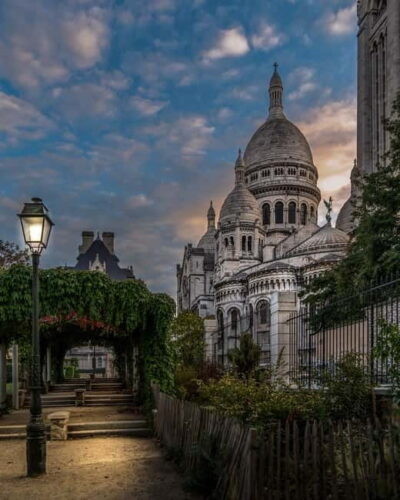
Paris: Montmartre Highlights Walking Tour with a Local Guide
Read our review →
Paris: Sacré-Coeur and Montmartre Tour with Expert Guide
Read our review →
Private Montmartre Food Tour with Wine, Cheese & Pastries
Read our review →
Paris Montmartre Food Tour – A Full French Meal by Do Eat Better
Read our review →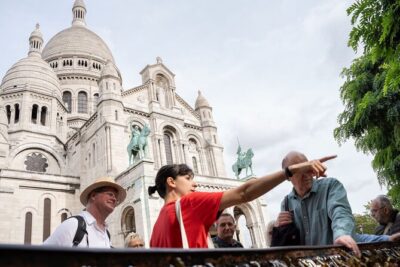
Hidden Montmartre: Paris’ Secret Streets Walking Tour
Read our review →Browse the lists this tour appears in