
Reviewed · COOKING CLASSES
Paris: Macarons Class, Teatime and To-Go Box
Macarons look delicate. This three-hour Paris class turns them into a hands-on project, with Italian meringue instruction, piping practice, a homemade filling, and teatime at Le Foodist. I like the small group format, which allows the English-speaking instructor to help each person, and I like that you leave with both recipes and a box of your own macarons. The main consideration is price: at $152 per person, this is a premium activity, and children under 12 cannot take part.
You begin at Le Foodist on Rue Cardinal Lemoine, in the 5th arrondissement, then spend about two hours working through the macaron process. I especially like the balance between technical baking and relaxed conversation, including stories about macarons and French culture over tea, coffee, and juice. If you are hoping simply to watch a pastry chef, this may feel more work-focused than expected, since participants are active in the kitchen.
In This Review
- Key points to know before booking
- Why this Paris macaron class is worth three hours
- Arriving at Le Foodist on Rue Cardinal Lemoine
- The first two hours: from meringue to macaron shells
- Making the filling and assembling your macarons
- French teatime with macarons and cultural stories
- Taking home a box of your own work
- Families, teenagers, and first-time bakers
- What the praise tells you, and one useful caution
- Booking details that affect your choice
- Should you book the Paris macaron class?
- FAQ
- Where does the macaron class take place?
- How long does the experience last?
- How much does the class cost?
- Is the class taught in English?
- How many people are in the class?
- What macaron method will I learn?
- Is equipment provided?
- What is included after the baking lesson?
- Can children participate?
- Are recipes provided?
- Can I cancel for a refund?
- Can I bring a younger child to watch?
Key points to know before booking
- Italian meringue method: Learn the more technical method, valued here for its reliability once the steps are understood.
- Small English-speaking class: The group is limited to six participants, with typical sessions designed to feel personal and easy to follow.
- Hands-on from start to finish: Mix, color, pipe, bake, and fill your own macarons rather than just tasting them.
- Teatime with a story: Pause after the baking for tea, coffee, fruit juice, your macarons, and informal French culture stories.
- A useful souvenir: Take home a box of your creations plus recipes in both hard copy and electronic form.
- Best for ages 12 and up: Children aged 12 to 16 must attend with a participating adult, and only participants may enter the kitchen.
Why this Paris macaron class is worth three hours
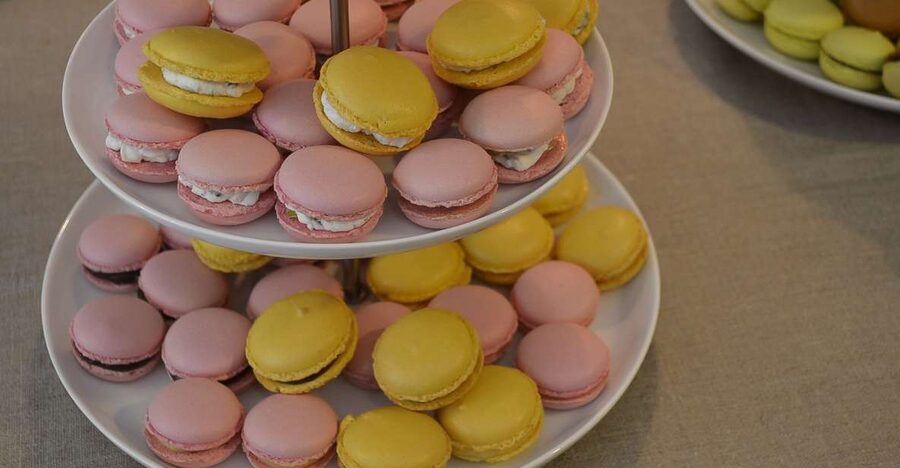
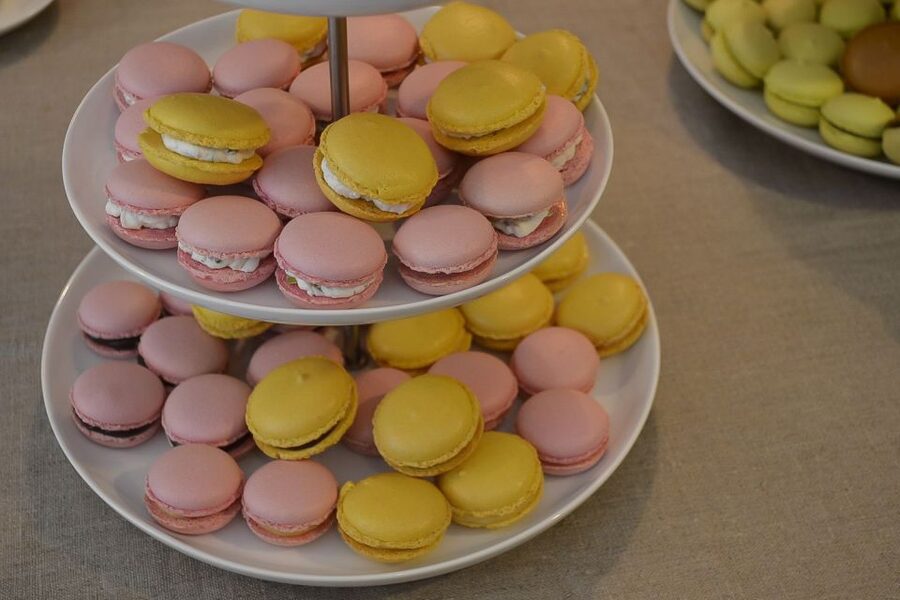
Paris has no shortage of pastry shops. You can buy a beautiful macaron in minutes. The value here is learning why the shell has its smooth top, crisp edge, and soft center, then trying to reproduce that balance yourself.
Macarons are not the same as coconut macaroons. These French sandwich cookies use almond flour, sugar, and meringue, with a filling between two shells. Their appearance is simple, but small errors in mixing, piping, or baking can affect the result.
This class focuses on the Italian meringue method. It is harder to master than some other approaches because it involves making a hot sugar syrup and combining it with whipped egg whites. The benefit is a more stable mixture, which can give beginners a dependable route into a pastry that often intimidates home bakers.
I see this as a good use of a Paris afternoon, especially if you want an activity that produces something tangible. You are not only watching a demonstration or sampling finished sweets. You are learning a process, eating part of the result, and carrying the rest back with you.
More Workshops in Paris
- Fragonard Paris: Mini Perfume Workshop
★ 4.5 · 1,924 reviews - Paris Cooking Class and Lunch with Wine plus Market Visit Option
★ 5.0 · 1,024 reviews - Paris Croissant Small-Group Baking Class with a Chef
★ 5.0 · 910 reviews
Arriving at Le Foodist on Rue Cardinal Lemoine
The meeting point is Le Foodist, at 59 Rue Cardinal Lemoine, 75005 Paris. Give yourself enough time to find the address, since one past participant found the street difficult to locate. Arriving early matters here: a baking class has a fixed rhythm, and joining after the first instructions could make the technical steps harder to follow.
The class takes place in a teaching kitchen, with cooking equipment and an apron provided. You do not need to bring baking tools. That makes this easier to fit into a sightseeing day, since you can arrive without carrying special equipment.
The setting is part of the appeal. The kitchen is described as attractive, clean, and well organized, and the work is arranged for a small number of people. That size matters more than it might in a simple demonstration. When you are piping batter or checking the texture of a filling, individual help can save a batch from going astray.
The class is taught in English. Several instructors have led sessions, including Stéphane Jimenez, Anne, Fanny, Luc, Amanda, Florence, Anna, Hugo, and Frédéric. The names vary by date, so you should not book with the expectation of a particular instructor unless the provider confirms it.
The first two hours: from meringue to macaron shells
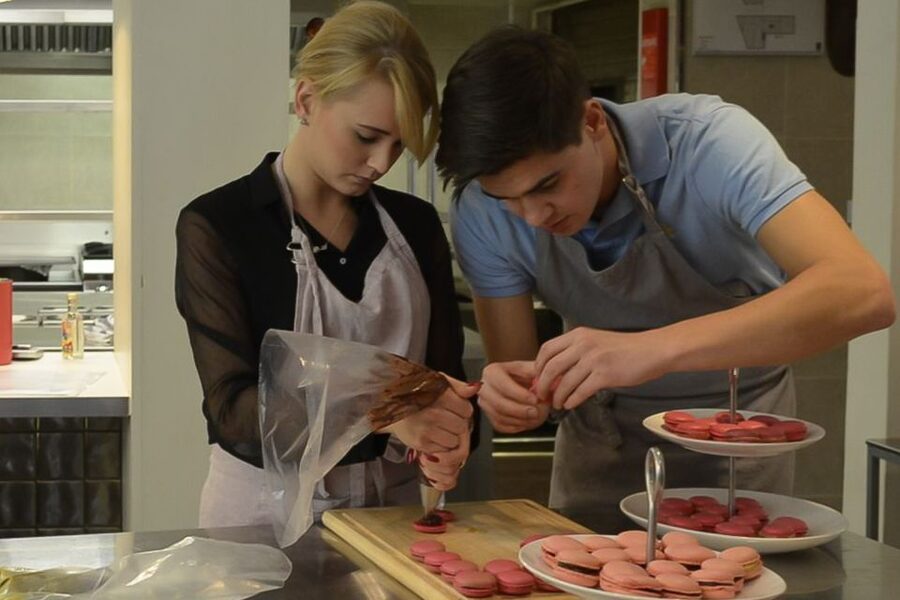
The working portion lasts about two hours. Your instructor explains the method, then guides you through the main stages rather than leaving you to guess.
The Italian meringue technique is the central lesson. You learn how the meringue is made and how it is incorporated with the almond mixture. This is where the class has real teaching value. Macaron batter needs the right consistency, and the instructor can show you what to look for before you pipe it.
You also learn how to add color to the shells. This is a small step, but it helps you understand how an attractive, even finish is created. The point is not just decoration. Color needs to be incorporated without damaging the texture of the mixture.
Piping is another key skill. You practice forming the shells in a consistent size and shape. A pastry bag can feel awkward at first, especially when you are trying to produce neat circles quickly. This is exactly the sort of task where the small group helps. Instructors described in the feedback, particularly Stéphane, Anne, and Luc, were praised for patience and for making sure people did not fall behind.
The class suits complete beginners. You do not need to arrive as a baker, and one participant who described having little cooking experience still found the class approachable. The instruction is broken into manageable stages, with room to ask questions.
At the same time, do not mistake beginner-friendly for effortless. One past participant noted that the group worked continuously for two hours. You will be involved, not lounging beside a pastry chef while the difficult work happens elsewhere. Wear something comfortable and expect to concentrate.
Making the filling and assembling your macarons
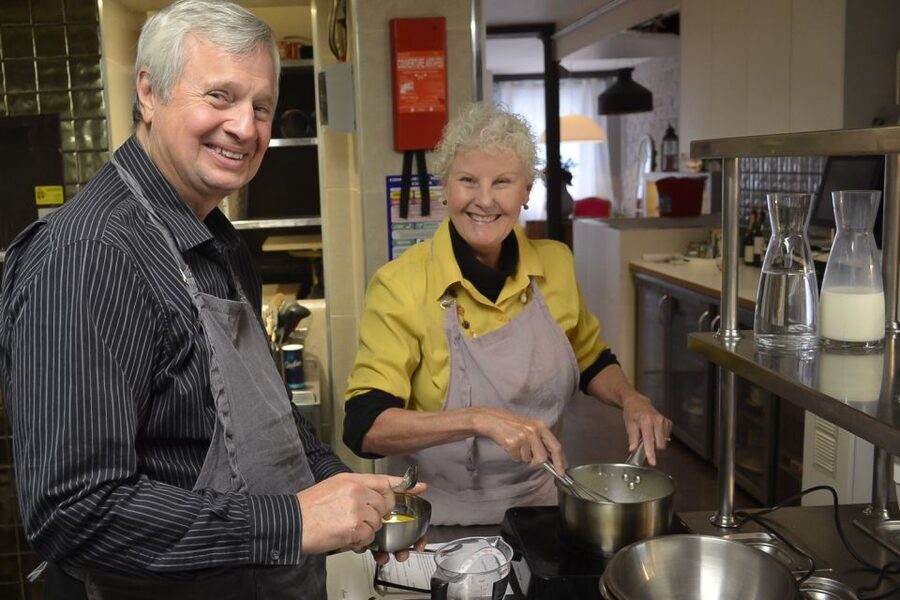
The filling gives you another chance to make a choice and learn a technique. Depending on the session, you work with a ganache or curd filling. The class teaches you how to prepare it and how to pipe it between the shells.
This part is important because a macaron is judged by the relationship between shell and filling. Too much filling can overwhelm the cookie. Too little makes the sandwich dry. Piping also affects how neatly the finished macarons come together.
The exact flavors are not fixed in the information provided, though one past participant recalled making four different flavors. That suggests the class may offer variety, but I would not count on a particular flavor combination unless it is confirmed for your date.
Once the shells and filling are ready, you assemble your macarons. The payoff is immediate: you can see how much your technique matters. Even if every shell is not bakery-perfect, you will understand the process far better than you would from reading a recipe alone.
You also receive recipes in English. They are provided in hard copy and electronically, which is useful if you want to try again at home. A printed recipe lets you make notes during the lesson, a detail one participant appreciated. That is a small but practical advantage over a class that sends you away with only a vague memory of the ingredients.
More Cooking Classes in Paris:
- Paris: Montmartre Cheese, Wine & Pastry Guided Walking Tour
★ 4.8 · 2,255 reviews - Paris: Macaron Class at Galeries Lafayette
★ 4.3 · 905 reviews - Paris: French Croissant Baking Class with a Chef
★ 4.9 · 712 reviews - Paris Cooking Class: Learn How to Make Macarons
★ 5.0 · 634 reviews
French teatime with macarons and cultural stories
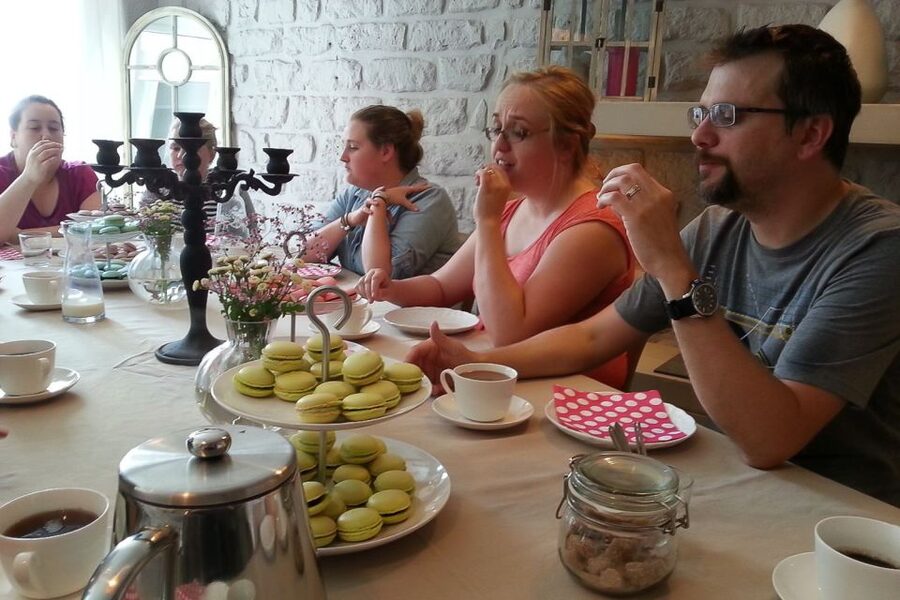
After the baking work, the mood changes. You sit down for teatime with tea, coffee, fruit juices, and some of the macarons you made.
This is not a separate restaurant meal, so do not book it expecting a full lunch or dinner. It is a pleasant closing pause after a fairly active kitchen session. You get to taste the results while they are fresh and compare your work with what others have made.
Your host also shares the story of the macaron and other points about French culture. The tone is often playful and tongue in cheek. That storytelling gives the class a stronger Paris connection than a purely technical baking lesson, especially if you enjoy food traditions and informal cultural conversation.
It is also a social part of the experience. With a group of roughly three to six people, you work alongside classmates and then share the final table. Several past participants valued meeting people from different places, while others enjoyed the friendly atmosphere with partners, teenagers, or family members.
If you have a packed sightseeing schedule, the three-hour length is worth considering. This is not a quick stop between the Louvre and dinner. You need to reserve a real block of time, and the class is best treated as the main event for part of an afternoon.
Taking home a box of your own work
The final souvenir is edible. Before leaving, you receive a box of your macarons to share with family and friends, or to keep for yourself over the next few days.
The quantity appears generous. Several participants described leaving with plenty to take home, and one couple felt they had more than enough both for teatime and for a large box afterward. Exact numbers are not provided, so you should think of this as a substantial box rather than a guaranteed count.
This makes the $152 price easier to assess. You are paying for a three-hour class, an instructor, kitchen use, equipment, an apron, drinks, recipes, and the take-home pastries. The box alone does not justify the cost. The value comes from the instruction and the chance to make something in Paris that you can repeat at home.
Still, it is expensive compared with buying macarons from a shop. I would book it if you place a high value on participation, food skills, and a memorable activity. I would skip it if your main goal is simply to taste excellent pastries at the lowest cost.
The macarons may also travel better in your memory than in your luggage. They are meant to be enjoyed over the next few days, and the provider does not state that the box is designed for long-distance transport. If you have a long journey home, handle them carefully and ask the instructor for practical advice before departing.
Families, teenagers, and first-time bakers
This is a strong choice for families with older children. Children under 12 cannot participate, and there are no childcare facilities. Young people aged 12 to 16 must be accompanied by a participating adult.
Only participants may enter the kitchen. This rule matters for families because an adult cannot simply bring along a younger child to watch while another family member cooks. Everyone entering the kitchen needs to meet the participation requirements.
The experience has worked well for families with teenagers. Past bookings included 14 and 16 year olds, two 14 year olds, and groups of children around 12 and 15. The instruction was praised for being patient and engaging, especially when younger participants needed extra help.
There is one practical point to clarify when booking for a family. Each paying participant receives a place in the hands-on work, but the exact way people share tasks can matter. One past parent felt that she had become an assistant while the children did the actual macaron-making. If every member of your party wants to pipe and prepare a batch, ask how stations and participation are arranged.
Couples and solo visitors can also fit in well. The small class size makes it easier to meet the other people at your work table, and the teatime gives everyone a natural chance to talk.
What the praise tells you, and one useful caution
The most repeated strengths are clear: patient instruction, friendly teaching, a clean kitchen, good organization, and a generous amount of macarons to take home. The names vary, but the same qualities come up around instructors such as Anne, Stéphane, Luc, Fanny, and Florence.
That consistency matters. A technical pastry class can become stressful if the teacher rushes or assumes prior knowledge. Here, the instruction is designed to keep beginners involved, and people repeatedly left feeling more confident about trying macarons at home.
The one clear criticism concerns the recipe handout. One participant wanted the printed recipe to include more of the chef’s personal tips and step-by-step directions. You will receive recipes in English, both printed and electronic, but you may still want to write down extra notes during the lesson.
I recommend noting details about batter texture, piping pressure, and the filling as you work. Those small observations may be as useful as the formal recipe later. Since the class is active, do not assume you will remember every tip once you return home.
The class also requires teamwork. You may be paired with people you have just met, and some tasks may be shared. That is usually part of the fun, but a person who wants complete control over every stage may find the group format less satisfying than a private lesson.
Booking details that affect your choice
The listed price is $152 per person, and the duration is three hours. The hands-on macaron work takes about two hours, followed by teatime and stories.
The current details describe a small group limited to six participants, while the broader description indicates that classes are typically intimate, sometimes ranging from three to seven people. Check the class details for your chosen date if group size is especially important to you.
The class is offered in English. You can cancel up to 24 hours before the start time for a full refund, and reserve now while paying later. Starting times vary, so check availability before planning your sightseeing around it.
Unaccompanied minors are not permitted. Children under 12 cannot take part, and participants aged 12 to 16 need a participating adult with them. There is no childcare on site.
Should you book the Paris macaron class?
Book this experience if you want more than a pastry tasting. It suits first-time bakers, couples, food-focused visitors, and families with teenagers who enjoy doing something together. You get technical instruction, a social teatime, recipes, and a box of macarons you made yourself.
I would be especially happy to recommend it for someone who has always found macarons too fussy to attempt. The Italian meringue method is demanding, but the teacher’s guidance gives you a fair shot at understanding it.
Skip it if you have limited time, dislike kitchen work, or are mainly hunting for the cheapest sweets in Paris. At $152, it is not a bargain snack. It is a structured food experience with a strong souvenir and a good chance of leaving you ready to try the recipe again at home.
FAQ
Where does the macaron class take place?
The class takes place at Le Foodist, 59 Rue Cardinal Lemoine, 75005 Paris.
How long does the experience last?
The full experience lasts three hours. About two hours are devoted to the hands-on macaron class, followed by teatime and stories.
How much does the class cost?
The listed price is $152 per person.
Is the class taught in English?
Yes. The instructor language is English, and recipes are provided in English.
How many people are in the class?
The class is described as a small group limited to six participants. Typical groups are described as intimate and may range from three to seven people.
What macaron method will I learn?
You will learn the Italian meringue method, including how to make the shells, add color, pipe the mixture, and prepare a ganache or curd filling.
Is equipment provided?
Yes. Cooking equipment and an apron are included.
What is included after the baking lesson?
Teatime includes tea, coffee, fruit juices, stories, and some of the macarons you made. You also receive a box of your creations to take away.
Can children participate?
Children under 12 cannot participate. Participants aged 12 to 16 must be accompanied by a participating adult, and unaccompanied minors are not allowed.
Are recipes provided?
Yes. Recipes are provided in English in hard copy and electronic form.
Can I cancel for a refund?
You can cancel up to 24 hours in advance for a full refund.
Can I bring a younger child to watch?
No. Only participants can enter the kitchen, and there are no crèche or childcare facilities.
Recently added around Paris
- Private Half-Day Guided Tour of Paris★ 4.5 · 48 reviews
- 2 hour outdoor group activity in Paris: SAINT GERMAIN★ 5.0 · 48 reviews
- Paris Dinner Show Opera Bel Canto★ 4.5 · 48 reviews
- Paris Vintage Tour by Night on a Sidecar with Champagne★ 5.0 · 48 reviews
- Secrets & Scandals of the Louvre – Limited to 6 Guests★ 5.0 · 48 reviews
- Paris Photoshoot: Eiffel Tower Exclusive Private Experience★ 5.0 · 48 reviews
- From Paris: Versailles Full-Day Guided Tour with Lunch★ 4.9 · 48 reviews
- Paris: Louvre Mona Lisa Discovery Guided Tour with Ticket★ 4.9 · 48 reviews
Cooking Classes, compared.

Paris: Montmartre Cheese, Wine & Pastry Guided Walking Tour
Read our review →
Paris Cooking Class and Lunch with Wine plus Market Visit Option
Read our review →
Paris Croissant Small-Group Baking Class with a Chef
Read our review →
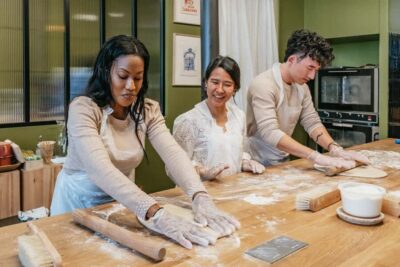
Paris: French Croissant Baking Class with a Chef
Read our review →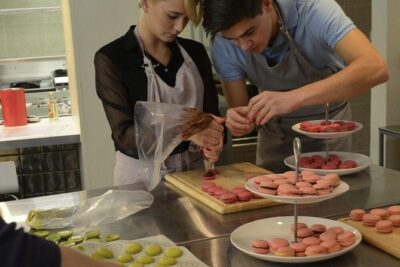
Paris Cooking Class: Learn How to Make Macarons
Read our review →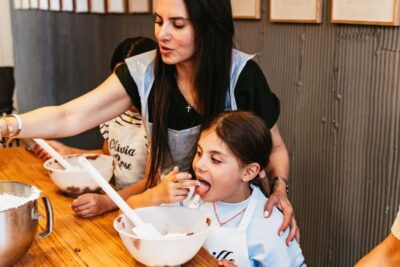
A Morning in Paris Food Tour: Croissants, Baguettes & Chocolate
Read our review →Browse the lists this tour appears in