
Reviewed · MUSéE D'ORSAY TICKETS
Paris: Musée d’Orsay Guided Tour with Skip-the-Line Tickets
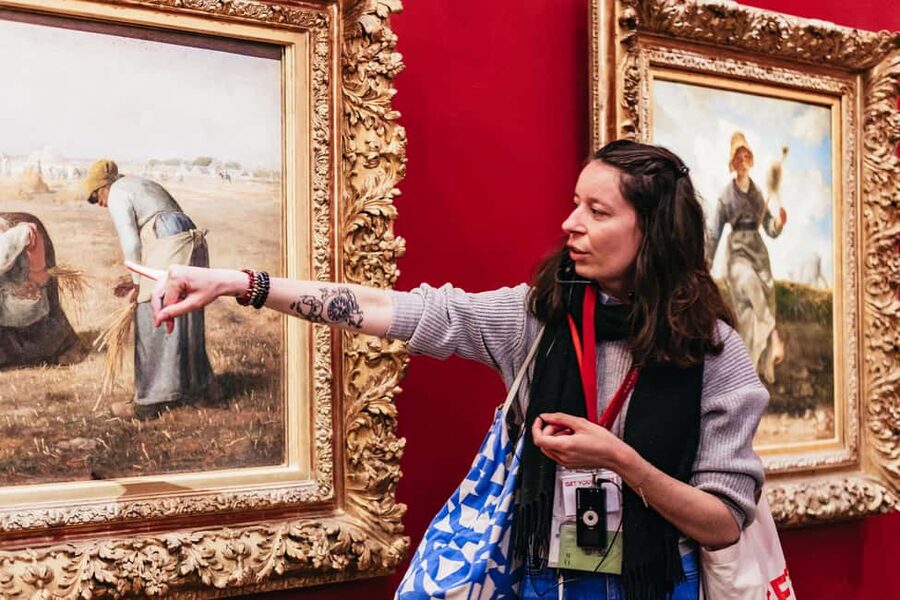
Paris keeps its best art in an old train station. This 90-minute guided tour brings you past the long public queue and into the Musée d’Orsay, where Monet, Renoir, Manet, Degas, Cézanne, and Van Gogh tell the story of modern art. I like the building’s grand railway clocks and the guide’s focus on both the paintings and the social upheaval behind them. I also like that the tour gives you a clear route through a large museum instead of leaving you to wander until your feet give out.
The main drawback is time. Ninety minutes inside is enough for a well-chosen introduction, not a full visit, and some travelers have found the pace a little quick. Crowds can also be heavy, with security adding up to 15 minutes, so you should arrive ready for a busy museum rather than a quiet art lesson.
In This Review
- Key points to know before booking
- Why the Musée d’Orsay building is half the experience
- Meeting beside the horse statue
- Skip-the-line entry, with one important limit
- The 90-minute route through Impressionism
- Van Gogh, Monet, Renoir, and the value of a guide
- What the crowds mean for your visit
- Is $55 a fair price?
- The optional Louvre afternoon
- Who should book this tour?
- Practical tips for getting the most from 90 minutes
- Should you book the Musée d’Orsay guided tour?
- FAQ
- How long does the Musée d’Orsay guided tour last?
- Is skip-the-line entry included?
- How long might security take?
- Where do I meet the guide?
- Is the tour offered in English?
- Can children join the tour?
- Can I visit temporary exhibitions with this ticket?
- Can I bring luggage or a tripod?
- Is the Louvre included?
- Can I re-enter the museum after leaving?
Key points to know before booking

- The meeting point is beside the horse statue near the Musée d’Orsay entrance, not at a general tourist office.
- The tour focuses on Impressionist and Post-Impressionist art, including works by Monet, Manet, Renoir, Degas, Cézanne, Gauguin, and Van Gogh.
- The former railway station is part of the story, including its unusual clocks and transformation into a museum.
- Expect 30 minutes of organization around the tour, including entry and receiving the audio headsets.
- The Louvre upgrade adds a separate two-hour afternoon tour, with the Mona Lisa, Venus de Milo, and Winged Victory of Samothrace.
- Large luggage, tripods, and selfie sticks are not allowed, and the tour is not suitable for wheelchair users or people with mobility impairments.
Why the Musée d’Orsay building is half the experience
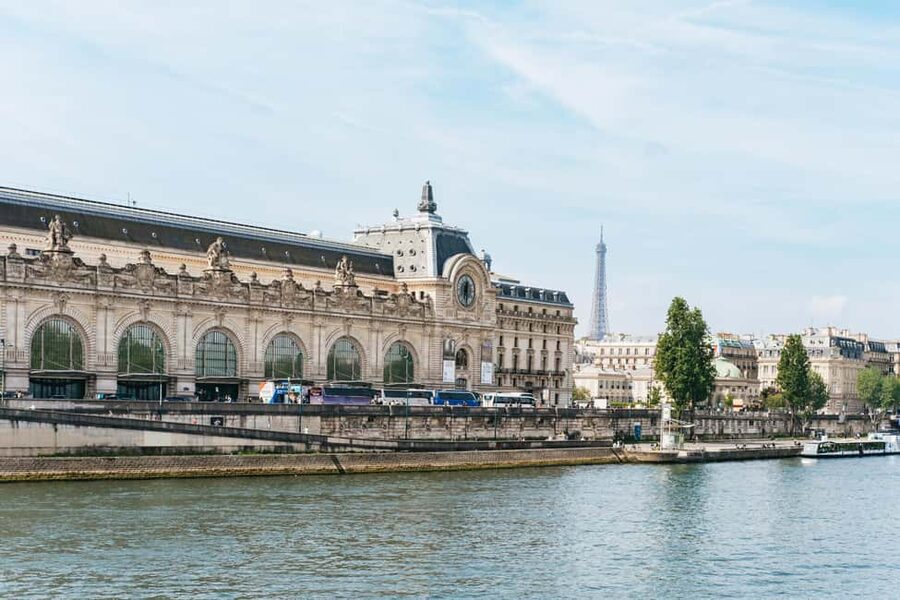
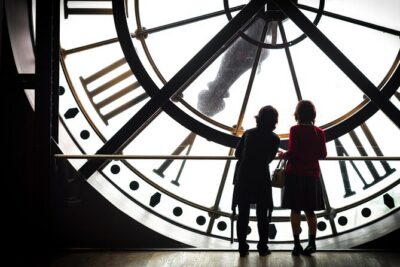
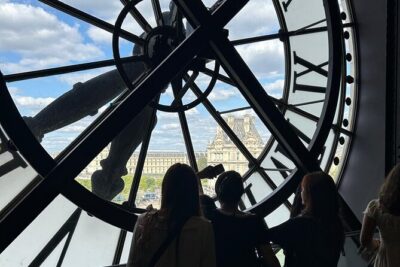
Before you look at a single Monet, look up. The Musée d’Orsay occupies a former train station and hotel, a grand structure built for the 1900 World’s Fair. Its enormous central hall, great clock faces, and high iron-and-glass design give the museum a feeling that a normal gallery cannot match.
The building helps explain the art inside. The 19th century saw factories, railways, city rebuilding, new leisure time, and faster travel reshape daily life. Impressionist painters responded to that changing world with scenes of modern Paris, suburban recreation, rural roads, theaters, cafés, and working life.
Your guide explains how a place built to move people through Paris became a place where people stop and look. That change is more than a neat architectural story. It gives you a useful frame for understanding why the museum’s art feels so different from the formal paintings at the Louvre.
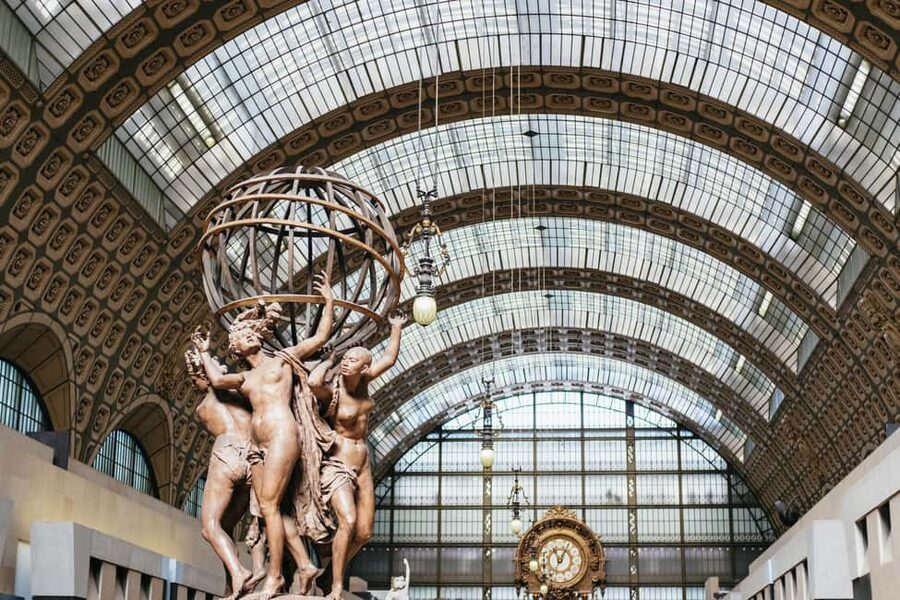
The old station clocks are also a memorable part of the visit. One offers views across Paris, making it an easy place to pause after the guided portion. The clock is not just a photo stop. It reminds you that the building was designed around movement, schedules, and machines before it became a home for paintings.
More Musée d'Orsay tickets:
- Paris in a Day: Louvre or Orsay, Eiffel Tower, City Walk & Cruise
★ 5.0 · 1,956 reviews - Paris: Musée d’Orsay Entry Ticket and Seine River Cruise
★ 4.6 · 1,344 reviews - Paris: Musée d’Orsay Skip-the-Line Tour with Expert Guide
★ 4.5 · 1,145 reviews
Meeting beside the horse statue
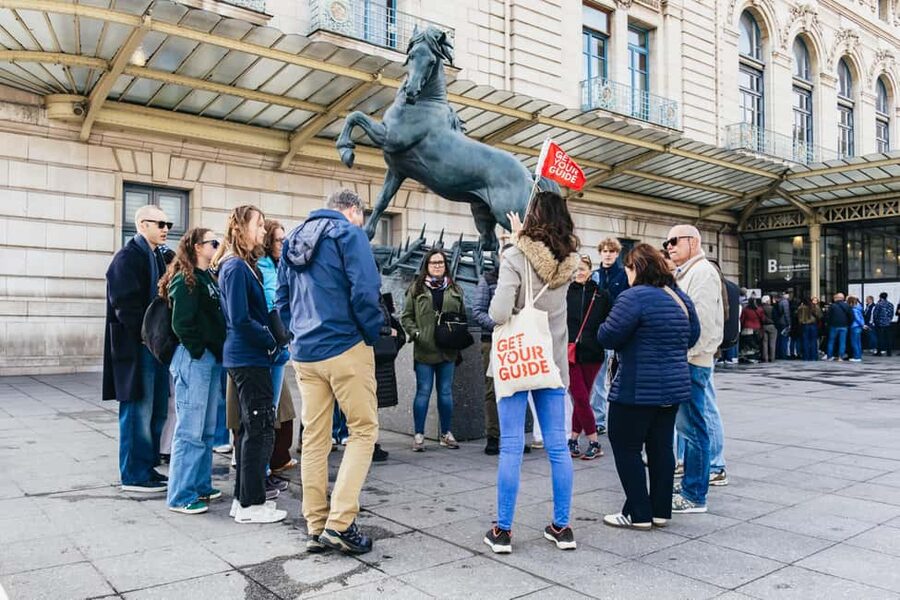
You meet next to the entrance of the Musée d’Orsay, beside the horse statue, at the time selected when you book. This location is specific, but it can still be confusing in a crowd, so give yourself extra time to find the statue and identify the guide.
One person had difficulty locating the group because there was no obvious GetYourGuide flag or card. The guide did appear in clothing that was easy to recognize, but you should not treat the meeting point as a place to arrive at the last second.
The booked time can also be slightly misleading. One visitor expected a 10:15 start but found that 10:15 was the meeting time and the actual tour began at 10:30. The practical lesson is simple: arrive early, allow time for the guide to gather the group, and expect a short setup period before the art begins.
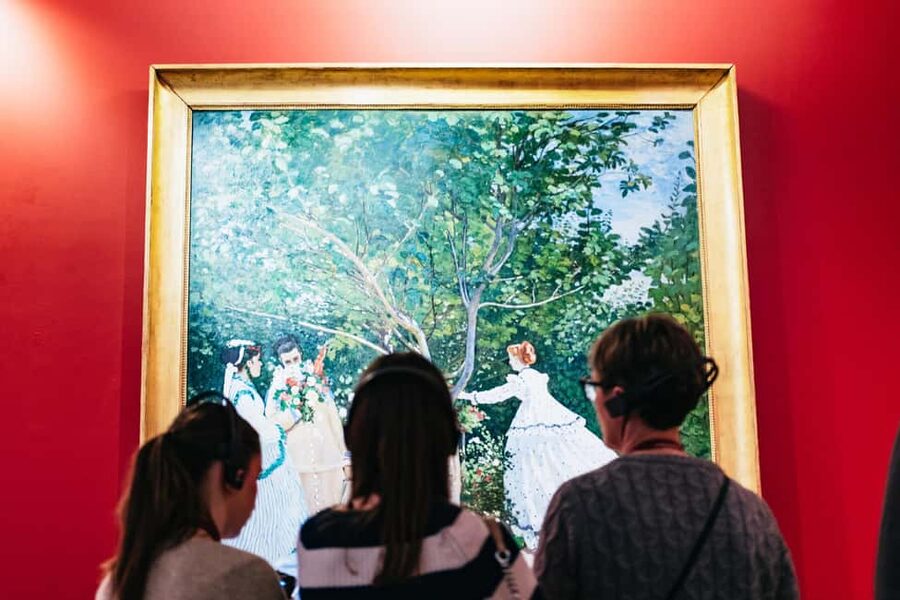
You receive an audio device so you can hear the English-speaking guide in crowded rooms. That matters here. The most famous paintings often attract clusters of people, and a headset lets you listen while standing a little away from the main knot around a canvas.
Skip-the-line entry, with one important limit
The ticket uses a separate entrance, which is the tour’s most practical benefit. Musée d’Orsay is one of Paris’s major sights, and timed entry helps you avoid spending a large part of your day waiting outside.
Skip-the-line does not mean skip every delay. Security checks still apply, and the tour information allows for a wait of up to 15 minutes there. You should also expect about 30 minutes for organization, museum entry, and headset distribution.
That means the advertised 1.5 hours refers to the guided museum visit itself. The full appointment takes longer once you include meeting the group, clearing security, and getting organized. Plan your next activity with breathing room rather than booking something immediately afterward.
Small bags and clothing can go into the cloakroom. Large luggage is not allowed, so leave suitcases elsewhere. Selfie sticks and tripods are also prohibited. This is sensible in a crowded gallery, but it means the tour is not a good stop between a hotel checkout and a train departure unless you have somewhere to store your bags.
The 90-minute route through Impressionism
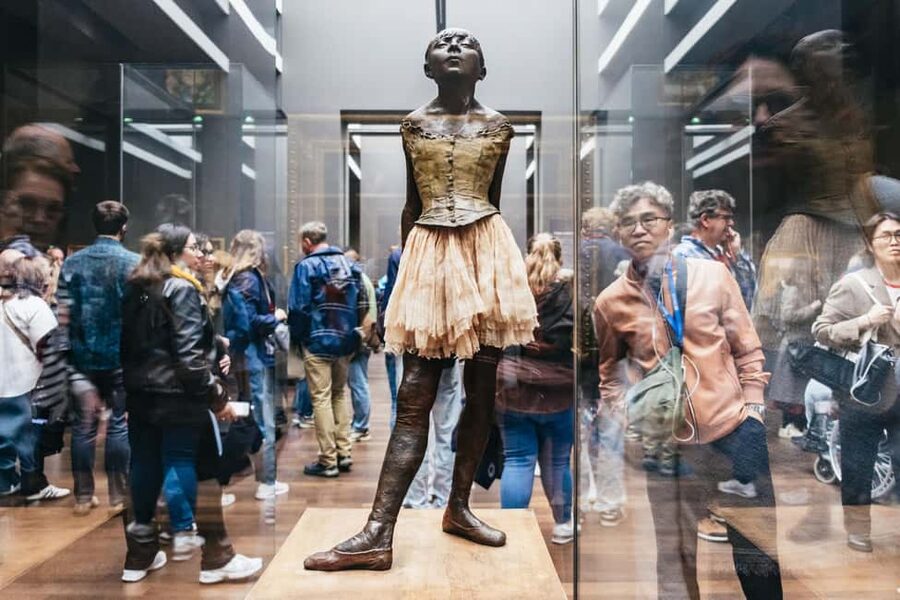
The tour is built as a highlights visit. No guide can cover a museum of this size in 90 minutes, especially with time needed to enter, move between rooms, and manage a group. The advantage is that you get a selected path through the collection instead of trying to make sense of the floor plan on your own.
The guide begins by setting up the Impressionist movement and the world that produced it. You hear about the arguments and social shocks surrounding new painting methods, changing ideas about beauty, and Paris’s adjustment to industrial life.
That background makes the paintings easier to read. Instead of hearing only the artist’s name and the title, you can look for the choices that made the work controversial or fresh. Brushwork, light, cropped views, modern subjects, and outdoor scenes become part of a larger story.
The route includes 19th-century works by Monet, Manet, Renoir, Degas, and others. It also moves into Post-Impressionism through Van Gogh, Cézanne, and Gauguin. You may see Parisian streets and city life, then travel through paintings toward the countryside and southern France.
The change in setting gives the visit a pleasing rhythm. Industrial Paris shows one side of the century, while rural scenes suggest another. Cézanne, Van Gogh, and Monet take you toward the south of France, while Gauguin points farther away, offering a sense of how artists looked beyond familiar Paris.
The strongest part of the tour is usually the explanation at individual paintings. Guides have been praised for discussing artistic technique, the artists’ lives, and connections between works. Merve, Gabriella, Erlon, Thibeault, Laetitia, Isabelle, and Letitia are among the guides singled out for clear, energetic presentations.
A good guide also knows when to stop talking. One especially useful detail from the feedback was the practice of pausing in rooms so people could look around before moving on. That balance matters. You want context, but you also need a few quiet seconds to meet the painting with your own eyes.
More skip-the-line tickets in France:
- Versailles: Skip-the-Line Tour of Palace with Gardens Access
★ 4.7 · 9,778 reviews - Versailles: Skip-the-Line Guided Palace Tour and Full Access
★ 4.6 · 5,214 reviews - Louvre Museum: Skip-the-Line Small Group Guided Tour
★ 4.6 · 3,960 reviews - From Paris: Versailles Skip-the-Line Tour & Gardens Access
★ 4.7 · 3,011 reviews
Van Gogh, Monet, Renoir, and the value of a guide
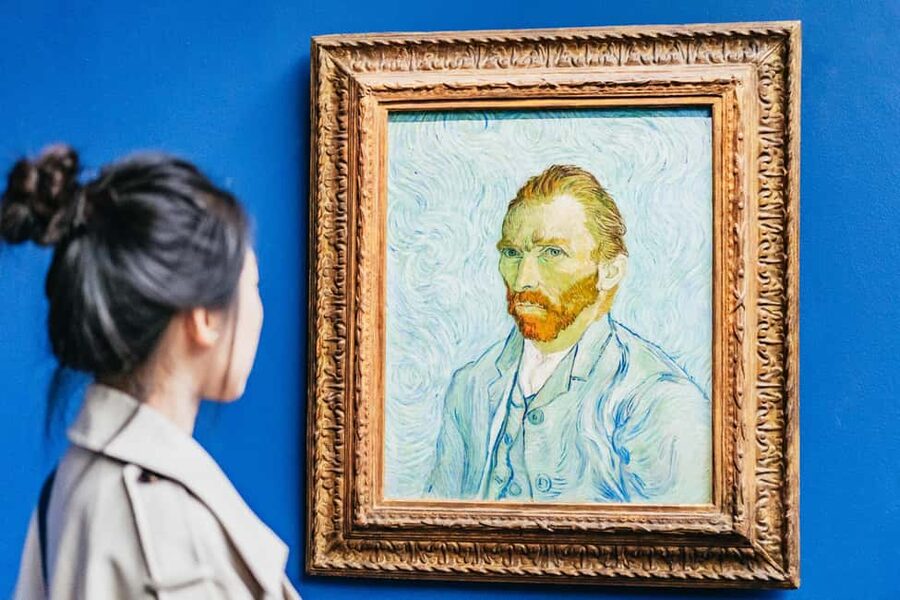
If you already know Impressionist art well, a guide may help you make connections rather than simply identify famous names. If you are new to the subject, the tour can prevent the paintings from blending into one large room of pretty colors.
The guide’s perspective is particularly useful with artists who are often reduced to a single label. Monet is not only water lilies and soft light. Van Gogh is not only swirling paint and personal drama. Renoir is not only pleasant social scenes. The tour’s value comes from showing how technique, subject, and the period’s changing tastes fit together.
The best guides on this experience appear to bring real enthusiasm to the job. Several were described as passionate, friendly, and engaging, with enough energy to hold attention through a crowded museum. That personal delivery is a major reason to choose a live tour over a printed guide.
Still, the quality of any museum tour depends on the individual guide and the day’s crowd. One account found the explanation of the paintings lighter than expected, and another felt the pace was rushed. You should book this as a structured introduction, not as a private art-history seminar.
What the crowds mean for your visit
The Musée d’Orsay can become very crowded around its best-known paintings. A timed ticket gets you through the door at a planned time, but it cannot create empty galleries once you are inside.
Crowds make the audio device especially useful. Stay close enough to hear, but avoid blocking the painting or the people behind you. The guide may pause at selected works, then move the group onward when the room becomes too packed.
The group format also affects how much personal attention you receive. You can ask questions, but the guide has to keep everyone moving. If you want to spend 20 minutes studying one canvas, this is not the right format. You may prefer a self-guided ticket or a private tour instead.
Once you leave the museum, you cannot re-enter with this ticket. Keep that in mind if you want time for the clock views, the gift shop, or another section after the guide finishes. The safest plan is to remain inside until you have seen everything you want to see.
Is $55 a fair price?
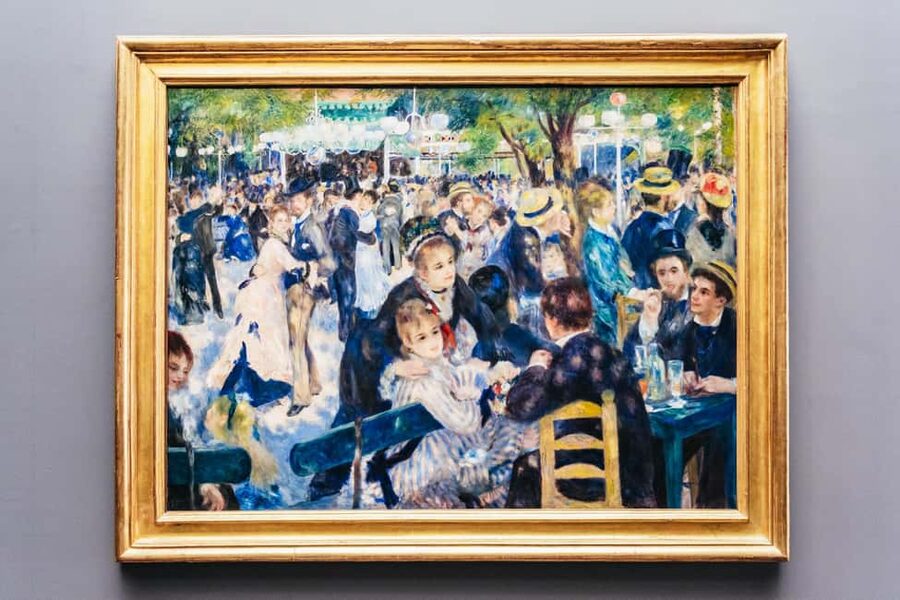
At $55 per person, this is not the cheapest way to enter the Musée d’Orsay. You are paying for more than admission, though. The price includes the museum ticket, a licensed English-speaking guide, skip-the-line access, the audio device, and cloakroom service for small bags and clothing.
The value is strongest if you are short on time, visiting the museum for the first time, or unsure how Impressionist art fits together. The guide saves you from planning a route and gives you enough context to understand why the collection matters.
The value is weaker if you already have a firm list of paintings to see and prefer to linger. You may cover fewer works than you would alone, and the 90-minute route cannot represent every part of the museum.
I would also compare the price with your whole Paris schedule. If this is your only museum visit, the guided structure can be worth it. If you plan several art museums and already enjoy reading labels and maps, a ticket with a digital audio guide may give you more freedom.
The optional Louvre afternoon
The combo option adds a two-hour guided tour of the Louvre in the afternoon. It is a useful pairing because the two museums tell different chapters of European art.
At the Louvre, the planned masterpieces include the Mona Lisa, Venus de Milo, and Winged Victory of Samothrace, along with less famous works. The route is designed to give you the major sights and some additional pieces without asking you to spend the whole day crossing the enormous museum.
Combining both museums in one day creates a packed schedule. Musée d’Orsay already requires time for meeting, security, and the guided route. Add the Louvre afterward and you should expect a full day of standing, walking, listening, and looking.
I would choose the combo if you have only one major museum day in Paris and want help with both institutions. I would choose the Orsay tour alone if you want to leave space for a relaxed lunch, a walk along the Seine, or a second visit to your favorite rooms.
The contrast is worthwhile. The Louvre is associated with older art, monumental scale, and famous classical works. The Musée d’Orsay carries you into later 19th-century painting and sculpture. Seeing both with guides can make the shift in artistic ideas easier to grasp.
Who should book this tour?
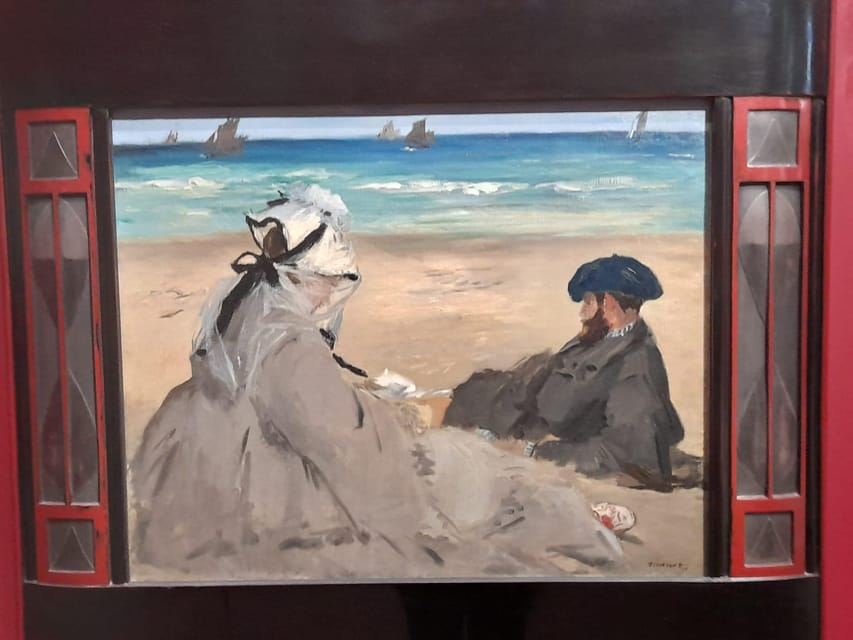
This tour suits a first-time visitor who wants a strong introduction without giving the museum an entire day. It also works well for anyone who likes hearing stories about artists and techniques rather than reading every label alone.
Families can book children onto the tour, but every child needs a ticket. The route is not suitable for wheelchair users or people with mobility impairments, so check the format carefully before paying.
You should choose it if you value a clear route, live explanation, and quicker entry. You should skip it if you dislike fixed schedules, want to study only a few artists, or plan to carry large bags.
The most praised part of the experience is the guide’s ability to make the paintings understandable and engaging. Merve, Gabriella, Thibeault, Erlon, Laetitia, Isabelle, and Letitia were all described as warm and well prepared. That consistency is encouraging, though no group tour can guarantee the exact guide or pace you will receive.
Practical tips for getting the most from 90 minutes
Arrive early at the horse statue. The meeting point can be hard to spot in a crowd, and arriving late creates a real problem because the group booking does not allow individual tickets to be issued afterward.
Wear comfortable shoes and keep your belongings light. Small bags can use the cloakroom, but large luggage is forbidden. Leave selfie sticks and tripods behind.
Use the headset from the beginning. The museum can be noisy, and the guide’s best comments may come while the group is moving between rooms.
Do not plan a tight appointment afterward. Allow time for security and organization, and remember that the interior tour lasts 1.5 hours.
If you want photographs through the clock, ask when the guided portion ends and make sure you have time to visit that area before leaving. You cannot return once you exit.
Should you book the Musée d’Orsay guided tour?
Book it if you want the museum’s major Impressionist works placed into a clear story, with skip-the-line entry and a live English-speaking guide. At $55, it is a reasonable convenience purchase for a first visit, especially when your Paris schedule is tight.
Do not book it expecting a complete museum visit or a slow private lesson. The route is a highlights tour, crowds can be heavy, and some sessions may feel hurried.
For most first-time visitors who want Monet, Renoir, Manet, and Van Gogh with useful context, I would choose it. Add the Louvre only if you are ready for a long museum day and want both sides of Paris’s great art scene in one carefully planned outing.
FAQ
How long does the Musée d’Orsay guided tour last?
The guided tour inside the museum lasts 1.5 hours. Allow an additional 30 minutes for organization, museum entry, and receiving the audio headsets.
Is skip-the-line entry included?
Yes. The experience includes a skip-the-line ticket and access through a separate entrance, although you still need to pass through security.
How long might security take?
The information allows for a possible wait of up to 15 minutes at the security check.
Where do I meet the guide?
Meet next to the entrance of the Musée d’Orsay, beside the horse statue, at the time you booked.
Is the tour offered in English?
Yes. The live guide leads the tour in English.
Can children join the tour?
Yes, but every child joining the tour needs to have a ticket purchased for them.
Can I visit temporary exhibitions with this ticket?
No. The tour does not provide access to the museum’s temporary exhibitions.
Can I bring luggage or a tripod?
Large luggage, selfie sticks, and tripods are not allowed. Small bags and clothing can use the cloakroom service.
Is the Louvre included?
The Louvre is included only if you select the combo option. That option adds a two-hour guided Louvre tour in the afternoon.
Can I re-enter the museum after leaving?
No. Once you exit the Musée d’Orsay, you cannot enter again with this ticket.
Recently added around France
- The essential in Bordeaux, private tour with a local★ 4.9 · 48 reviews
- Avignon, Les Baux, St Remy and Arles from MARSEILLE★ 4.5 · 48 reviews
- Visit Avignon and Villeneuve lez Avignon aboard a Double-Decker Bus★ 4.0 · 48 reviews
- 2 hour outdoor group activity in Paris: SAINT GERMAIN★ 5.0 · 48 reviews
- Private Half-Day Guided Tour of Paris★ 4.5 · 48 reviews
- Blind Test Room & karaoke Montpellier★ 5.0 · 48 reviews
- Paris Dinner Show Opera Bel Canto★ 4.5 · 48 reviews
- Cannes: Lérins Islands Private Boat Tour★ 4.9 · 48 reviews
Musée d'Orsay Tickets, compared.
Paris in a Day: Louvre or Orsay, Eiffel Tower, City Walk & Cruise
Read our review →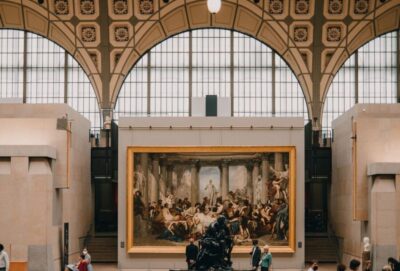
Paris: Musée d’Orsay Entry Ticket and Seine River Cruise
Read our review →
Paris: Musée d’Orsay Skip-the-Line Tour with Expert Guide
Read our review →
Musée d’Orsay Skip-the-Line Tour with Expert Guide
Read our review →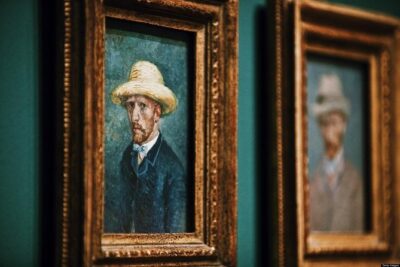
The Musée d’Orsay Guided Tour Orsay Museum Semi-Private 6ppl Max
Read our review →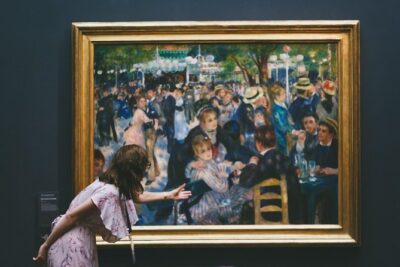
Louvre & Musée d’Orsay Guided Museum Tour Semi-Private 6ppl Max
Read our review →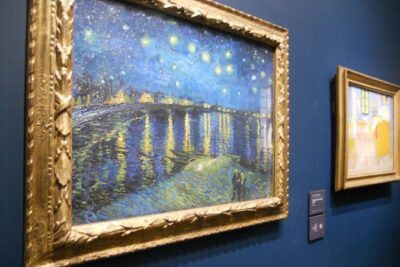
Browse the lists this tour appears in