
Reviewed · MUSEUMS
Visit of Choco-story COLMAR, the Chocolate Museum.
Chocolate has a surprisingly long voyage. At Choco-Story Colmar, you follow cocoa from a forest and Aztec legend to Spanish ships, European courts, and modern factories. I like the interactive displays and the way the museum turns a short visit into a playful lesson for both adults and children. I also like that chocolate tasting is included. The main drawback is the fixed, non-refundable booking policy, so choose your date carefully.
This is a compact museum visit of about 90 minutes, starting at 12 Place de la Cathédrale in central Colmar. The audio guide is listed in six languages, though the description also refers to four, so check the available language before booking. You move at your own pace, with films, projections, games, and hands-on features rather than a traditional guided tour.
In This Review
- Five things to know before you go
- Starting beside Colmar Cathedral
- A forest, a monkey, and the first cocoa beans
- Meeting Quetzalcoatl in the Aztec temple
- Crossing the Atlantic on a 16th-century ship
- European courts and a royal photo stop
- Trying the choco scanner
- The industrial story and a 250-kilogram Statue of Liberty
- Recipes on the giant screen
- The tasting: a small but important part of the visit
- Audio guide languages and the pace of the visit
- Who will get the most from Choco-Story Colmar
- Is the $18.02 price good value?
- Booking and practical cautions
- Should you book Choco-Story Colmar?
- FAQ
- Where does the Choco-Story Colmar visit start?
- Where does the experience end?
- How long does the visit take?
- How much does admission cost?
- Is a chocolate tasting included?
- Is hot chocolate included?
- Is an audio guide provided?
- How many languages are available for the audio guide?
- Can most people participate?
- Can the booking be canceled or changed?
Five things to know before you go
- The story begins in a tropical forest: An animated monkey introduces cocoa beans before the tour moves into Aztec mythology.
- Quetzalcoatl appears in an Aztec temple: The feathered serpent god is linked to the legend of cocoa reaching the human world.
- A Spanish ship creates a full sensory scene: Creaking floors, moving hurricane lamps, and shipboard views make the 16th-century crossing feel theatrical.
- Chocolate sculptures become very large upstairs: The industrial section includes a 250-kilogram Statue of Liberty and other chocolate creations.
- Tasting is included, but hot chocolate costs extra: Save room for samples, but do not expect a hot drink to be part of the basic price.
Starting beside Colmar Cathedral
The visit begins at 12 Place de la Cathédrale, a handy location in the center of Colmar. You can pair it with a walk around the old town, making the museum easy to fit between other sightseeing stops.
The stated price is $18.02 per person. That is not the cheapest museum ticket you will find, but the visit lasts about an hour and a half and includes an audio guide, interactive features, films, projections, and chocolate tasting. For a family or anyone who wants more than glass cases and printed labels, the price feels easier to justify.
You should allow the full 90 minutes if you want to follow the story at a relaxed pace and try the interactive elements. The visit ends back at the same meeting point, so there is no complicated transfer at the end.
The museum is near public transportation, and most people can take part. The maximum group size is listed as 200 people, so the venue can accommodate a fairly large crowd. That number matters most during busy periods, when popular interactive stations may feel less private or require a little patience.
More Museum Tours in Colmar:
- Paris: Louvre Museum Timed-Entrance Ticket
★ 4.6 · 71,977 reviews - Louvre Museum Masterpieces Guided Tour with Access
★ 4.5 · 12,023 reviews - Paris: Louvre Museum Entry Ticket With Host and River Cruise
★ 4.6 · 9,926 reviews
A forest, a monkey, and the first cocoa beans
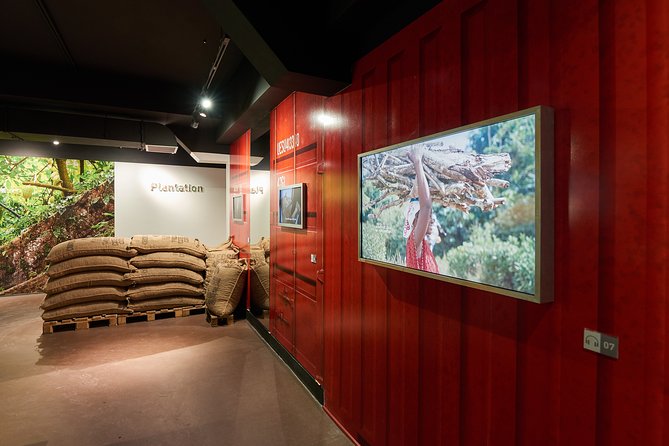
The first scene places you in a virgin forest. An animated panel shows a small monkey tasting cocoa beans, giving the story a friendly beginning instead of opening with a long block of text.
This is a smart way to introduce the basic ingredient. Cocoa can seem familiar because chocolate bars are everywhere, yet the bean itself is far removed from the finished sweet. The opening helps you connect the plant, the fruit, and the food you eventually taste.
Children should enjoy the moving image and playful setup. Adults may appreciate the simple reminder that chocolate begins with agriculture and careful processing, not with a shiny wrapper.
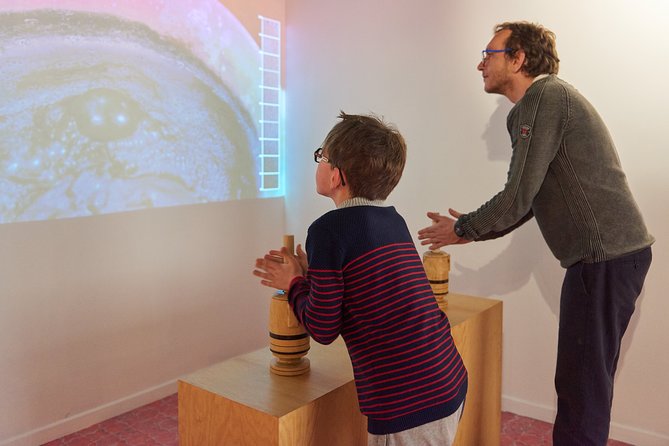
The museum uses interactive and immersive environments throughout the visit. Expect a mix of film, sound, projections, props, and small games. This format keeps the pace moving, though anyone seeking a quiet, highly detailed museum display may find the theatrical style a little light.
Meeting Quetzalcoatl in the Aztec temple
The next major scene is an Aztec temple featuring Quetzalcoatl, the feathered serpent god. According to the legend presented here, Quetzalcoatl brought cocoa to Earth.
This section gives the ingredient a place in pre-Hispanic culture and belief. The point is not simply that cocoa was discovered, but that it carried meaning long before it became a European luxury or a mass-produced snack.
The temple setting also gives the museum a chance to shift from natural history to story and tradition. You are not just memorizing dates. You are seeing how cocoa enters a larger human story through myth, ritual, and trade.
The audio guide provides the background in your chosen language, while the set gives you something visual to remember. I would pay attention here rather than rushing toward the tasting. The later chocolate samples are enjoyable, but the early sections explain why cocoa mattered before European chocolate houses and factories changed it.
Crossing the Atlantic on a 16th-century ship
One of the most imaginative parts of the visit recreates a Spanish ship. The floor creaks, hurricane lamps move, and the windows reveal a bright sea scene.
These effects are deliberately theatrical. They help you picture cocoa crossing from the Americas toward Europe during the 16th century. You are given a sense of movement and uncertainty, even though you remain inside a museum in Colmar.
For children, this may be one of the strongest scenes because it feels like a short stage set. For adults, it provides a clear transition in the story: cocoa is leaving its original setting and entering a new market, culture, and social world.
The ship scene also shows the museum’s overall approach. This is not a conventional lecture with rows of objects. It uses sound and movement to make the sequence easier to remember. If you prefer a calm, object-focused collection, you may wish for more traditional displays alongside the effects.
A few more Colmar trips worth weighing up
- Paris: Day or Sunset Cruise with Drink, Ice Cream or Dessert
★ 4.4 · 4,225 reviews - Paris: Entrance Ticket to the Chocolate Museum
★ 4.1 · 1,105 reviews - Private Montmartre Food Tour with Wine, Cheese & Pastries
★ 5.0 · 1,027 reviews - Paris French Sweets Tasting Tour with Pastries and Chocolates
★ 4.5 · 947 reviews
European courts and a royal photo stop
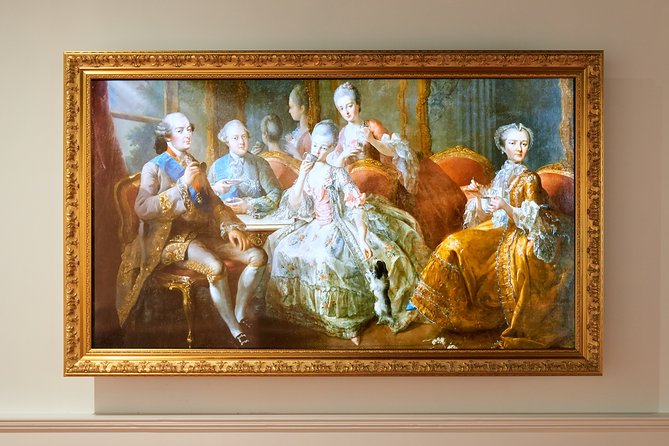
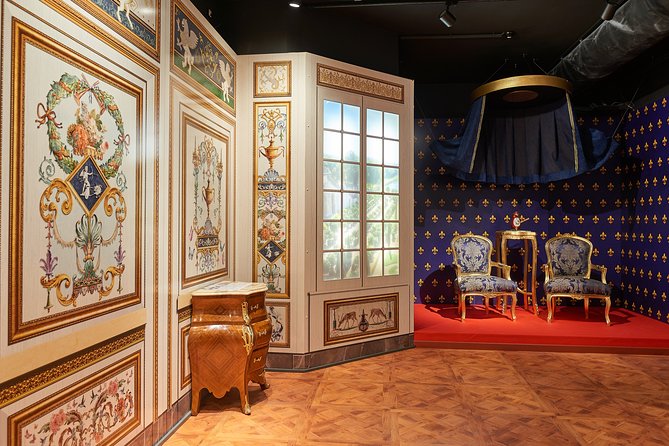
The story then moves into European courts, where chocolate became associated with wealth and ceremony. Royal armchairs invite you to sit and take a photograph.
That photo opportunity may sound like a small detail, but it fits the subject well. Chocolate was not always an everyday treat. Its move into European court life helped turn it into a product linked with status, fashion, and refined dining.
The armchairs give families and friends something to do together, and the stop breaks up the listening. You can use it as a quick photo pause rather than a major exhibit.
I also like this section because it makes the social history of chocolate easier to understand. The ingredient did not simply arrive in Europe and become popular overnight. It passed through elite settings before industrial production made chocolate available to a much wider public.
Trying the choco scanner
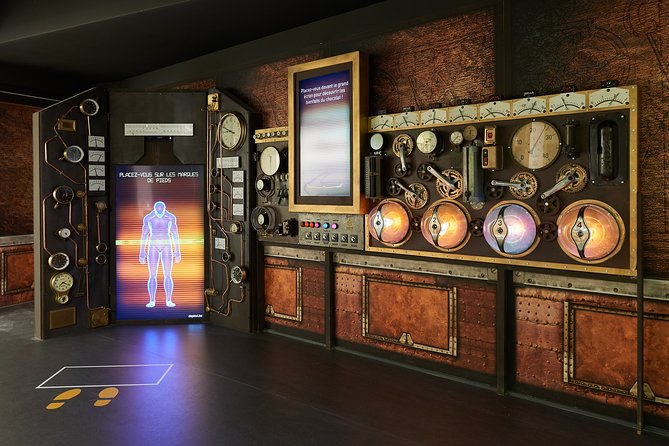
The choco scanner is one of the museum’s more unusual interactive features. It reproduces your body movements and presents the supposed benefits of the cocoa tree fruit.
This is a playful way to get you physically involved. Instead of standing in front of a panel, you move and watch the system respond. That makes it especially useful for children, but adults can join in without feeling that the museum is only for young visitors.
You should treat the health claims as part of the presentation rather than as personal medical advice. The feature is designed to celebrate cocoa and explain its appeal, not to replace careful information from a doctor or nutrition source.
Still, the scanner adds variety to the route. The visit is not only about watching films. You have several chances to interact, play, and take part in the presentation.
The industrial story and a 250-kilogram Statue of Liberty
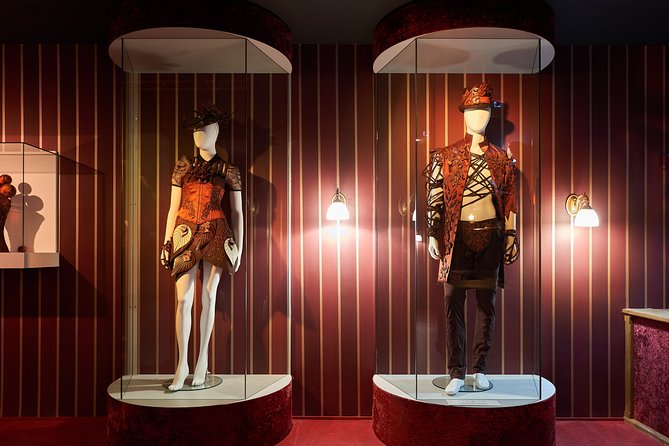
The second floor turns to industrialization. Here, the museum shifts from legends, ships, and court life to the machines and production methods that helped chocolate reach the modern public.
The centerpiece is a cabaret-style show featuring a 250-kilogram Statue of Liberty made from chocolate. The statue lights up the world alongside other chocolate sculptures.
This is the sort of display that makes the museum memorable. A giant chocolate figure gives you a clear sense of scale, while the cabaret format keeps the industrial section from becoming a dry explanation of manufacturing.
The sculptures also show the skill involved in working with chocolate as a material. You are looking at food, but also at an edible form of sculpture. The display may appeal even to someone who is less interested in the technical side of cocoa production.
The industrial floor is likely to be one of the busiest parts of the experience because the large sculptures and show offer strong photo opportunities. If you are visiting with children, this section gives you a useful reward after the earlier history and mythology.
Recipes on the giant screen
Three master chocolatiers appear on a giant screen to present their recipes. This adds a practical angle to the museum’s historical story.
You see chocolate not only as a crop or a luxury but as something shaped by technique. Recipes show how professionals use cocoa in a finished dish, and they connect the museum visit with the food you may buy or taste elsewhere in Colmar.
The screen presentation also gives the visit a modern ending. The story has moved from a forest and an Aztec temple to industrial production, then to contemporary chocolate-making methods.
Do not expect a full cooking class. The information provided describes recipe presentations on screen, not hands-on instruction. If you want to learn specific techniques, you will get inspiration rather than a complete lesson.
The tasting: a small but important part of the visit
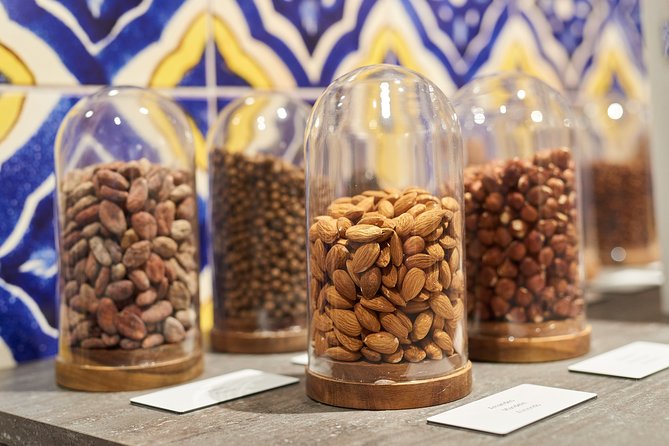
Chocolate tasting is included in the admission. This matters because tasting gives you a direct link to everything the museum has explained.
The samples help turn an abstract lesson into something physical. You have seen cocoa discussed as a plant, a trade product, a court luxury, and an industrial ingredient. Now you can experience the result directly.
The tasting is also a strong reason for families to choose this museum. A child may not remember every historical detail, but the combination of moving scenes, games, and chocolate is likely to hold attention.
Hot chocolate is not included. If you specifically want a hot drink, plan to buy it separately if available. The included tasting should not be confused with a café stop.
Because the visit is self-paced, you can spend more time with the exhibits that interest you and less time with sections that feel familiar. That flexibility is useful, though it means the experience may feel less structured than a tour led by a live guide.
Audio guide languages and the pace of the visit
An audio guide is included. The booking information lists six languages, while the main description refers to four. Since that detail is presented inconsistently, confirm your preferred language before you pay.
An audio guide suits this museum well because the displays supply the visual and physical setting while the narration fills in the story. You can listen as you move from one scene to the next instead of waiting for a group to gather around a guide.
The self-paced format is another plus. One person can linger at the Aztec temple, another can take extra time with the chocolate sculptures, and children can return to an interactive game without holding up a formal group.
The tradeoff is that you do not have a live guide to answer questions or adjust the explanation to your interests. If you want personal commentary, this may feel limited. If you prefer independence, the format is a good match.
Who will get the most from Choco-Story Colmar
I would recommend this experience most strongly to:
- Families looking for a child-friendly museum in central Colmar
- Couples who enjoy food history and theatrical displays
- Chocolate fans who want context before tasting
- Visitors with about 90 minutes between other Colmar plans
- Anyone who prefers interactive exhibits to long written explanations
The museum also works well during a short city break. Its central location and fixed duration make it easier to schedule than a large attraction with an open-ended visit.
You may want to skip it if your main goal is a formal lesson in confectionery science, a full factory tour, or a sit-down hot chocolate experience. The museum offers history, storytelling, games, recipes, sculpture, and tasting, but it does not promise a complete professional course.
Is the $18.02 price good value?
At $18.02, the value depends on what you want from a museum. You are paying for more than a display of chocolate objects. The ticket includes the audio guide, interactive presentation, films, 3D projections, and tasting, with about 90 minutes of content.
For a child who enjoys touching, watching, and playing, the price can feel fair. The visit offers enough variety to avoid the usual problem of a food museum becoming a quick walk past labels.
For an adult with only mild interest in chocolate, the value is less certain. The theatrical effects may feel entertaining but not especially detailed, and the hot chocolate is an extra cost. I would choose this museum when the subject itself appeals to you or when you need a family-friendly indoor activity in Colmar.
The strongest value comes from combining education with entertainment. You learn the basic journey of cocoa, then get visual set pieces and a tasting rather than only reading about the finished product.
Booking and practical cautions
You receive confirmation at the time of booking. The experience cannot be refunded or changed, so do not reserve it until your Colmar schedule is settled.
It is booked an average of nine days in advance, which suggests that planning ahead can be sensible during a busy visit. The museum is near public transportation, and the starting and ending point is the same central address.
The maximum capacity is 200 people. That does not mean every session will feel crowded, but it does mean you should not assume a small private museum atmosphere.
Should you book Choco-Story Colmar?
Book it if you want a lively 90-minute introduction to cocoa, especially if you are visiting with children or enjoy food-themed attractions. The strongest parts are the animated forest, Aztec temple, moving ship scene, interactive choco scanner, giant chocolate sculptures, and included tasting.
Skip it if you want a quiet art museum, a live specialist guide, or hot chocolate included with admission. For most visitors who like chocolate and have room in their Colmar plans, the $18.02 ticket offers a pleasant mix of history, spectacle, and sweets. Just confirm the audio language and lock in your date carefully because the ticket is non-refundable.
FAQ
Where does the Choco-Story Colmar visit start?
It starts at 12 Place de la Cathédrale, 68000 Colmar, France.
Where does the experience end?
The activity ends back at the meeting point.
How long does the visit take?
The visit lasts approximately 1 hour and 30 minutes.
How much does admission cost?
The listed price is $18.02 per person.
Is a chocolate tasting included?
Yes. Chocolate tasting is included with the experience.
Is hot chocolate included?
No. A hot chocolate drink is not included.
Is an audio guide provided?
Yes. An audio guide is included.
How many languages are available for the audio guide?
The included information lists six languages, while the experience description mentions four. Confirm the available language when booking.
Can most people participate?
Yes. Most people can participate, and the museum is near public transportation.
Can the booking be canceled or changed?
No. The experience is non-refundable and cannot be changed for any reason.
Recently added around Colmar
- Alsace: Half-Day Wine Tour from Colmar★ 4.7 · 54 reviews
- Private and customizable: Alsace Wine Route HIGHLIGHTS in 3 hours★ 5.0 · 63 reviews
- Christmas Market Tour from Colmar★ 4.5 · 64 reviews
- The Emblematic: visit of villages, Haut-Koenigsbourg, Wine tasting★ 5.0 · 81 reviews
- Enchanting Christmas Experience From Colmar★ 4.3 · 82 reviews
- Alsace’s Gems Small Group Day Tour from Colmar★ 5.0 · 84 reviews
- From Colmar: Alsace Medieval and Wine Tasting Day Tour★ 4.7 · 91 reviews
- France, Germany and Switzerland Full Day Tour from Colmar★ 4.5 · 107 reviews
Museums, compared.
Louvre Museum Masterpieces Guided Tour with Access
Read our review →
Paris: Louvre Museum Entry Ticket With Host and River Cruise
Read our review →
Les Invalides: Napoleon’s Tomb & Army Museum Entry
Read our review →
Louvre Museum – Exclusive Guided Tour (Entry Included)
Read our review →
Paris: Louvre Museum Hosted Entry and Mona Lisa Audioguide
Read our review →
Paris: Louvre Museum Tour Mona Lisa & Iconic Masterpieces
Read our review →
Browse the lists this tour appears in