
Reviewed · WALKING TOURS
Strasbourg : European District Walking Tour
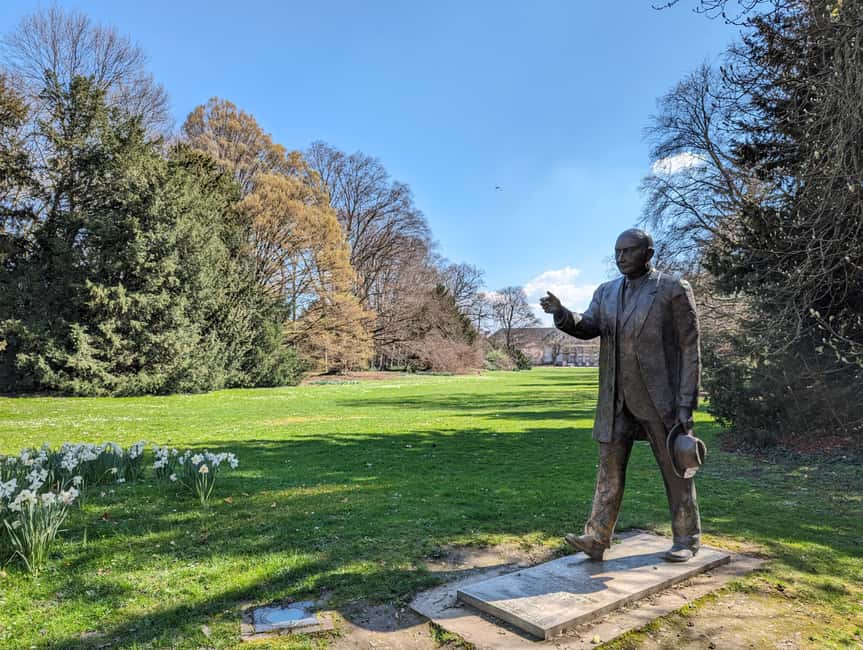
Strasbourg’s modern story is written in stone. This 90-minute walk links the city’s Franco-German past with the Council of Europe, the European Court of Human Rights, and the European Parliament. I like the small group of six and the chance to see a less familiar side of Strasbourg, including unusual Art Nouveau homes near the Orangerie. The main limitation is clear: you see the Parliament from outside, not from within.
The $35 price is fair if you want context rather than a quick photo stop. Guides such as Nicolas have been praised for clear English, funny anecdotes, and useful restaurant advice, while Remy is noted for taking time with questions. Bring an ID, expect to walk in all weather, and skip this tour if you have mobility problems.
In This Review
- Key points about Strasbourg’s European District walk
- Why this part of Strasbourg matters
- Starting at the Agora and Council of Europe
- The Council of Europe and the European Court of Human Rights
- Art Nouveau houses near the Orangerie
- Along the Ill River toward Wacken
- Seeing the European Parliament from outside
- What the small-group format changes
- Is $35 a fair price?
- Weather, walking, and practical limits
- Who should book this Strasbourg walk?
- Should you book the European District Walking Tour?
- FAQ
- How long does the Strasbourg European District Walking Tour last?
- What languages are available?
- How many people can join the tour?
- Does the tour include entry to the European Parliament?
- What should I bring?
- Does the tour operate in bad weather?
Key points about Strasbourg’s European District walk
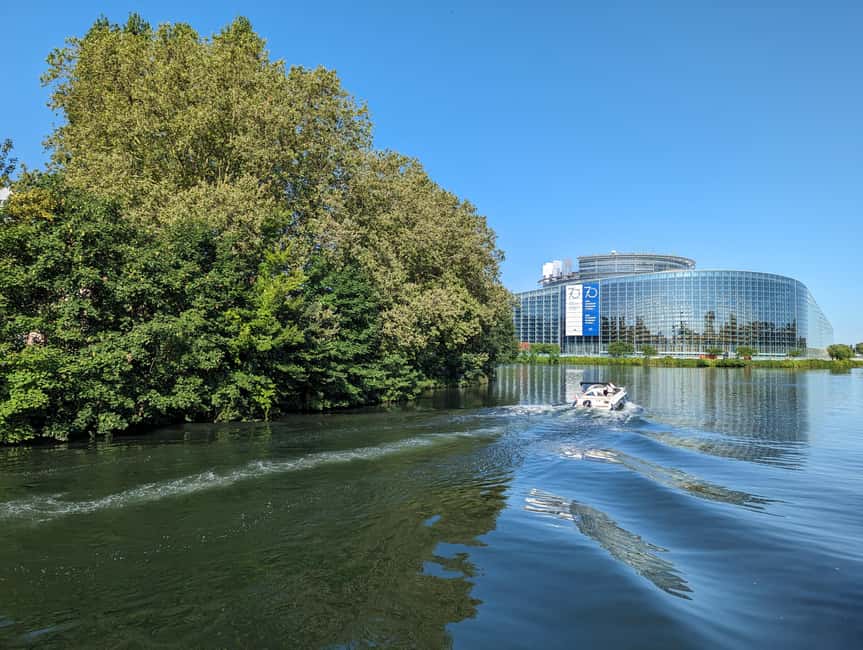
- A compact 90-minute route: You cover the Council of Europe, European Court of Human Rights, Orangerie-area homes, the Ill River, Wacken, and the outside of Parliament.
- Small groups up to six people: This gives you a better chance to ask questions and hear the guide clearly.
- A useful Franco-German perspective: Strasbourg’s past as a source of conflict helps explain why European institutions matter here.
- A modern side of the city: Wacken brings bike paths, new buildings, and the Ill River into the story.
- No Parliament entry: The tour ends near the Parliament, where you can visit independently. Entry is free, but it is not part of this experience.
- English and French guiding: The tour is offered in both languages, with guides such as Nicolas and Remy receiving especially warm praise for their friendly style.
Why this part of Strasbourg matters
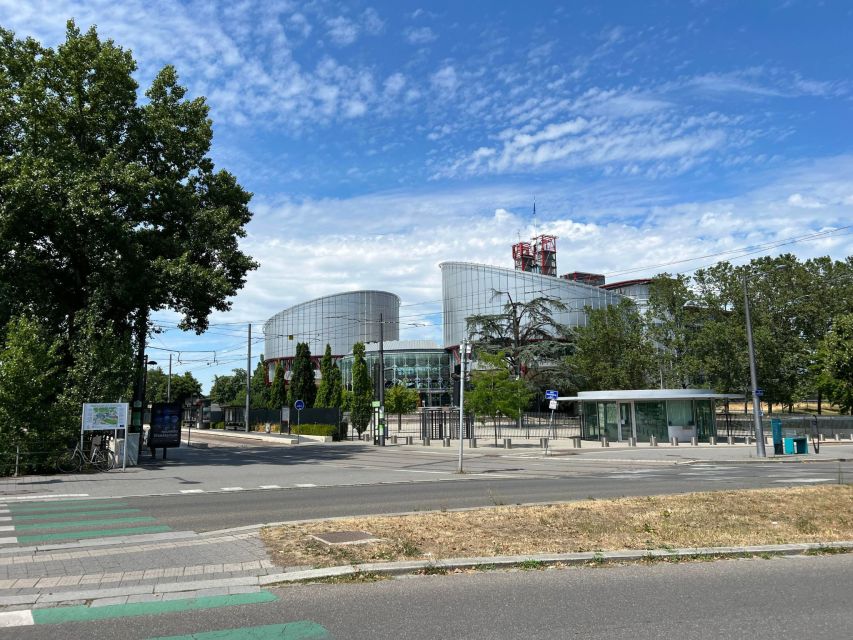
Most first visits to Strasbourg focus on the cathedral, canals, half-timbered streets, and old-town lanes. Those sights deserve their fame, but they only tell part of the city’s story. The European District explains how Strasbourg moved from a disputed border city to a working center for European cooperation.
For centuries, the relationship between France and Germany was marked by tension and conflict. Strasbourg’s position near the border made it a powerful symbol of that struggle. Today, the city hosts major political institutions that were built around cooperation between European countries.
That change is the heart of the walk. You are not simply looking at office buildings. You are learning why these institutions were placed in Strasbourg and what they are meant to do. The guide connects local streets and buildings with the larger story of the European Union and postwar Europe.
I especially like this approach for anyone who finds EU politics confusing. The institutions can sound abstract when you read about them in a guidebook. Seeing them in their own district gives the subject a physical setting, and a good guide can explain the differences in plain language.
More Walking Tours in Strasbourg
- Strasbourg: Walking Tour with a Local Guide
★ 4.3 · 607 reviews - Strasbourg: Walking Tour with Local Guide
★ 5.0 · 598 reviews - Strasbourg: Guided Historical Neighborhoods Walking Tour
★ 4.9 · 275 reviews
Starting at the Agora and Council of Europe
The meeting point is the Agora, the building where the tour begins near the Council of Europe. Look for a guide wearing a black T-shirt with the orange Bretzel&Fun logo. That detail matters because the European District contains large institutional buildings, and a clear meeting signal saves time.
The first section introduces the Council of Europe and its role. The Council of Europe is not the same thing as the European Union, and that distinction is worth understanding before you continue. The walk also covers the European Court of Human Rights, another institution that is often confused with EU bodies.
This is one of the strongest reasons to choose a guided walk instead of simply taking photographs outside. The buildings themselves may not explain their purpose. Your guide provides the basic framework, then points out specific features and explains how the institutions relate to one another.
Nicolas has received particular praise for explaining these subjects in English with clarity and humor. His style appears to include anecdotes about the important people and events that shaped European cooperation. If you enjoy a guide who adds personality without turning the tour into a lecture, that is useful information when choosing this experience.
The tour is limited to six participants. That is a real advantage here. Institutional subjects can quickly become dry, but a small group lets you stop for questions and keeps the conversation more personal. You are less likely to feel like a face in a crowd.
The Council of Europe and the European Court of Human Rights
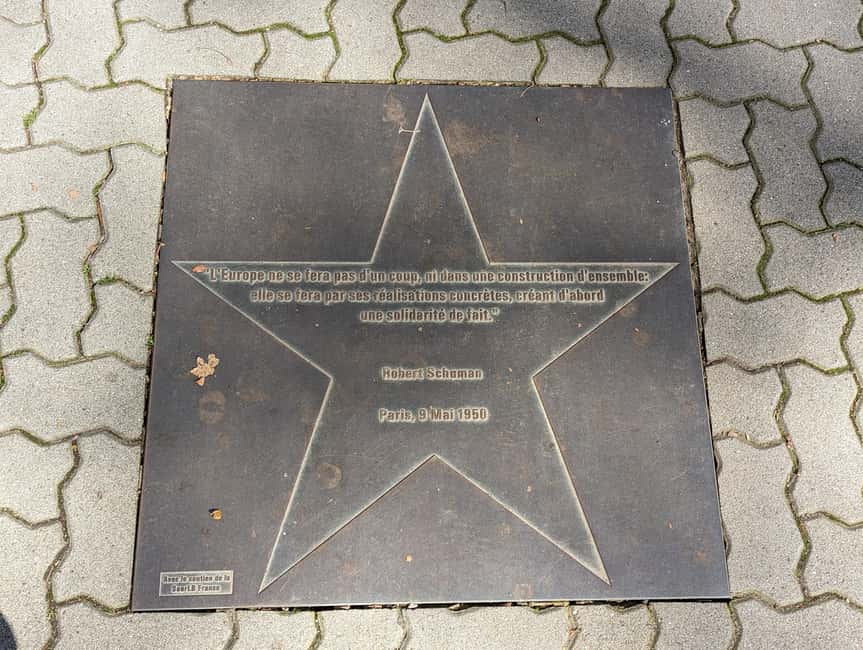
The walk gives you an outside look at the Council of Europe and the European Court of Human Rights. The guide explains the specific features of both institutions, so you can leave with a clearer sense of their separate jobs.
The tour does not promise entry into either building. Its value comes from explanation, location, and discussion. You are looking at the places where European legal and political work is carried out, while hearing how those bodies fit into the wider European system.
This distinction is important for planning. If you want an architectural tour or an inside visit, this walk may feel limited. If you want a friendly introduction to European institutions, the outside stops are enough to make the subject easier to follow.
I would bring a small notebook if EU politics interests you. Ninety minutes is not long enough to cover every detail, but it is a useful first lesson. You can then decide if you want to read more or visit the Parliament independently.
Art Nouveau houses near the Orangerie
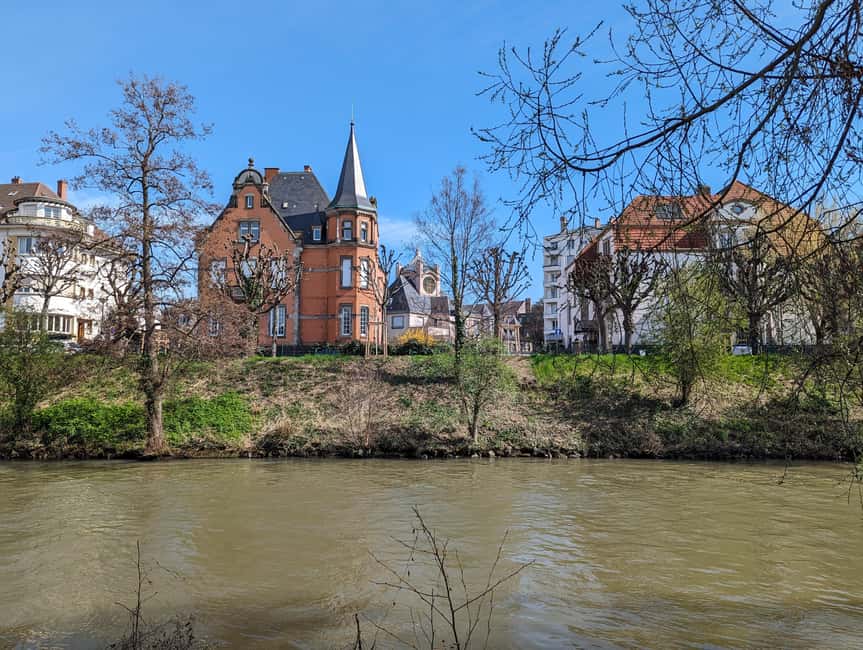
The route is not only about government buildings. Near the European District, you see unusual houses in the Orangerie area, including examples of Art Nouveau design. This change of subject keeps the walk from becoming a procession of official facades.
The houses add a local touch. They show that the district is not just a workplace for diplomats, judges, and elected officials. It also has residential architecture with its own style and character.
The information provided does not specify the names of individual houses or the exact number you will see. That means you should expect an architectural stop rather than a tightly defined house-by-house tour. Still, this part should appeal to you if you enjoy looking at details above street level, unusual shapes, and buildings that do not resemble the standard old-town style.
I like the contrast. Strasbourg’s historic center is known for older Alsatian architecture, while the Orangerie area adds another layer. The walk helps you see that Strasbourg is not one single style repeated from street to street.
A completely different sort of day in Strasbourg:
- Strasbourg: Euro Guided Tour by Segway
★ 4.7 · 808 reviews - Colmar, Medieval Village & Castle Small Group from Strasbourg
★ 5.0 · 769 reviews - 2-Hour Strasbourg Euro Tour by Segway
★ 5.0 · 642 reviews - From Strasbourg: Best Of Alsace Historical Day Trip
★ 4.7 · 633 reviews
Along the Ill River toward Wacken
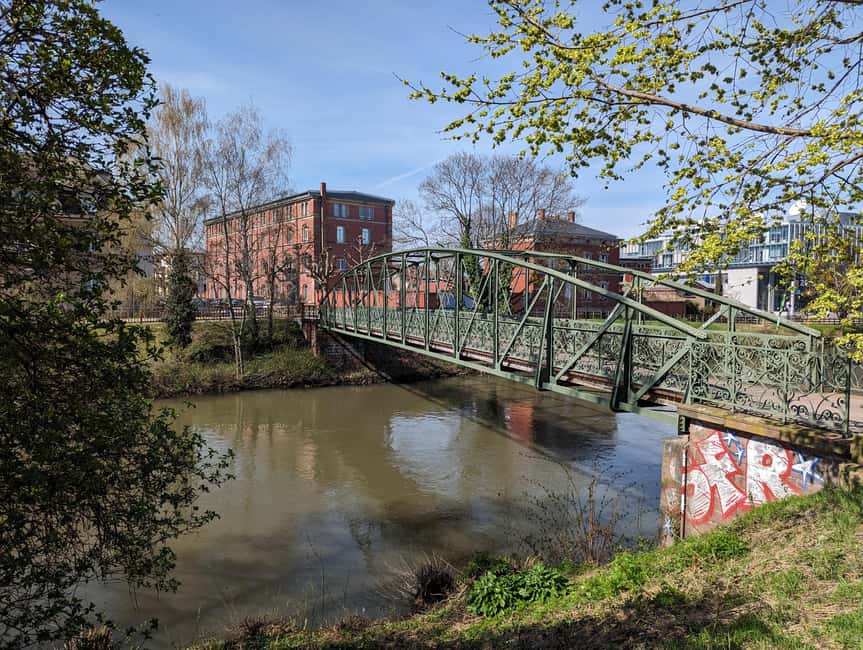
The route then follows the Ill River toward Wacken. Water, paths, and open views give this portion a more relaxed feel after the institutional stops.
Wacken is described as a fast-growing and dynamic district. New buildings and bike paths reflect the city’s newer direction, while the river helps connect the area to Strasbourg’s older geography. You get a sense of a city still changing, rather than one preserved entirely for visitors.
This is also where the tour brings together several themes: modern urban planning, cycling, European institutions, and the river that runs through Strasbourg. The setting helps you understand why the district feels different from the historic center.
The Wacken section may appeal most if you have already seen the major old-town sights. It gives you another view of Strasbourg, one shaped by contemporary construction and international institutions. If your only goal is medieval architecture, however, this route will be less suitable.
The walk finishes close to the European Parliament. Along the way, the guide explains how the Parliament works and how elected deputies from each country vote on European laws. That basic explanation can be particularly helpful for families or teenagers who know the name of the Parliament but not its function.
Seeing the European Parliament from outside
The Parliament is an important finish, but the limits are simple: there is no entry during this tour. You receive an exterior explanation and are dropped close to the entrance.
The separate visit is still useful. Entry to the Parliament is free, according to the tour information, so you can continue on your own after the walk. Check the practical arrangements for the day if you plan to go inside, since this guided experience does not include that portion.
This combination can work well. The guide gives you background before you arrive, then you can explore the Parliament independently. One French participant combined the walking tour with an inside visit afterward and found the two activities worked well together.
Allow extra time if Parliament entry is important to you. The 90-minute tour itself does not include a visit, and the guide cannot replace any separate admission or security process. Carry your passport or ID card, as required for the tour, and avoid bringing weapons, sharp objects, or explosive substances.
What the small-group format changes
A maximum of six participants is one of the clearest benefits. You can ask about the EU, French-German relations, architecture, or local restaurants without waiting behind a large group.
The guide’s personality also matters more in a small group. Nicolas is praised for being friendly, informative, and entertaining, with anecdotes that kept even a teenage participant interested. He has also offered dinner suggestions after the walk, which is a nice practical extra when you are still finding your way around Strasbourg.
Remy is praised for being warm, entertaining, and willing to give every question time. That suggests the provider’s guiding style is personal rather than rigid, although the exact guide depends on the date and schedule.
The language choices are English and French. Nicolas has been specifically praised for explaining everything clearly in English. If you need another language, this is not the right tour based on the information available.
Is $35 a fair price?
At $35 per person, this is not a bargain sightseeing stroll, but it is a reasonable price for a live, small-group guide. You are paying for 90 minutes of explanation, a group capped at six, and a route that covers several parts of Strasbourg that can be hard to connect on your own.
The value is strongest if you care about context. A self-guided walk can take you past the Council of Europe, the Court, and Parliament, but it may not explain their differences or their place in European politics. Here, the guide does that work while also pointing out architecture and urban changes.
The value is weaker if you mainly want access inside the Parliament. You will need to visit separately, even though entry is free. You should also consider the time: 90 minutes is enough for an introduction, not a full study of the EU or Strasbourg’s political history.
For many people, the best plan is to treat this as a first activity in the European District, then visit Parliament independently afterward. That gives you background before you enter, provided the separate visit fits your schedule.
Weather, walking, and practical limits
The tour runs rain or shine. Wear shoes suitable for a 90-minute city walk and bring weather protection. The information does not describe indoor alternatives, so bad weather may affect your comfort even if the tour continues.
The experience is not suitable for people with mobility impairments. The route includes walking through several districts, along the Ill River, and through areas with roads and paths. Anyone who needs frequent seating or has difficulty walking should check carefully before booking.
You need a passport or ID card. The tour does not include transportation, meals, or Parliament admission. It does include the guided walk, explanations, photo opportunities, and local advice for the rest of your stay in the region.
Cancellation is flexible: you can cancel up to 24 hours before the start for a full refund. You can also reserve and pay later, which helps if your Strasbourg plans are still shifting.
Who should book this Strasbourg walk?
I would choose this tour if you want to understand why Strasbourg matters beyond its cathedral and old town. It suits first-time visitors who enjoy history, politics, architecture, or city planning, and it works well for families with older children and teenagers who prefer a guide with stories and humor.
It also fits visitors who like a short activity with room for another plan afterward. You can take the walk in the morning, continue to Parliament on your own, or use the guide’s local suggestions for lunch or dinner.
I would be cautious if you want a full Parliament visit included, a completely indoor activity, or a route designed for limited mobility. The walk also may not be the best use of time if you have only a few hours in Strasbourg and have not yet seen the historic center.
Should you book the European District Walking Tour?
Book it if you want a clear, friendly introduction to Strasbourg’s role in Europe. The combination of Franco-German history, the Council of Europe, the European Court of Human Rights, Art Nouveau homes, the Ill River, and Wacken gives you more variety than a simple institutional tour.
The small group and strong praise for guides such as Nicolas and Remy add real value. Just remember the key limitation: the European Parliament is an outside stop only. Plan a separate free visit if you want to go inside, bring ID, and prepare for a walk in any weather.
FAQ
How long does the Strasbourg European District Walking Tour last?
The tour lasts 90 minutes.
What languages are available?
The live guide speaks English or French.
How many people can join the tour?
The group is limited to six participants.
Does the tour include entry to the European Parliament?
No. The tour visits the Parliament from outside and finishes close to its entrance. You can visit it on your own, and entry is free.
What should I bring?
Bring a passport or ID card.
Does the tour operate in bad weather?
Yes. The tour takes place rain or shine. It is not suitable for people with mobility impairments.
Recently added around Strasbourg
- From Strasbourg: Half-Day Tour of Alsace Villages★ 4.7 · 50 reviews
- Medieval Villages and Wine Tasting from Strasbourg★ 5.0 · 55 reviews
- Strasbourg City Center Guided Bike Tour w/ Local Guide★ 5.0 · 57 reviews
- Strasbourg Food Tour : Gourmet private Tour with tastings★ 4.7 · 58 reviews
- Private Tour: From Strasbourg to Colmar, Eguisheim, Riquewhir★ 4.5 · 58 reviews
- Capture the Magic of Strasbourg with an Exclusive Photoshoot★ 4.9 · 61 reviews
- FULL DAY ALSACE PRIVATE TOUR : Tailored by your Friendly Driver★ 5.0 · 76 reviews
- Explore Strasbourg in 60 minutes with a Local★ 5.0 · 82 reviews
Walking Tours, compared.
Paris Top Sights Half Day Walking Tour with a Fun Guide
Read our review →
Montmartre Hidden Gems and Scenic Highlights Walking Tour
Read our review →
Montmartre Hill French Gourmet Food and Wine Tasting Walking Tour
Read our review →
Paris Île de la Cité and Notre-Dame Walking Tour With Crypt
Read our review →
Paris: Montmartre Cheese, Wine & Pastry Guided Walking Tour
Read our review →
Paris in a Day: Louvre or Orsay, Eiffel Tower, City Walk & Cruise
Read our review →
Paris: Montmartre Highlights Walking Tour with a Local Guide
Read our review →
Browse the lists this tour appears in